Resistive Index: What It Means and How Doctors Use It to Diagnose Problems
When your doctor orders a resistive index, a measurement used in Doppler ultrasound to assess blood flow resistance in arteries. It's also known as the resistance index, and it tells them how easily blood is moving through an organ—like your kidneys, liver, or even the arteries in your legs. This isn’t a lab test you give blood for. It’s a quick, painless scan that uses sound waves to watch how blood flows through vessels and calculates how much resistance it’s fighting against.
The Doppler ultrasound, a non-invasive imaging tool that measures blood flow speed and direction is the machine behind the resistive index. It’s the same tech used to check on babies during pregnancy, but here, it’s focused on arteries. A high resistive index—usually above 0.7 in the kidneys—can mean something is blocking blood flow. That could be a kidney stone, a narrowed artery, or even early signs of kidney damage from high blood pressure or diabetes. It’s not a diagnosis on its own, but it’s a red flag that tells your doctor to look closer.
Doctors use the renal resistive index, the version of the resistive index measured in the kidney’s arteries most often. If you’re on dialysis, have chronic kidney disease, or are being monitored after a transplant, this number helps track how your kidneys are holding up over time. A rising resistive index might mean your kidneys are getting less blood, which could mean your meds need adjusting or you’re developing new blockages. It’s not flashy, but it’s one of the quietest, most reliable tools in vascular medicine.
It’s also used in other areas. In the legs, a high resistive index can point to peripheral artery disease. In the brain, it helps assess stroke risk. Even in the liver, it’s used to spot signs of cirrhosis before symptoms show up. The same math applies everywhere: more resistance = harder for blood to get through = potential problem.
You won’t find this term on your regular blood work, but if you’ve had an ultrasound recently and your report mentions a resistive index, it’s worth asking what the number means for you. It’s not just a number—it’s a clue. And in medicine, clues matter more than you think.
Below, you’ll find real-world stories from people who’ve been through this—how it helped catch kidney problems early, why one man’s high index led to a life-saving stent, and how a simple scan changed the course of someone’s treatment. These aren’t theory pages. These are experiences that show how the resistive index works in real life.
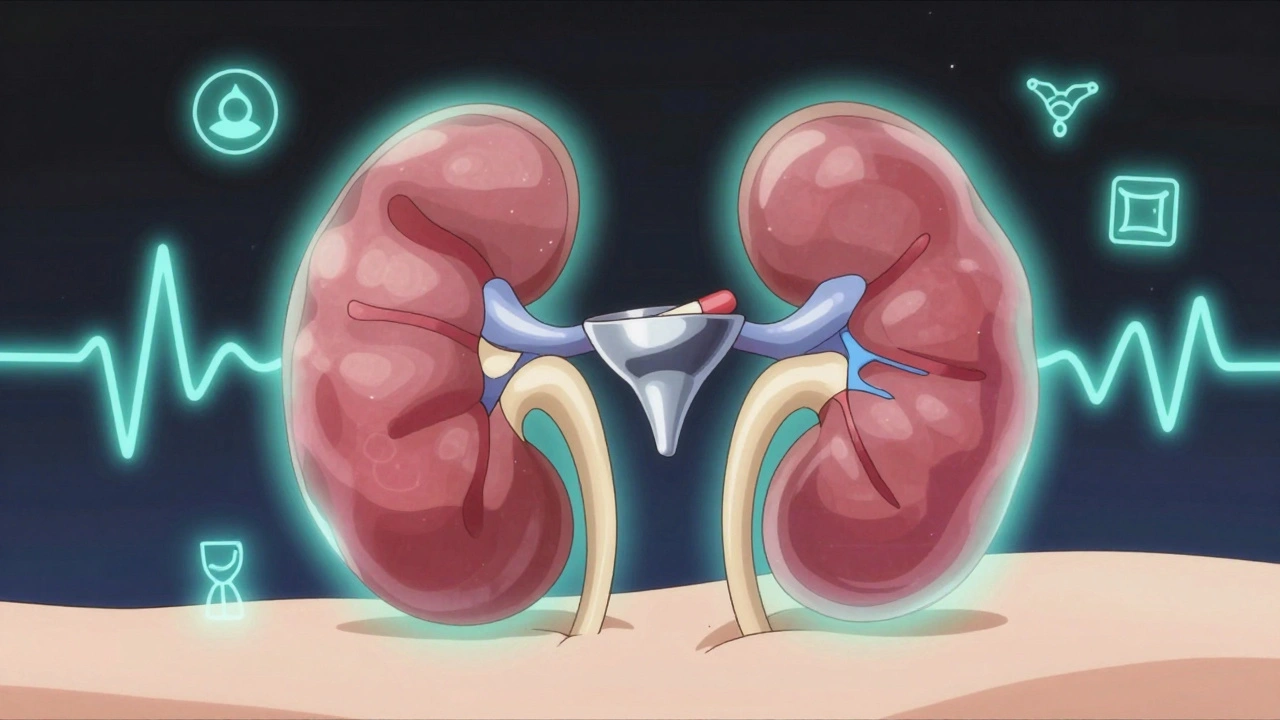
Renal Ultrasound and Imaging: How to Evaluate Kidney Obstruction and Size
Renal ultrasound is the safest, first-line test to check for kidney obstruction and measure kidney size. It detects hydronephrosis, measures resistive index, and avoids radiation-making it essential for diagnosing blockages without harming patients.