
Hyperparathyroidism: High Calcium, Bone Loss, and When Surgery Is Needed

When your blood calcium stays too high for too long, your body starts breaking down your bones. That’s the reality of hyperparathyroidism-a condition where one or more of your parathyroid glands pump out too much hormone, throwing calcium balance completely off. It’s not rare. About 1 in 100 adults in the U.S. has it, and women over 60 are most at risk. Yet, many people live for years with symptoms like fatigue, bone pain, or frequent kidney stones, thinking it’s just aging or stress.
What’s Really Happening in Your Body?
Your four parathyroid glands sit behind your thyroid in the neck. Their job is simple: keep calcium in your blood just right. Too low? They release PTH (parathyroid hormone). Too high? They shut off. In hyperparathyroidism, that system breaks. One gland gets a tumor-usually a harmless adenoma-and starts producing PTH nonstop, even when calcium is already sky-high. That excess PTH does three damaging things:- It pulls calcium out of your bones like a thief, weakening them over time.
- It tells your kidneys to hold onto calcium instead of flushing it out.
- It tricks your gut into absorbing more calcium from food.
How Bone Loss Turns Into Fractures
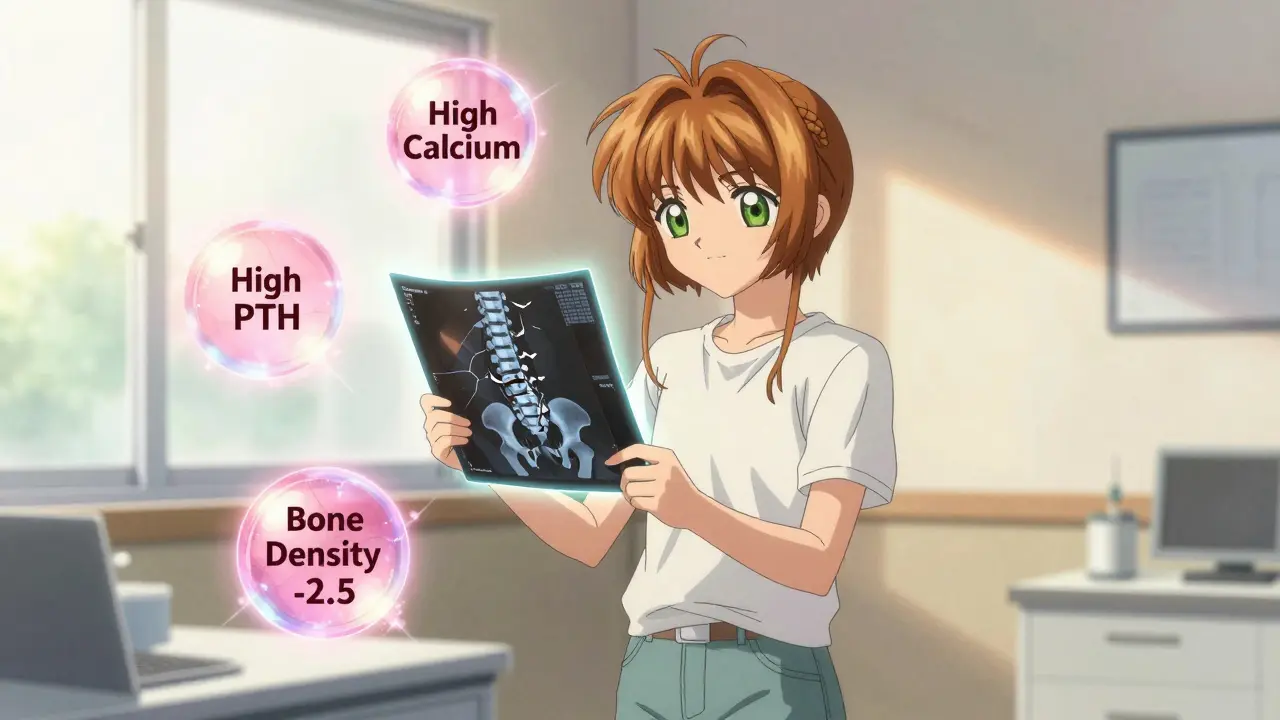
Your bones aren’t just scaffolding-they’re storage units for calcium. In hyperparathyroidism, they’re being emptied. Studies show people with untreated primary hyperparathyroidism lose 2-4% of bone density every year at the hip and spine. That’s twice the rate of normal aging. Over five years? That’s a 10-20% drop. Not surprising, then, that fracture risk jumps by 30-50% compared to people with normal calcium. DXA scans (the same ones used for osteoporosis) show this clearly. A 2022 study found that 1 in 4 patients already had osteoporosis at diagnosis. And it’s not just older women. Men under 50 with high calcium and high PTH show the same bone loss pattern. The damage isn’t reversible without fixing the root cause.When Do You Need Surgery?
For most people, surgery is the only cure. Medications can lower PTH a little or slow bone loss, but they don’t fix the overactive gland. The 2023 Endocrine Society guidelines say surgery should be considered if you have:- Blood calcium more than 1 mg/dL above normal (so, over 11.2 mg/dL if normal is 10.2)
- Reduced kidney function (creatinine clearance below 60 mL/min)
- Bone density T-score of -2.5 or lower (osteoporosis)
- Age under 50
What the Surgery Actually Involves
Most surgeries today are minimally invasive. A small incision (1-2 inches) in the neck, a 30-60 minute procedure, and you’re often home the same day. Surgeons use real-time PTH testing: if the hormone drops more than 50% within 10 minutes of removing the gland, you’re cured. Success rates? 95-98% for single-gland disease. Before surgery, you’ll likely get a sestamibi scan or ultrasound to find the bad gland. These work well-90% accurate for adenomas. In complex cases, a 4D-CT scan gives even better detail. About 85% of cases involve just one abnormal gland. The rest? Two or more, which means a slightly longer surgery and a bit more risk.What Happens After Surgery?
Right after, your calcium can crash. That’s normal. Your body’s been used to high levels for years. Suddenly, the source is gone. About 30-40% of patients need calcium supplements for a few weeks. Some even need a vitamin D analog like calcitriol. This isn’t failure-it’s recovery. Bone density starts to improve within a year. Studies show a 3-5% gain in spine density in the first 12 months, and 5-8% by year two. Kidney stones? 92% fewer after surgery. Fatigue? 75% of patients report major improvement. One patient on EndocrineWeb wrote: “After seven years of being told I was depressed, my calcium was 11.8. Surgery fixed everything. It felt like my brain turned back on.”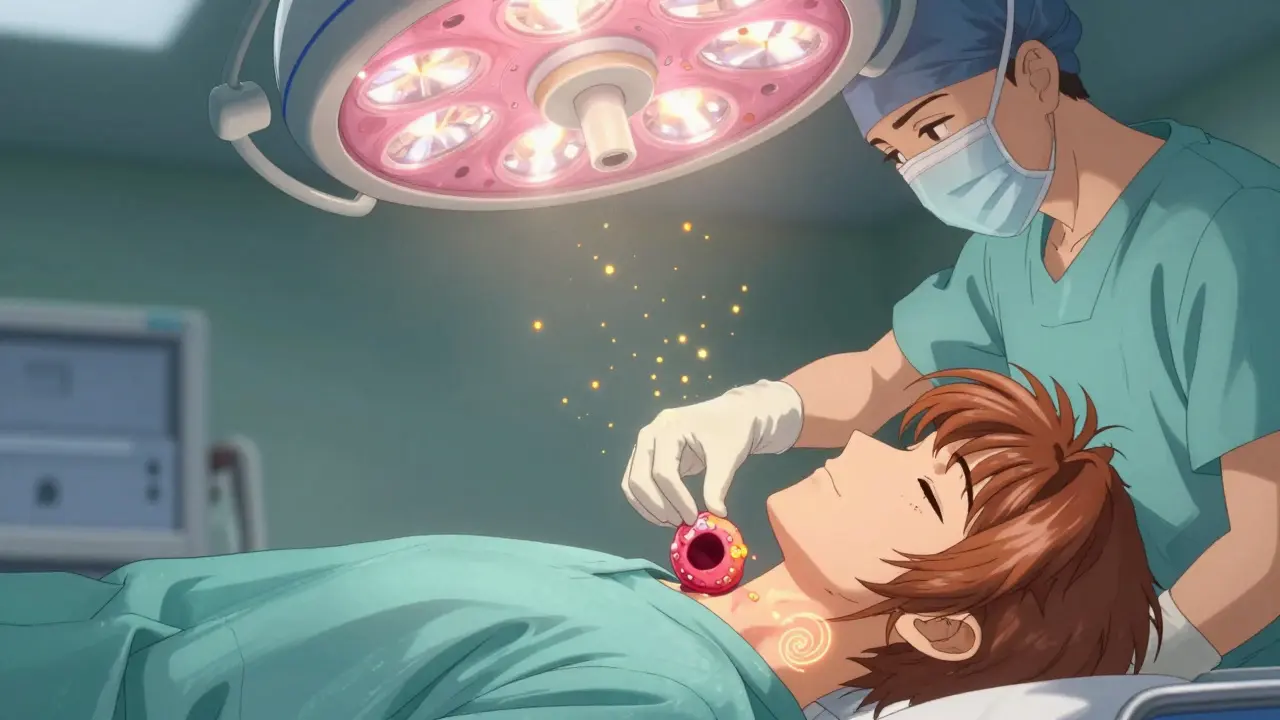
What Doesn’t Work
Cinacalcet and bisphosphonates are sometimes used-but they’re band-aids. Cinacalcet lowers PTH by 30-50% in kidney disease patients, but only 20-30% in primary hyperparathyroidism. Bisphosphonates (like alendronate) can boost bone density by 3-5% over two years, but they don’t touch the high calcium. They’re for people who can’t have surgery-not replacements. And yes, there’s a risk. Voice changes? Less than 1% in experienced hands. Low calcium long-term? Rare. Recurrence? 2-3% if one gland was removed, 5-10% if multiple glands were involved. But the risk of doing nothing? Far higher.Why So Many People Are Diagnosed Late
The average time from first symptom to diagnosis? 2-5 years. Why? Calcium is often checked in routine blood work-but doctors don’t always connect high calcium to PTH. Many patients are told they have “dehydration” or “vitamin D excess.” Others are misdiagnosed with depression or chronic fatigue. One survey found 47% of patients visited three or more doctors before getting the right answer. Screening helps. Since Medicare started covering routine calcium checks for adults over 65 in 2020, diagnoses in that group jumped 18%. But many younger people still slip through. If you have unexplained bone pain, kidney stones, or persistent tiredness, ask for a PTH test. It’s simple. It’s cheap. It could change your life.What You Can Do Now
If you’ve been told your calcium is high:- Get your PTH tested-don’t rely on calcium alone.
- Ask for a DXA scan if you’re over 50 or have risk factors.
- Stay hydrated. Dehydration makes high calcium worse.
- Avoid thiazide diuretics (like hydrochlorothiazide). They raise calcium.
- Get 1,200 mg of calcium daily from food (dairy, leafy greens), not supplements-unless your doctor says otherwise.
- Do weight-bearing exercise. Walk, lift, dance. It helps your bones.


Patrick Jackson
This is wild. I had no idea high calcium could be silently eating my bones alive. I thought it was just "old age" or "not enough vitamin D." Now I get why my hip hurt so bad last winter. 🤯
Roland Silber
I'm a med student, and this is one of those conditions that gets overlooked because the symptoms are so vague. Fatigue? Depression? Kidney stones? Everyone blames lifestyle. But when PTH stays elevated, it's not just "stress"-it's a metabolic bomb ticking. The bone density loss numbers are terrifying. 2-4% per year? That's like osteoporosis on steroids.
Adebayo Muhammad
I've seen this too many times in Lagos: people with calcium levels at 12.5, told to "drink more water," then die from a hip fracture at 58. The system is broken. Doctors don't test PTH because it costs $40. In the U.S., it's a routine check. In Nigeria? You need a miracle. And don't even get me started on the lack of endocrinologists...
Ferdinand Aton
Wait-so you're saying surgery is the only cure? What about fasting? Or keto? I read a guy on Reddit who reversed his hyperparathyroidism with lemon water and intermittent fasting. Maybe the real issue is sugar?
William Minks
I'm from Kenya and this hits different. My aunt had this and was told "it's just menopause." She got a fracture in 2021. We flew her to the U.S. for surgery last year. She's walking again. I wish more doctors here knew about this. 🙏
Amina Aminkhuslen
This isn't a medical issue-it's a corporate healthcare scam. Why do you think they don't screen everyone? Because if you fix it early, they lose the revenue from osteoporosis drugs, kidney stone procedures, and depression SSRIs. They want you sick for life. 💔
amber carrillo
I was diagnosed at 52 after three ER visits for kidney stones. My PTH was 180. I delayed surgery for a year because I was scared. The bone scan showed 18% loss. After surgery, my energy came back like a switch flipped. If you're reading this and have high calcium-don't wait.
Vikas Verma
The pathophysiology of primary hyperparathyroidism is a classic example of endocrine dysregulation. The parathyroid adenoma induces autocrine signaling via calcium-sensing receptor downregulation, leading to sustained PTH secretion despite hypercalcemia. Surgical resection remains the gold standard due to irreversible osteoclastic activation. Non-operative management is palliative at best.
Sean Callahan
I think i might have this... i been tired for 4 years. doc said i was depressed. i went to 3 diffrent doctors. no one ever checked my calcium. i think i might have it. i dont know what to do. help?
Roland Silber
To the person above: Don't panic. Get a basic metabolic panel ASAP. Look for calcium >10.5 and ask for PTH. If both are high, you need an endocrinologist. It's not depression. It's not anxiety. It's biology. And it's fixable. You're not crazy.
Susan Purney Mark
Thank you for saying that. My mom had this and no one listened until she broke her wrist. Now she's back to gardening. I'm sharing this with my whole family. 💕
Tim Hnatko
I'm a nurse in rural Iowa. We see this all the time. Elderly patients with calcium at 11.8, told to take more calcium supplements. It's heartbreaking. We don't have endocrinologists here. I've started asking for PTH on every routine panel over 60. It's changed a few lives.
Joey Pearson
If you're over 50 and have unexplained fatigue or kidney stones, just ask for PTH. It's $25. If your doctor says no, go to urgent care. This isn't complicated. You deserve to feel good.
Ian Kiplagat
Surgery success rate: 98%. Risk of doing nothing: 50% higher fracture risk. The math is clear.
Aaron Pace
I had this. Surgery. Now I'm 6 months post-op. My bones feel like they're back. I can lift my grandkids again. I used to think I was just getting old. Turns out I was just sick. 🥹