
Contamination Controls: Preventing Adulteration in Generic Drugs

When you take a generic pill, you expect it to work just like the brand-name version. But behind that simple tablet or capsule is a complex battle against invisible threats-dust, microbes, chemical residues-that can turn a safe medicine into a dangerous one. In generic drug manufacturing, contamination isn’t just a risk; it’s a constant, high-stakes challenge. A single mistake in cleaning, airflow, or worker procedure can lead to adulterated batches, recalls, and even patient harm. The stakes? Billions in losses and lives on the line.
What Counts as Adulteration?
The FDA defines a drug as adulterated if it’s been made, packed, or stored under unsanitary conditions that could make it harmful. This isn’t theoretical. In 2020, a class of blood pressure meds called Valsartan was found to contain cancer-causing nitrosamines. Twenty-two generic manufacturers were affected. The recall cost over $1.2 billion. That wasn’t an accident-it was a failure of contamination controls. Adulteration doesn’t always mean dirt. It could be a tiny amount of another drug left behind from a previous batch. It could be fungal spores from a poorly maintained HVAC system. It could be a cleaning solvent that didn’t fully rinse out. The threshold for danger is shockingly low. The European Medicines Agency says even 1 nanogram of a potent drug on a surface can be enough to contaminate the next batch. That’s one-billionth of a gram. You can’t see it. You can’t smell it. But it can still kill.How Clean Is Clean? The Numbers That Matter
Pharmaceutical facilities don’t just follow hygiene rules-they follow scientific standards. Cleanrooms are classified by how many particles float in the air. For the most critical steps, like filling injectables, air must meet ISO Class 5: no more than 3,520 particles per cubic meter that are 0.5 micrometers or larger. That’s stricter than a hospital operating room. Airflow matters too. HVAC systems must push air through HEPA filters 20 to 60 times per hour, depending on the zone. Pressure differences between rooms keep contaminated air from flowing into clean areas. A room with a batch of antibiotics should be under negative pressure so air flows in, not out, preventing cross-contamination. Cleaning validation is the backbone of quality. After a batch runs, equipment must be cleaned to a strict limit: under 10 colony-forming units (CFU) per 25 cm² of surface. For chemical residues, it’s under 10 parts per million. That’s not guesswork. It’s measured with swabs, rinse samples, and advanced tools that give results in hours-not days.Human Error Is the Biggest Threat
You’d think machines and filters would do the job. But data shows otherwise. In a 2023 survey of 217 generic manufacturers, 68% had at least one batch rejected due to contamination. The top causes? Human error (47%), cleaning failures (29%), and dirty raw materials (18%). People are the weak link. A worker in a gown might skip the air shower. Someone might grab the wrong cleaning cloth. A shift change creates traffic, stirring up particles. One study found gowning compliance dropped 40% after an 8-hour shift. That’s not laziness-it’s fatigue. And in a 12-hour production cycle, fatigue is inevitable. Industry experts like Dr. Michael Gamlen say 83% of contamination events trace back to human factors. That’s why training isn’t optional. It’s a core part of the system. Color-coded equipment, clear signage, and step-by-step checklists help. But even then, mistakes happen.
Technology Is Changing the Game
Old-school methods-waiting 5 days for a culture to grow-are outdated. Today, rapid microbiological methods give results in 24 to 48 hours. ATP bioluminescence meters light up when they detect organic residue, showing cleaning effectiveness in under 5 minutes. Real-time particle counters are making a big difference. Devices like the MetOne 3400+ monitor air continuously. A 2022 study found they reduced contamination incidents by 63%. Why? Because they catch what manual checks miss-transient spikes in dust from a door opening or a sneeze. Manual checks fail to catch 78% of these events. AI is stepping in too. Honeywell’s Forge Pharma system uses machine learning to predict contamination risks before they happen. In a pilot with a major generics maker, false alarms dropped by 68%. That means fewer shutdowns, less waste, and more confidence.Costs and Trade-Offs
Contamination control isn’t cheap. A full cleanroom system with HEPA filters, pressure controls, and real-time monitoring can cost $500,000 to $2 million. For small manufacturers, that’s a huge barrier. Some cut corners. Others invest heavily. The market is split into three tiers. Companies like Dycem sell sticky mats that trap footborne dirt-72% reduction in contamination, according to one facility. Freyr Solutions offers end-to-end validation services. Thermo Fisher sells the sensors and monitors. The top 50 generic manufacturers use real-time systems. Only 37% of smaller ones do. There’s debate over how much to spend. Dr. Paul Garmory warns that over-engineering for low-risk drugs-like simple painkillers-can cost $2.8 million a year with little safety gain. The key is risk-proportionate controls. A high-potency cancer drug needs far stricter containment than a vitamin tablet.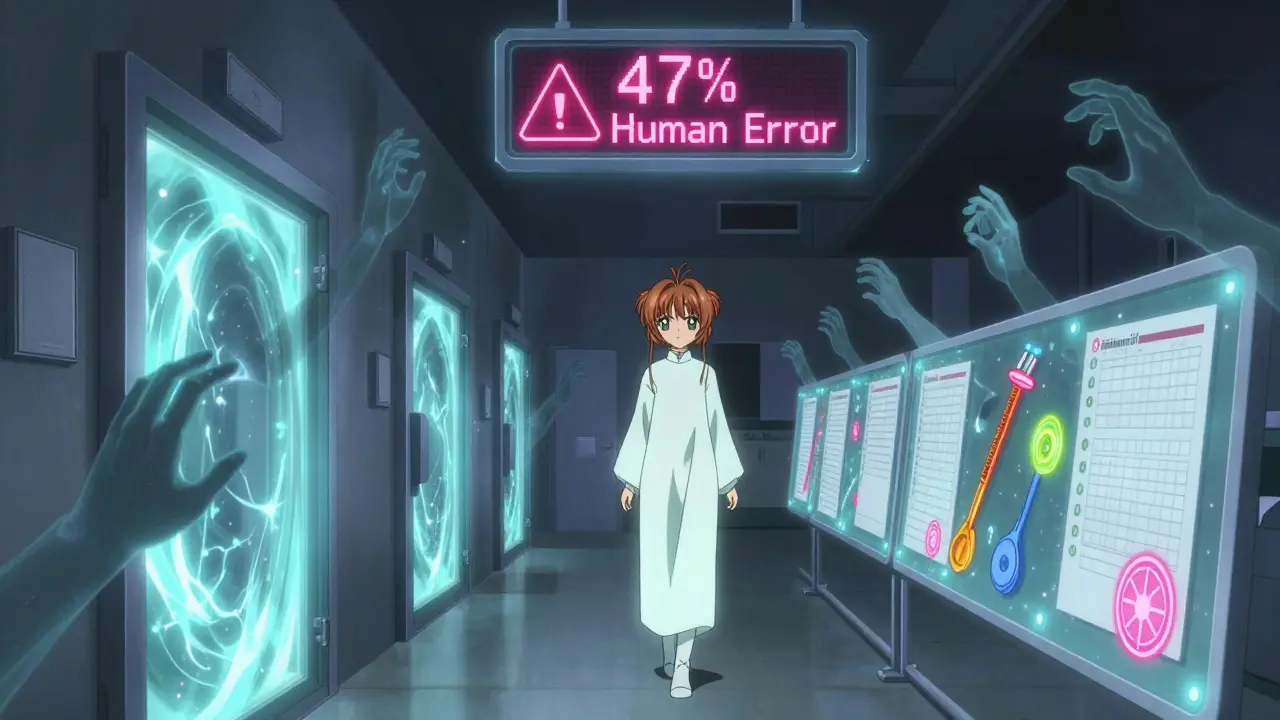
What’s Next? The 2025 Deadline
The FDA’s new draft guidance, released in September 2023, requires all generic drug makers to use health-based exposure limits (HBELs) by 2025. This means every product, even low-risk ones, must have a scientifically calculated safety threshold for cross-contamination. Facilities will need to validate cleaning for each one. The cost? Around $1.2 million per site. For small manufacturers, that’s a make-or-break investment. The Generic Pharmaceutical Association says many won’t survive unless they adapt. But those that do will see benefits: 40% faster regulatory approvals, fewer batch rejections, and better trust from regulators and customers. New tech is helping. Waterless cleaning systems, tested by GSK, cut utility costs by 22%. Continuous manufacturing, now guided by ICH Q13, reduces handling and contamination points. Sustainability and safety are no longer separate goals.What You Can Do
If you work in a generic drug facility, start here:- Map every cleaning process. What’s the limit? How do you measure it? Who verifies it?
- Track gowning compliance. Use video audits or swipe tests. If compliance drops after 8 hours, change shift patterns.
- Invest in real-time monitoring-even one sensor on a critical line can catch problems early.
- Train staff on risk, not just rules. Show them what 1 nanogram looks like. Make it real.
- Use color-coded tools. One color for each product line. No more mix-ups.
Why This Matters Beyond the Factory
Generic drugs make up 90% of all prescriptions in the U.S. But they’re only 22% of spending. That’s because they’re affordable. If contamination controls fail, those savings vanish. Recalls drive up prices. Trust erodes. Patients go without. This isn’t just about compliance. It’s about keeping medicine safe, reliable, and accessible. Every cleanroom, every sensor, every trained worker is part of a silent system that protects millions. The next pill you take? Its safety was fought for in a sterile room, by people who refused to let a single particle go unchecked.



Milad Jawabra
This is insane. One nanogram? That’s less than a grain of salt. And we’re trusting our lives to this? Someone’s gotta get fired over this. 😤
Renee Jackson
The rigor required in pharmaceutical manufacturing is extraordinary. Every protocol, every validation step, every sensor exists not for compliance-but for the patient who will never know how close they came to harm. This is sacred work.
Richard Elric5111
We speak of contamination as if it were a technical flaw, but it is, in truth, a metaphysical failure-a collapse of the boundary between the human and the sterile. The body does not distinguish between a pill and a prayer. If the pill is tainted, the faith is too.
Dean Jones
Let’s be real. The system is built on the assumption that humans are perfect machines. We’re not. We get tired. We forget. We cut corners. And when we do, the consequences aren’t abstract-they’re a child with a seizure because a cleaning cloth was reused. The fact that we’re still using manual swabs in 2025 is a scandal. Real-time monitoring should be mandatory, not optional. And if it costs $2 million? Then we pay. Because lives aren’t negotiable. We’ve spent billions on space missions and fighter jets. This? This is the most important tech investment we’ve ignored for decades.
Betsy Silverman
I work in a small clinic and I’ve seen patients panic when their generic med looks different. But this? This is the silent crisis behind that panic. We don’t talk about contamination because we’re scared of what we’d find. But ignorance isn’t safety. Knowledge is. Thanks for shining a light on this.
Ivan Viktor
So we’re spending $2 million to stop a speck of dust from killing someone… and yet we still let people smoke in public parks. Priorities, folks.
Jeff Card
I’ve been in pharma for 18 years. The biggest shift I’ve seen? From ‘clean enough’ to ‘proven clean.’ It’s not about checking boxes anymore. It’s about proving every single step works. And yeah, it’s expensive. But the alternative? A mother in Ohio losing her son because his blood pressure med turned toxic. That’s the real cost.
Aisling Maguire
I mean… if the FDA says 1 nanogram is dangerous, why are we still using cotton swabs? That’s like using a toothbrush to clean a nuclear reactor. Someone’s gotta get fired.
Deborah Dennis
This is why generics are a scam. You think you’re saving money? You’re gambling. And the casino? It’s a warehouse in India with a broken HEPA filter. I’ve seen the reports. It’s not a question of if-it’s a question of when. And the next recall? It’ll be worse.
Shivam Pawa
HBELs are necessary. But implementation requires scalability. For SMEs, the burden is disproportionate. We need tiered compliance frameworks-not one-size-fits-all mandates. Technology must be modular. Sensors must be affordable. Training must be contextual. Not all drugs are warheads.
Diane Croft
This is why we need more women in pharma engineering. Precision. Patience. Persistence. We don’t just make pills-we protect lives. Every sensor, every protocol, every trained worker matters.
Mariah Carle
We’re afraid of contamination… but are we more afraid of admitting how fragile our systems are? The truth is, we’ve built a civilization on invisible trust. That pill? It’s not medicine. It’s a promise. And promises break.
Raman Kapri
You claim contamination is a high-stakes challenge. But let’s not pretend this isn’t a regulatory theater. The real issue is profit margins. If contamination were truly the priority, we’d shut down every facility without real-time monitoring. Instead, we issue guidelines and call it progress.