Hypertension: What It Is, How It Affects You, and What You Can Do
When your blood pressure stays too high for too long, you have hypertension, a chronic condition where the force of blood against artery walls is consistently elevated, increasing risk for heart attack, stroke, and kidney damage. Also known as high blood pressure, it often has no symptoms—until it’s too late. About 1 in 3 adults in the U.S. has it, and many don’t even know. That’s why it’s called the silent killer. It doesn’t shout. It doesn’t hurt. It just creeps up, slowly straining your heart, arteries, and organs.
Managing hypertension, a condition that requires ongoing monitoring and often lifelong treatment isn’t just about popping a pill. It’s about timing, lifestyle, and support. For example, taking blood pressure meds at the right time of day can make a measurable difference in how well they work. And if you’re also on osteoporosis drugs like Fosamax, you need to know that magnesium supplements can block their absorption—so timing matters here too. medication compliance, the consistent, correct use of prescribed drugs is the biggest factor in keeping hypertension under control. Studies show people who stick to their regimen cut their risk of stroke by nearly half. Support groups and community programs don’t just offer sympathy—they reduce missed doses and hospital visits by giving people real, daily tools to stay on track.
It’s not just about the medicine. cardiovascular health, the overall condition of your heart and blood vessels depends on how you live. Weight, salt intake, stress, and sleep all play a role. Women, in particular, experience different symptoms and risks than men, and heart disease remains the top cause of death for women. Even if you’re not on meds yet, understanding how your body responds to pressure—how arteries stiffen, how kidneys struggle, how the heart thickens—helps you make smarter choices. You don’t need to be a doctor to know that if your blood pressure is high, you’re putting your life on delay.
The posts below cover exactly what you need to manage hypertension effectively: how meds interact with other drugs, why support makes a difference, how to talk to your doctor about your treatment, and what really works when the numbers won’t budge. No fluff. No guesswork. Just clear, practical info that helps you take back control.
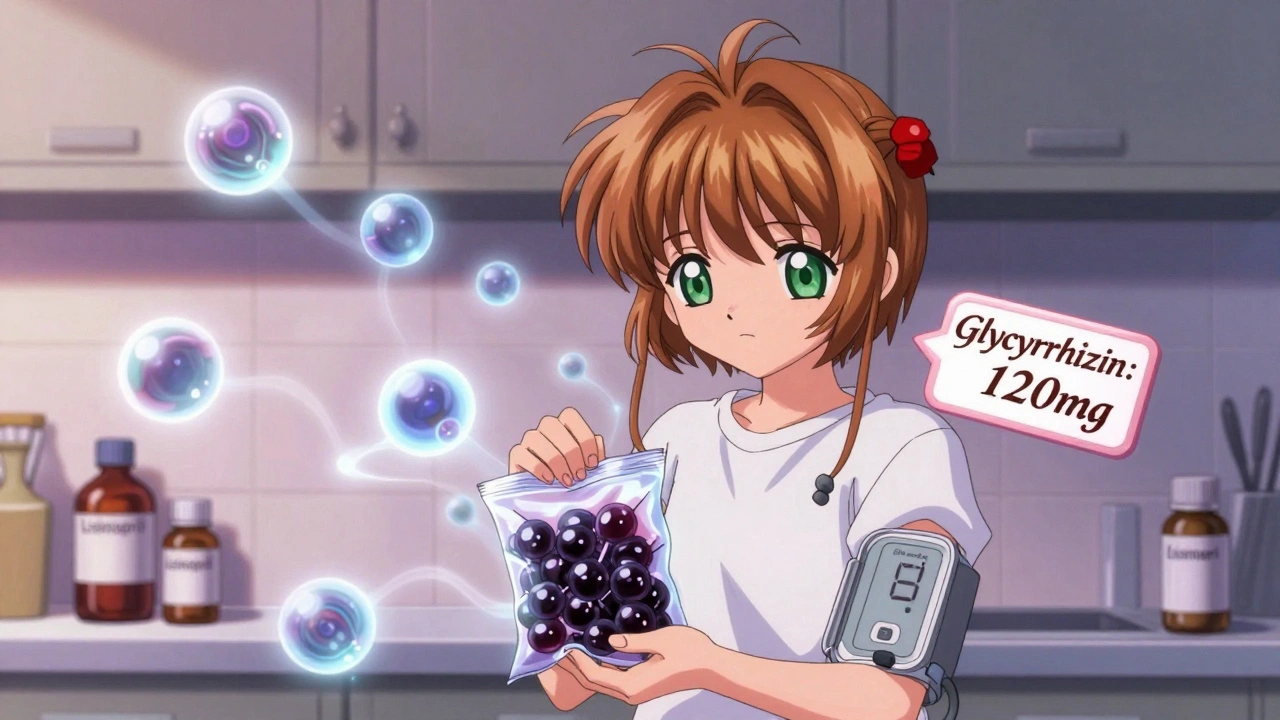
Licorice and Blood Pressure Medication Interactions: What You Need to Know
Licorice contains glycyrrhizin, which can raise blood pressure and lower potassium, making blood pressure medications less effective. Learn which products to avoid and what to do if you're on antihypertensives.