
Licorice and Blood Pressure Medication Interactions: What You Need to Know
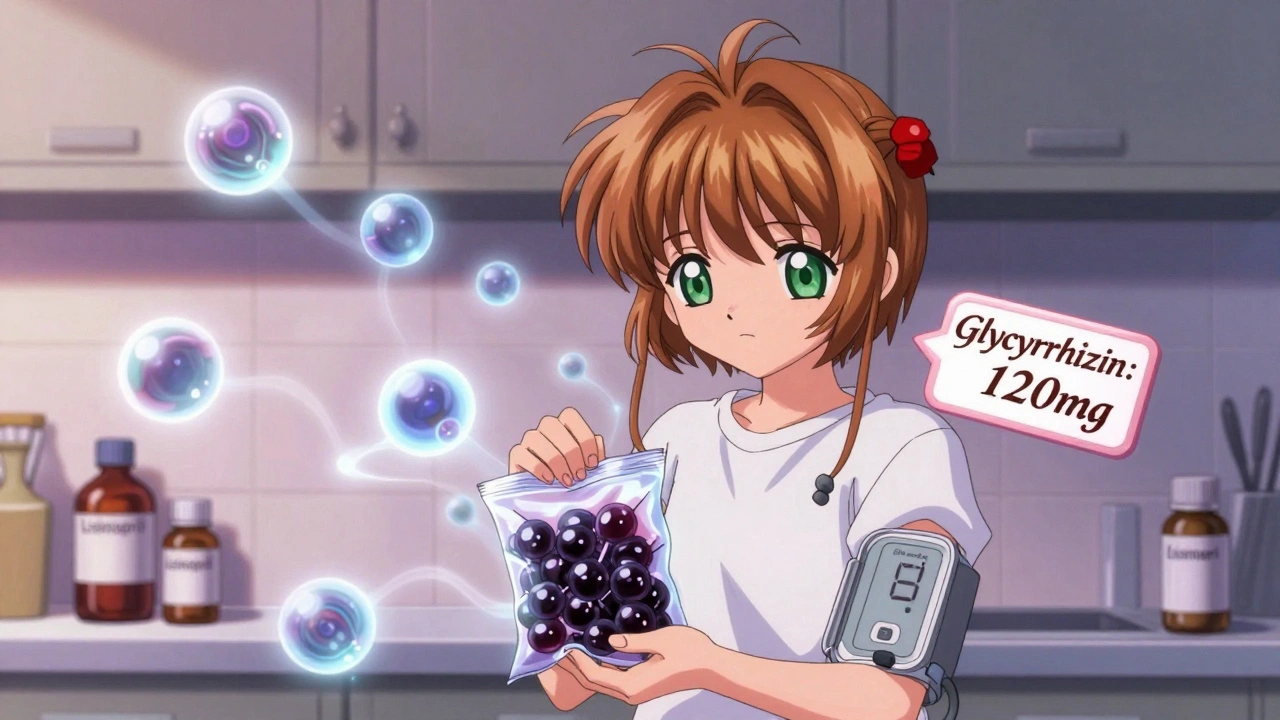
Many people enjoy licorice candy or drink licorice tea without thinking twice. But if you’re taking medication for high blood pressure, that sweet treat could be quietly undoing your treatment. The problem isn’t just about sugar-it’s about glycyrrhizin, the active compound in real licorice root. This natural substance interferes with how your body handles salt, water, and potassium, and it can make your blood pressure meds less effective-or even dangerous.
How Licorice Actually Raises Blood Pressure
Glycyrrhizin doesn’t just taste sweet-it acts like a hormone in your body. Specifically, it blocks an enzyme called 11β-HSD2, which normally keeps cortisol (a stress hormone) from mimicking aldosterone (a hormone that tells your kidneys to hold onto salt and water). When this enzyme is blocked, cortisol starts behaving like aldosterone. The result? Your kidneys hang onto more sodium and water, and you lose more potassium. That extra fluid increases your blood volume, which pushes your blood pressure up.
This isn’t theoretical. Studies show that people who regularly consume high amounts of licorice see their systolic blood pressure rise by an average of 5.45 mmHg and diastolic by 1.74-3.19 mmHg. That might sound small, but for someone already struggling to control hypertension, it’s enough to push them out of target range. In fact, this effect is why doctors now warn patients with high blood pressure to avoid licorice entirely.
Which Blood Pressure Medications Are Affected?
Almost all blood pressure medications can be undermined by licorice, but some combinations are especially risky.
- Diuretics like hydrochlorothiazide and furosemide already make you lose potassium. Add licorice, and your potassium levels can drop dangerously low-sometimes below 3.0 mmol/L. This raises your risk of muscle weakness, irregular heartbeat, and even cardiac arrest.
- ACE inhibitors and ARBs (like lisinopril or losartan) work by relaxing blood vessels and reducing fluid retention. Licorice does the opposite: it floods your system with fluid. The two cancel each other out, leaving your blood pressure uncontrolled.
- Potassium-sparing diuretics like spironolactone are designed to keep potassium up. But licorice forces potassium out anyway, making these drugs far less effective.
- Digoxin (Lanoxin), used for heart failure and irregular heart rhythms, becomes extremely dangerous with licorice. Low potassium lets digoxin bind too tightly to heart cells, triggering toxicity. There are documented cases of patients developing heart failure after taking licorice-containing supplements while on digoxin.
The Merck Manual and MSD Manual both list licorice as a high-risk interaction for all these medications. The risk isn’t just about one or two pieces of candy-it’s about daily, long-term use.
How Much Licorice Is Too Much?
The safe limit? Less than 100 mg of glycyrrhizin per day. That’s roughly the amount in 60-70 grams (about 2.1-2.5 ounces) of traditional black licorice candy. For context, a single large bag of licorice twists might contain more than that. And it doesn’t take long-effects can show up after just two to four weeks of daily consumption.
But here’s the catch: not all licorice products contain glycyrrhizin. Many candies sold today-especially red licorice-are flavored with anise or artificial flavors and are safe. The real danger comes from:
- Traditional black licorice candy (especially imported brands)
- Licorice root tea
- Herbal supplements labeled as “licorice root” or “Glycyrrhiza glabra”
- Some cough syrups and digestive aids
Always check the ingredients. If it says “licorice root extract” or “glycyrrhizin,” assume it’s active. And don’t assume “natural” means safe-natural doesn’t mean harmless when it comes to drug interactions.
Who’s at Highest Risk?
Not everyone reacts the same way. Some people can eat a little licorice without issue. But others are much more sensitive:
- People over 60-aging kidneys are less able to handle the salt and potassium shifts.
- Women-studies show higher sensitivity, possibly due to hormonal differences.
- Those with existing hypertension-even small increases in blood pressure can be dangerous.
- People with heart disease or kidney problems-their bodies are already under stress.
Medsafe (New Zealand’s medicines regulator) and the Merck Manual both point out that these groups can experience serious side effects even below the 100 mg/day threshold. If you fall into one of these categories, the safest choice is to avoid licorice completely.
Signs You Might Be Having a Reaction
Many people don’t realize they’re having a reaction until it’s serious. Watch for these symptoms:
- Unexplained rise in blood pressure (5 mmHg or more systolic)
- Muscle weakness or cramps
- Fatigue or lethargy
- Swelling in ankles or legs (edema)
- Irregular heartbeat or palpitations
- Numbness or tingling in hands or feet
If you’re on blood pressure meds and notice any of these, stop licorice immediately and check your potassium levels. A simple blood test can reveal if your potassium has dropped below 3.5 mmol/L-a red flag. Doctors can also test your cortisol-to-cortisone ratio to confirm licorice-induced effects.
What Should You Do?
If you take blood pressure medication:
- Stop eating black licorice candy unless you’re certain it’s glycyrrhizin-free.
- Check supplement labels-if it says “licorice root,” skip it.
- Ask your pharmacist if any of your current supplements contain licorice.
- Monitor your blood pressure daily if you’ve consumed licorice recently.
- Get a potassium blood test if you’ve been using licorice regularly and have uncontrolled hypertension.
There’s no need to panic if you’ve had a few pieces. But if you’ve been eating licorice daily for weeks, it’s time to cut it out and talk to your doctor. Your blood pressure meds can’t work properly if your body is fighting against them.
The Bigger Problem: No Labels, No Warnings
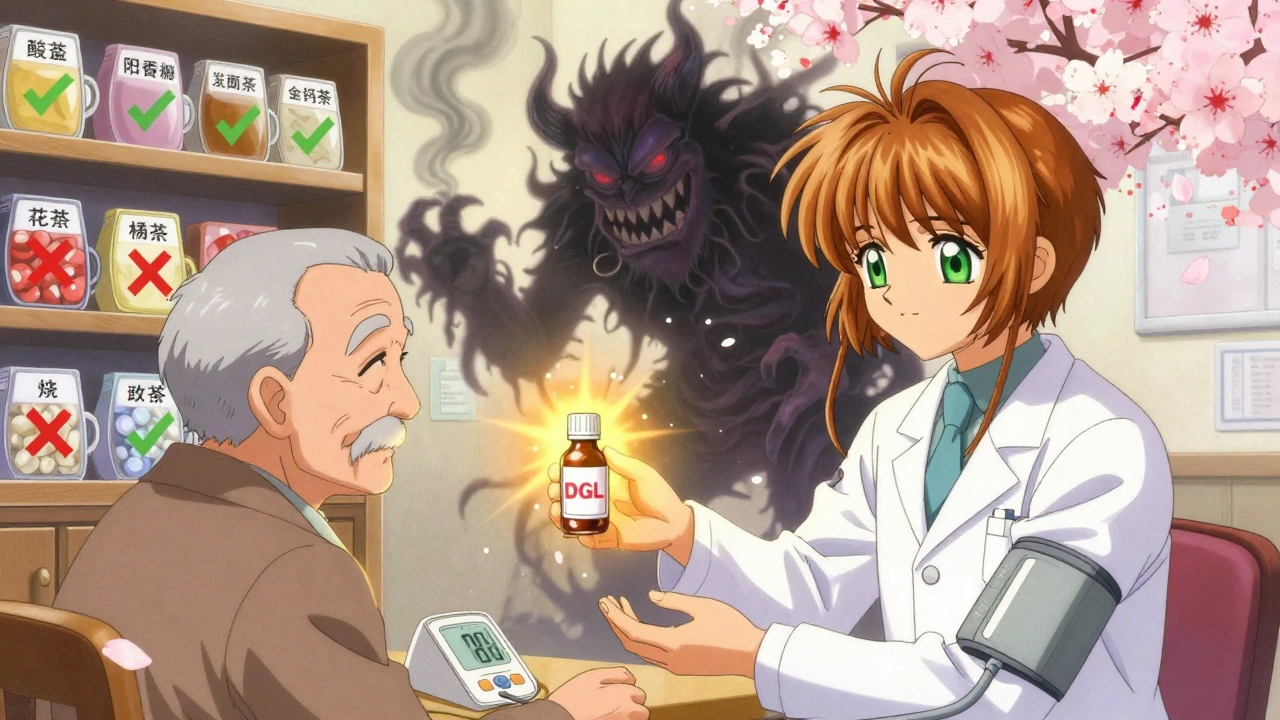
Here’s the frustrating part: in many countries, including the U.S., there’s no legal requirement for licorice products to list glycyrrhizin content. A candy bar might say “licorice flavor” but still contain real licorice root extract. A herbal tea bag might say “natural licorice root” with no dosage info. Supplements? Often just labeled as “licorice root” with no standardization.
This lack of labeling creates hidden risks. A patient might think they’re safe because they’re not eating candy-but they’re drinking licorice tea every morning and taking a supplement for “digestive support.” Neither product warns them about blood pressure risks.
Until regulations change, the only way to stay safe is to assume anything labeled “licorice root” is active-and avoid it if you’re on blood pressure meds.
What About Deglycyrrhizinated Licorice (DGL)?
Yes, there’s an alternative: DGL, or deglycyrrhizinated licorice. This version has the glycyrrhizin removed, so it doesn’t affect blood pressure or potassium. It’s commonly used for heartburn and stomach ulcers. If you want the soothing benefits of licorice without the risks, look for DGL products. Just make sure the label says “deglycyrrhizinated”-if it doesn’t, assume it’s the risky kind.
Bottom Line
Licorice isn’t just a sweet snack. For people on blood pressure medication, it’s a silent saboteur. It raises blood pressure, lowers potassium, and can make your meds useless-or even dangerous. The science is clear: if you’re managing hypertension, avoid real licorice. Stick to DGL if you need the herbal benefits, and always read labels. Your heart will thank you.
Can I eat licorice candy if I’m on blood pressure medication?
Only if it’s confirmed to be glycyrrhizin-free. Most black licorice candy contains enough glycyrrhizin to raise blood pressure and lower potassium. Red licorice and many modern brands use anise flavor instead and are generally safe. Always check the ingredients-look for "licorice root" or "glycyrrhizin" and avoid it if present.
How long does it take for licorice to affect blood pressure?
Effects can appear within days to weeks of daily consumption. Studies show measurable increases in blood pressure and drops in potassium after just two to four weeks of consuming more than 100 mg of glycyrrhizin per day. The longer you consume it, the more pronounced the effects become.
Does licorice interact with all blood pressure medications?
Yes. Licorice works by increasing sodium and water retention and lowering potassium, which directly opposes the action of all major classes of blood pressure medications-including diuretics, ACE inhibitors, ARBs, calcium channel blockers, and beta-blockers. It’s especially dangerous with digoxin and potassium-wasting diuretics.
What are the signs of licorice toxicity?
Symptoms include unexplained high blood pressure, muscle weakness, fatigue, swelling in the legs, irregular heartbeat, low potassium levels, and in severe cases, heart failure or flaccid paralysis. If you’re on blood pressure meds and notice any of these, stop licorice and get a blood test for potassium and cortisol levels.
Is DGL licorice safe for people with high blood pressure?
Yes. DGL (deglycyrrhizinated licorice) has the glycyrrhizin removed, so it doesn’t affect blood pressure or potassium. It’s commonly used for stomach issues and is safe for people on blood pressure medication. Always confirm the product is labeled "deglycyrrhizinated"-if it’s not, it may still contain harmful levels of glycyrrhizin.
Why don’t licorice products have warning labels?
In many countries, including the U.S., there’s no legal requirement for licorice products to list glycyrrhizin content or include health warnings. Supplements and candies often don’t disclose how much licorice root they contain. This creates a hidden risk, especially for people taking blood pressure meds who assume "natural" means safe.


Alicia Marks
Just learned this and immediately threw out my licorice stash. So glad I read this before it was too late!
Jack Dao
Of course people don’t read labels. That’s why we’re all dying of hypertension and eating candy like it’s therapy. 🙄
Rebecca M.
So let me get this straight… I can’t have my ‘stress relief’ licorice tea, but I can have 3 energy drinks and a pack of cigarettes? Thanks, medicine. 🙃
Paul Keller
This is one of those rare cases where the science is not just solid-it’s terrifyingly consistent. Glycyrrhizin doesn’t just interfere with medication; it fundamentally hijacks your endocrine signaling pathways. The fact that this isn’t regulated like a controlled substance is a public health failure. I’ve seen patients with eGFRs under 40 and potassium levels at 2.8 because they thought ‘natural’ meant ‘harmless.’ It doesn’t. It means ‘unregulated.’ If you’re on any antihypertensive, treat licorice root like you would cocaine: avoid it unless prescribed by a physician who knows exactly what they’re doing.
Shannara Jenkins
My grandma used to make licorice root tea for her digestion. I had no idea it could be dangerous. I’m going to check her cabinet tonight and swap it out for peppermint. Thanks for the heads-up-you just might’ve saved someone’s heart ❤️
Steve World Shopping
Pharmacokinetic interference via 11β-HSD2 inhibition is a well-documented CYP3A4-mediated endocrine disruption. Licorice root glycyrrhizin induces pseudohyperaldosteronism. Avoid. Period.
Steve Enck
The real tragedy here is not the licorice-it’s the societal delusion that wellness can be commodified without consequence. We treat herbs like candy because we’ve outsourced responsibility to the market. The FDA doesn’t regulate because profit > prevention. You think you’re choosing ‘natural’-but you’re choosing ignorance, packaged in brown paper bags labeled ‘traditional remedy.’ The body doesn’t care if it’s organic. It only cares about receptor binding. And glycyrrhizin binds like a thief in the night.
Jay Everett
Just had a bag of those black licorice twists last week. 😳 I’m not even kidding-I’ve been feeling weirdly tired and my ankles are puffy. I’m getting my potassium checked tomorrow. Thanks for the wake-up call, OP. Also, DGL is a total lifesaver for my acid reflux-no drama, no side effects. If you want licorice flavor without the chaos, DGL is the way to go 🙌
मनोज कुमार
DGL safe. Licorice root bad. Read labels. Stop eating candy. Done.