Glycyrrhizin: What It Is, How It Works, and Why It Matters in Medicine
When you hear glycyrrhizin, a bioactive compound found in licorice root that has been studied for its anti-inflammatory and antiviral properties. Also known as glycyrrhizic acid, it’s not just a flavoring agent in candy—it’s a molecule with real biological effects that show up in clinical research and traditional medicine alike. This compound is what makes licorice root useful in herbal remedies, and it’s why scientists keep looking at it for conditions like hepatitis, liver damage, and even some viral infections.
Glycyrrhizin doesn’t work alone. It often shows up alongside licorice root, a plant used for centuries in Chinese and Ayurvedic medicine to soothe digestion and reduce inflammation, and its effects are tied to how the body processes it. Studies suggest it can help lower liver enzyme levels in people with chronic hepatitis, which is why it’s been tested as a supportive treatment. But it’s not harmless—too much can cause high blood pressure, low potassium, or even fluid retention. That’s why it’s not something you just start taking without knowing the dose or your health history.
It also interacts with other drugs. If you’re on blood pressure meds, diuretics, or steroids, glycyrrhizin might make side effects worse. It’s not just about avoiding licorice candy—some supplements, teas, and even cough syrups contain concentrated forms. The anti-inflammatory, a property that reduces swelling and immune system overactivity effects of glycyrrhizin are useful, but they’re a double-edged sword. Too much suppression can leave you vulnerable, and too little won’t help. That’s why the difference between a helpful dose and a harmful one is so thin.
People looking at natural options for liver support, chronic inflammation, or even herpes outbreaks have turned to glycyrrhizin because the science is there—not hype. But it’s not a magic bullet. The posts below cover real cases: how it’s used in combination with other treatments, what the risks are, and how to tell if what you’re taking actually contains it. You’ll find guides on herbal supplements that include licorice, warnings about drug interactions, and even how it compares to synthetic alternatives. There’s no fluff here—just what you need to know before you take it, give it, or recommend it.
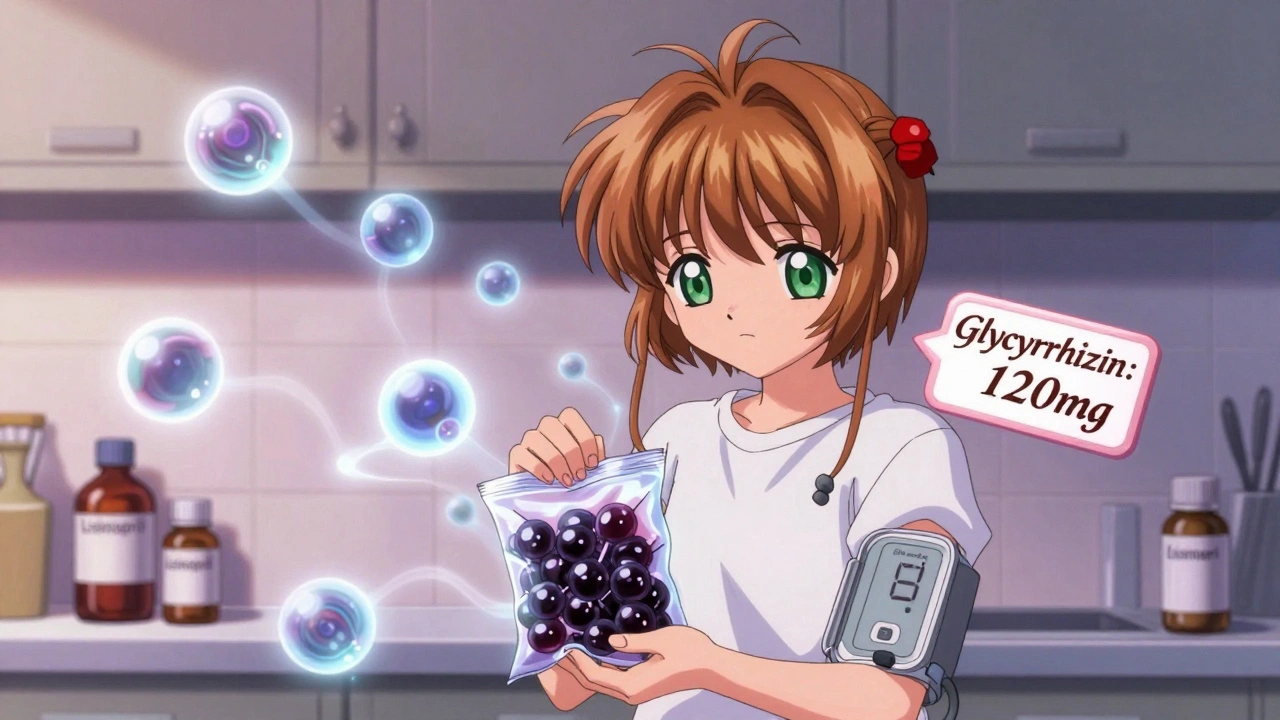
Licorice and Blood Pressure Medication Interactions: What You Need to Know
Licorice contains glycyrrhizin, which can raise blood pressure and lower potassium, making blood pressure medications less effective. Learn which products to avoid and what to do if you're on antihypertensives.