Insulin Resistance: What It Is, How It Affects Your Body, and What You Can Do
When your body’s cells stop responding properly to insulin resistance, a condition where cells fail to absorb glucose from the bloodstream despite normal or high insulin levels. Also known as insulin insensitivity, it’s the silent driver behind most cases of type 2 diabetes, a chronic condition where the body can’t regulate blood sugar effectively. Without action, insulin resistance doesn’t just raise blood sugar—it fuels weight gain, high blood pressure, and heart disease.
This isn’t just about sugar. metabolic syndrome, a cluster of conditions including belly fat, high triglycerides, and elevated blood pressure that often appear together with insulin resistance is your body’s warning sign. And prediabetes, the stage before full-blown diabetes where blood sugar is higher than normal but not yet diabetic is where most people first notice something’s off—fatigue after meals, constant hunger, or slow healing cuts. These aren’t random symptoms. They’re linked. Insulin resistance forces your pancreas to pump out more insulin, which eventually wears it down. That’s when blood sugar climbs, and the real damage starts.
What makes this worse? Sitting too long, eating refined carbs, and not moving enough. But the good news? It’s reversible. Many people reverse insulin resistance by changing their diet, moving more, and losing even a small amount of weight. The posts below cover what works—from how certain medications interact with your metabolism, to why support groups help people stick to lifestyle changes, and how supplements like magnesium might affect your blood sugar control. You’ll find real, practical advice on managing what’s happening inside your body, not just treating the numbers on a lab report.
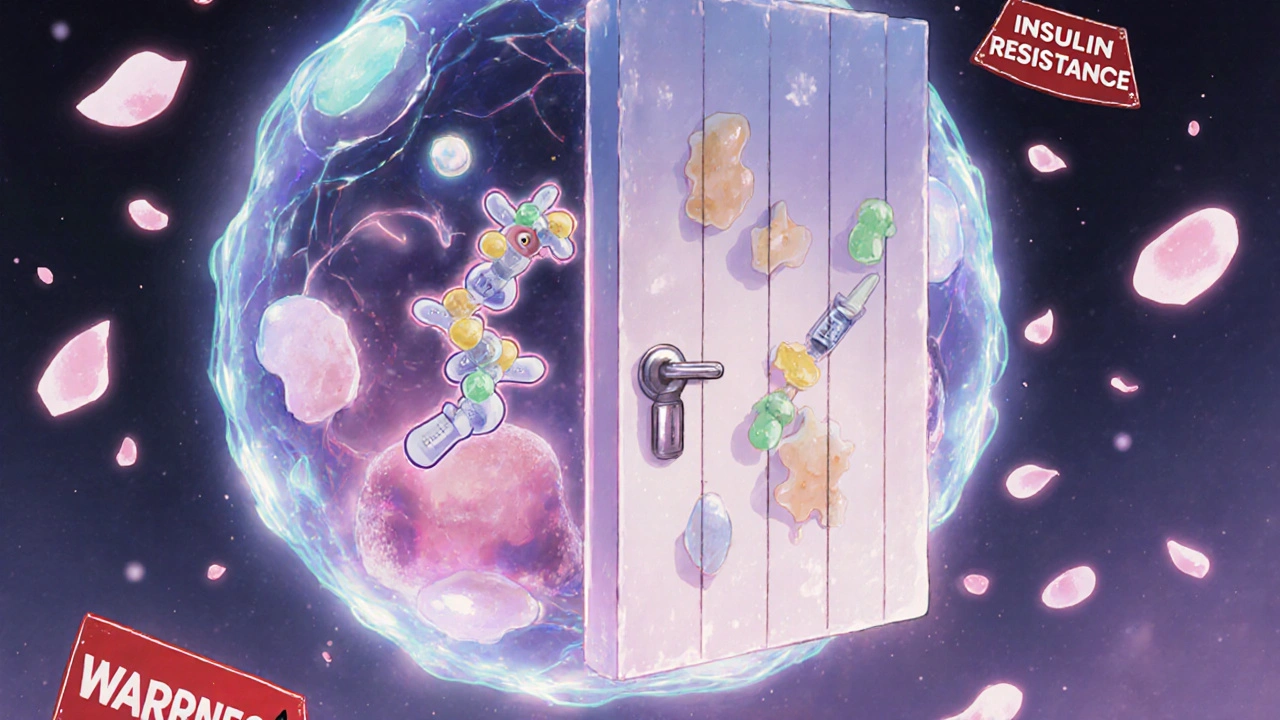
Type 2 Diabetes: Understanding Insulin Resistance and Metabolic Syndrome
Type 2 diabetes is driven by insulin resistance and metabolic syndrome-two silent conditions that develop years before diagnosis. Learn how they connect, what actually causes them, and how to reverse them with science-backed lifestyle changes.