
Pomegranate Juice and Medication Metabolism: What to Consider
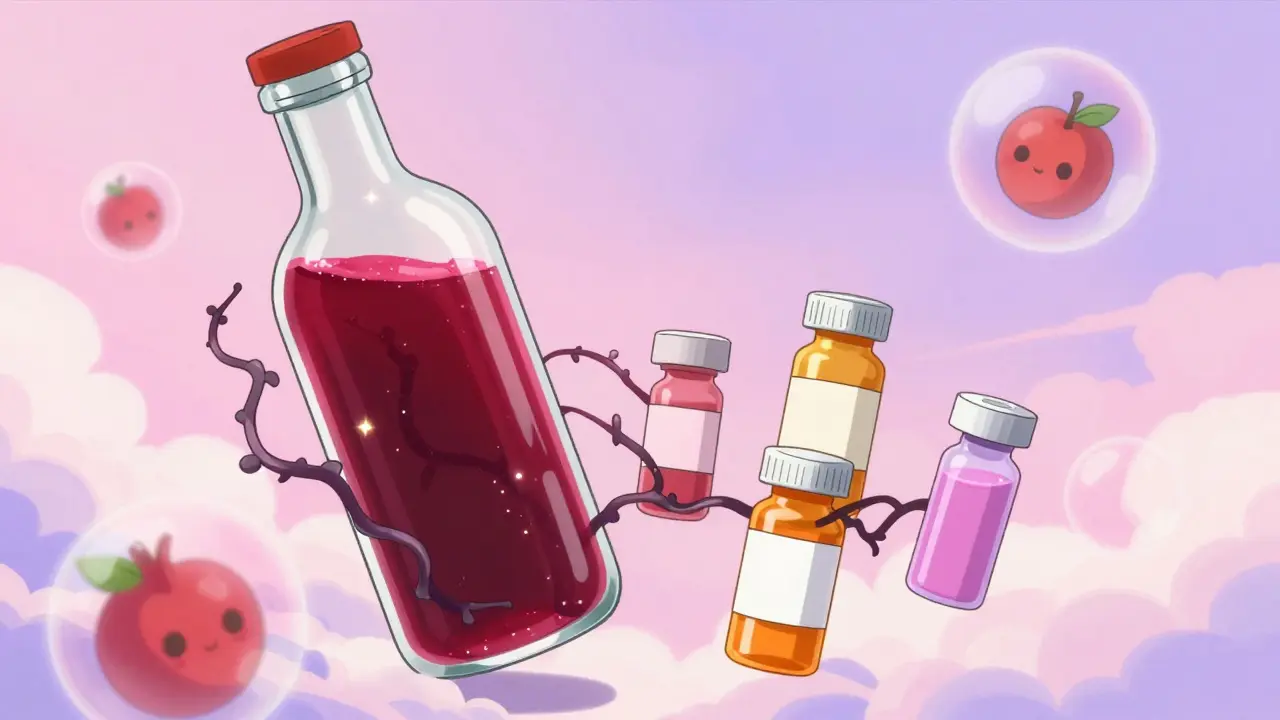
You might reach for that bottle of deep red pomegranate juice thinking you're doing your heart a favor. It's packed with antioxidants, right? But if you are taking prescription medication, that daily glass could actually be messing with how your body processes those drugs. This isn't just theory anymore. We are looking at real data from medical journals and case reports that show exactly where the risk lies.
It feels counterintuitive to hear that a natural fruit drink might cause problems with essential medicine. Yet, the science behind Pomegranate Juice has been debated heavily since around 2010. Back then, publications like Consumer Reports started flagging potential dangers, citing research from institutions like the University of California, Irvine. They found that compounds in the juice can inhibit liver enzymes responsible for breaking down drugs.
| Risk Level | Varies by medication type; highest for blood thinners |
| Mechanism | Inhibits CYP3A4 and CYP2C9 liver enzymes |
| Daily Limit | Recommendation often cites 8 ounces maximum |
| Safety Tip | Maintain consistent intake patterns rather than sudden changes |
The Mechanism Behind the Interaction
To understand why this happens, we have to look inside your liver. When you swallow a pill, your body needs to process it before it works or before it exits your system. This processing happens mostly thanks to a family of proteins called Cytochrome P450 Enzymes. According to data from the U.S. Food and Drug Administration's Center for Drug Evaluation and Research, these enzymes handle roughly 60% of all clinically used drugs. Two specific versions, CYP3A4 and CYP2C9, are the heavy lifters here.
Here is the catch: certain chemicals in pomegranate juice act like speed bumps for these enzymes. Specifically, polyphenolic compounds including punicalagins and ellagitannins-which make up about 50% of the juice's antioxidant capacity-can physically block these enzymes from doing their job. If the enzyme is blocked, the medication stays in your bloodstream longer than intended. For a normal drug, this might just mean stronger side effects. For a drug with a narrow therapeutic index, where the difference between healing and harming is tiny, it becomes dangerous.
Lab Studies Versus Real Human Results
This is where things get complicated. You will find a lot of conflicting headlines online. Some sources say "Never mix," while others say "It's perfectly safe." Why the confusion? It comes down to how the studies were done. Early research was mostly in vitro, meaning they tested the juice against the enzymes in a petri dish, not in people. These lab tests showed significant inhibition-sometimes blocking CYP3A4 activity by 30%.
However, when researchers moved to human volunteers, the story changed. A pivotal open-label study published in the Journal of Clinical Pharmacology by Misaka S. et al. in 2014 gives us the clearest picture so far. They had 12 healthy Japanese volunteers drink 330 mL of pomegranate juice daily for two weeks. They tracked midazolam levels, a drug processed by CYP3A4. The result? There was no statistically significant change in how the body handled the drug. The geometric mean ratios for exposure were nearly 1.0, which indicates clinical insignificance.
So, does this mean it's totally safe? Not entirely. Another set of data suggests that individual biology plays a huge role. While group averages showed no effect, individual variations in genetics could make some people more sensitive. A 2014 article in The Journal of Clinical Psychiatry highlighted this discrepancy, noting that laboratory data is insufficient grounds for broad clinical decisions without considering patient-specific variables.

High-Risk Medications to Watch
If you are on standard vitamins or over-the-counter pain relief, you likely don't need to worry. But there is a specific subset of prescription drugs where caution is mandatory. The most prominent concern involves anticoagulants, specifically Warfarin.
Warfarin has a notoriously narrow window of effectiveness. You measure this using something called the International Normalized Ratio, or INR. If your INR is too low, you risk clotting. Too high, and you risk bleeding internally. UK regulators, specifically the Medicines and Healthcare products Regulatory Agency, note that pomegranate juice may decrease warfarin metabolism by 15-25%. This could spike INR values by 0.5 to 1.5 units. One documented case reported an INR jump from 2.5 to 4.1 after regular consumption.
Beyond blood thinners, other categories warrant attention:
- ACE Inhibitors: Drugs like benazepril, enalapril, and lisinopril are used for blood pressure. An additive effect could theoretically drop your blood pressure too low.
- Statins: Similar to how grapefruit interacts with cholesterol meds, pomegranate might impact atorvastatin levels.
- Antidepressants & AIDS Drugs: Consumer Reports flagged these in 2010 due to their reliance on CYP pathways.
WebMD's medication interaction checker lists pomegranate juice as having a 'moderate interaction' with 17 specific medications. However, a 2022 study in the Journal of Pharmacy Practice surveyed over 1,200 patients taking chronic meds. Only 4.7% experienced documented adverse effects linked to pomegranate. This suggests that while the risk exists, it isn't universal.
Pomegranate vs. Grapefruit: Is It Really Different?
You might know about the grapefruit warning. The FDA explicitly warns against mixing grapefruit juice with certain statins because it can increase blood levels by up to 15-fold. Many people assume pomegranate behaves exactly the same way, but the data shows a nuance.
Grapefruit contains furanocoumarins, which permanently destroy the enzyme until new ones grow back. Pomegranate seems to work differently, potentially through reversible inhibition or competing for binding sites. This makes the interaction less severe but more variable depending on timing. A 2023 systematic review in the Journal of Dietary Supplements concluded that while lab evidence strongly suggests inhibition, human clinical evidence remains inconsistent compared to the robust grapefruit data. Most experts agree that if grapefruit is a 'stop sign,' pomegranate is more like a 'yellow light.'
| Juice Type | Primary Enzyme Affected | Severity (Lab) | Clinical Evidence | Common Warning Status |
|---|---|---|---|---|
| Grapefruit Juice | CYP3A4 | High | Strong / Well-documented | Explicit FDA Warnings |
| Pomegranate Juice | CYP2C9 / CYP3A4 | Medium | Contradictory / Case-based | Monitoring Recommended |
| Seville Orange Juice | CYP3A4 | High | Strong | Treat as Grapefruit |
Practical Steps for Safe Consumption
If you love the drink and you are on a stable medication regimen, you don't necessarily need to quit cold turkey. Sudden changes in diet can sometimes trigger worse fluctuations than steady consumption. The American Heart Association's 2021 Nutrition Guidance advises maintaining consistent consumption patterns. Abruptly stopping pomegranate juice can shift your enzyme activity just as much as starting it, causing your INR to crash if you are on warfarin.
Here is a checklist based on current guidance from the Mayo Clinic and the European Medicines Agency:
- Limit Quantity: Try to stay under 8 ounces (approx. 240 mL) per day.
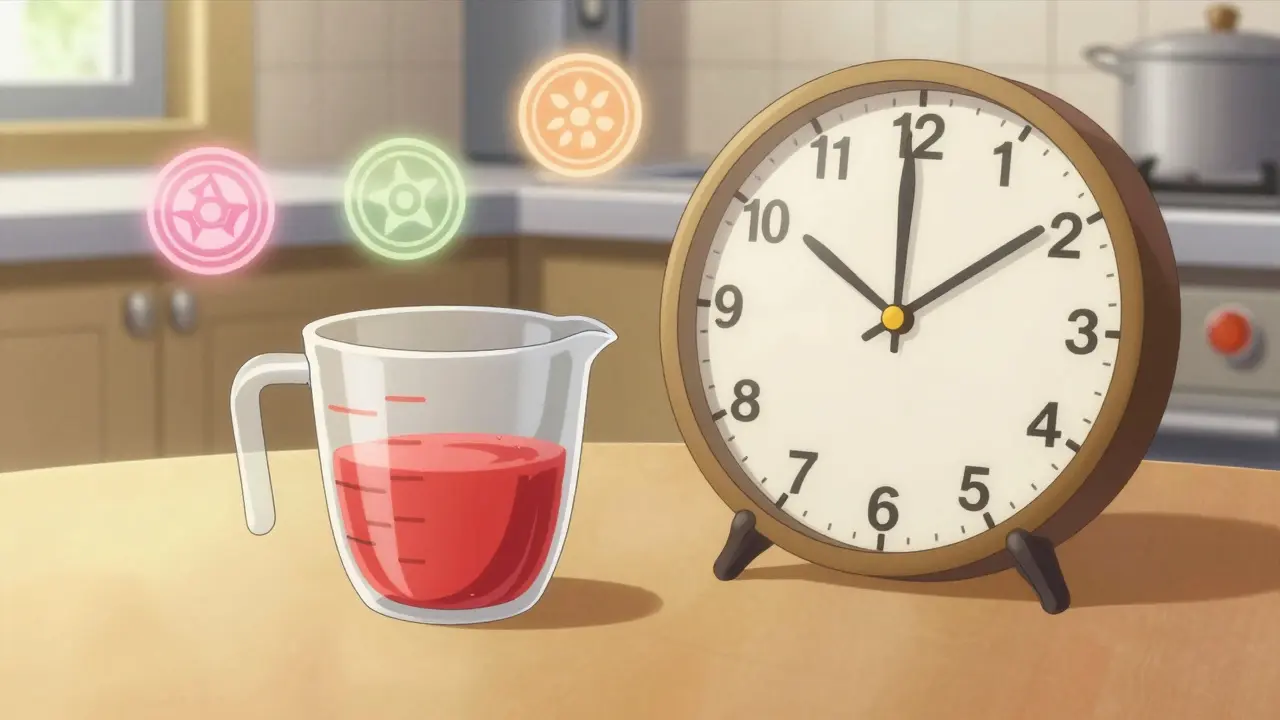
- Timing Matters: The University of North Carolina Eshelman School of Pharmacy recommends waiting at least 2 hours between taking your medication and drinking the juice to minimize overlap in the gut.
- Monitor Closely: If you start or stop drinking regularly, schedule extra blood checks. For warfarin users, this means checking your INR sooner than usual.
- Check Labels: Many supplements contain concentrated pomegranate extracts, which might bypass the dilution of juice and present higher risks.
- Consult Your Pharmacist: Bring your full list of prescriptions to a consultation, not just the main ones.
There is ongoing research too. The National Center for Complementary and Integrative Health funded a study examining interactions with 12 common medications, expected to yield preliminary genetic susceptibility data in Q2 2025. This might help clarify who is genetically prone to these reactions. Until then, treating yourself with caution is the best approach.
Can I ever drink pomegranate juice safely?
Yes, for most people, moderate consumption (under 8 oz/day) is considered safe. The key is consistency; avoid large changes in your intake volume to prevent sudden spikes in drug levels.
Which medicines interact with pomegranate juice?
The highest risk is with Warfarin and other blood thinners. Risks are lower for most antibiotics and simple painkillers. Check with your pharmacist about ACE inhibitors and statins.
Is pomegranate juice worse than grapefruit juice?
Generally no. Grapefruit has a more permanent and severe interaction with liver enzymes. Pomegranate is often milder, though still requires monitoring for sensitive individuals.
How soon does the interaction happen?
Changes in drug metabolism usually appear within days of changing your routine. Monitor your INR or blood pressure closely 3-5 days after introducing the juice.
Do pomegranate pills have the same risk?
Potentially yes. Concentrated extracts often have higher doses of the active compounds punicalagin and ellagitannin, which could increase the chance of interference compared to diluted juice.



Beth LeCours
Just stick to water instead please.
Sam Hayes
well this makes sense and i agree mostly about the timing part
simran kaur
The medical establishment wants you to depend on their system entirely. They flag natural remedies to push synthetic alternatives that cost more money.
Jenna Carpenter
why do they not put disclaimers on bottles thier labels ar liek nothing helpful
Mark Zhang
It is really good to know this before we get hurt. Taking care of ourselves is something we all need to remember daily. Small steps help prevent big problems later on.
Ace Kalagui
This information really hits home for many of us. We trust nature to fix our bodies every day. Yet the lab reports show different outcomes sometimes. Enzyme blocking sounds very scary to read about. My uncle takes warfarin for his heart condition now. He drinks fruit juice but never mixes them together. Timing matters a lot when swallowing those pills too. Two hours is actually a decent waiting period mostly. Consistency keeps the levels steady in our blood flow. Changing habits suddenly creates new risks for everyone. Doctors suggest monitoring closely if you start new things. Grapefruit warnings are stronger but pomegranate still counts here. Supplements contain concentrated extracts which change everything else. Pills bypass the dilution factor found in liquid forms easily. Safety remains the primary goal for long term health plans. Always consult your pharmacist regarding specific drug lists available.
Vicki Marinker
One cannot ignore the statistical variance presented here despite the lengthy explanation.
Aysha Hind
Those chemical blockers are sinister little monsters hiding in red juice. Big food companies know this danger yet they smile at customers. Your gut feels unsafe when you read such reports.
Lawrence Rimmer
Truth is an elusive beast that hides behind data sheets and clinical trials we cannot verify personally.
Hudson Nascimento Santos
The interplay between biology and consumption reveals deeper philosophical questions about control and autonomy.
Brian Shiroma
Oh great another thing to fear from my morning glass.
Rachelle Z
This is crazy!!! 😱🍹💊 Stop drinking juice!!! Be careful friends!!!!
Branden Prunica
I felt sick after reading this report honestly. My whole life is being questioned now regarding what is safe.