
DOAC Interactions with Other Medications: What You Need to Know
When you’re on a blood thinner like apixaban, rivaroxaban, or dabigatran, even a small change in your medication routine can be risky. These drugs-called DOACs (Direct Oral Anticoagulants)-are designed to prevent clots without the constant blood tests that warfarin requires. But they’re not magic bullets. Many common medications, supplements, and even over-the-counter painkillers can interfere with how DOACs work, pushing your risk of bleeding or clotting out of balance.
Why DOAC Interactions Matter More Than You Think
DOACs are popular because they’re easier to use than warfarin. No weekly INR checks. Fewer food restrictions. But that simplicity can be misleading. Most people on DOACs are older and managing multiple conditions-high blood pressure, diabetes, heart failure. That means they’re often taking five or more other drugs. Each one adds a chance for interaction.
Unlike warfarin, which reacts to many things, DOACs have narrow interaction profiles. But when those interactions happen, they’re powerful. Too much DOAC in your system? Risk of bleeding. Too little? Clots can form-leading to stroke, heart attack, or pulmonary embolism. A 2020 review from the American College of Cardiology found that unrecognized drug interactions are a leading cause of incorrect DOAC dosing, and that’s directly tied to serious complications.
How DOACs Are Processed: The CYP3A4 and P-gp Connection
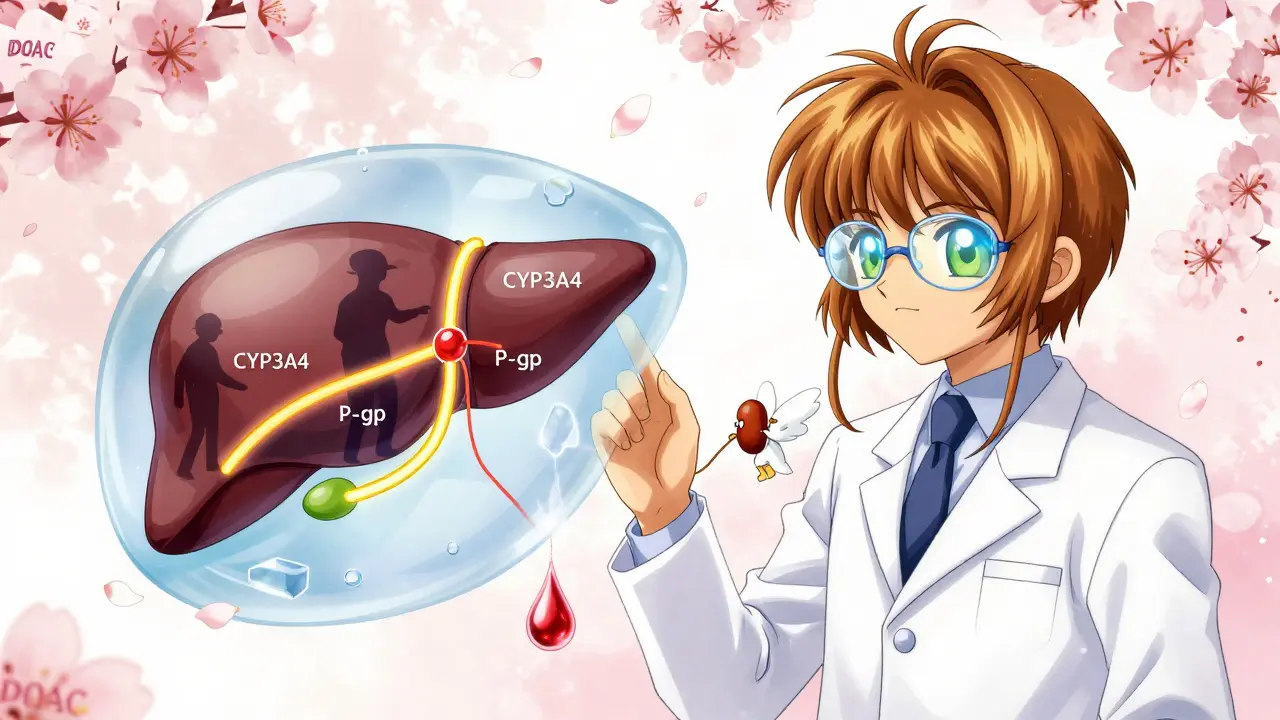
Most DOACs are broken down by two key systems in your body: the CYP3A4 enzyme and the P-gp transporter. Think of them like security checkpoints in your liver and intestines. If something blocks or speeds up these checkpoints, the DOAC levels in your blood change.
- Apixaban: About 20-25% processed by CYP3A4; heavily affected by P-gp.
- Rivaroxaban: Half of it goes through CYP3A4; also relies on P-gp.
- Dabigatran: Almost entirely handled by P-gp. No CYP3A4 involvement.
- Edoxaban: Mainly P-gp, minor CYP3A4 role.
- Betrixaban: Like dabigatran-P-gp dependent.
That means if you take a drug that blocks P-gp, dabigatran and edoxaban levels can spike. If you take something that speeds up CYP3A4, rivaroxaban and apixaban may not work at all.
Top Medications That Interfere with DOACs
Here are the most common culprits you’ll likely encounter:
1. Antiarrhythmics: Dronedarone and Amiodarone
Dronedarone is a strong P-gp inhibitor. That’s bad news for dabigatran and rivaroxaban. Guidelines say don’t combine them. For edoxaban, the dose must be cut in half-to 30 mg daily. Amiodarone is a moderate P-gp blocker. It’s less dangerous but still needs monitoring. If you’re on amiodarone and a DOAC, watch for bruising, dark stools, or dizziness.
2. Blood Pressure Meds: Diltiazem and Verapamil
These calcium channel blockers are common for heart rhythm and hypertension. Diltiazem moderately blocks CYP3A4 and weakly blocks P-gp. That can raise levels of apixaban and rivaroxaban. Verapamil does the same. For dabigatran, your doctor may lower the dose to 110 mg twice daily if you’re on verapamil. For apixaban and rivaroxaban, the effect is usually mild-but not zero. Always check with your pharmacist.
3. Antibiotics: Clarithromycin and Ketoconazole
These are strong CYP3A4 and P-gp inhibitors. Taking them with apixaban or rivaroxaban can cause dangerous spikes in drug levels. If you need an antibiotic while on a DOAC, your doctor should pick one that doesn’t interfere-like amoxicillin or cephalexin. Never self-switch antibiotics.
4. Seizure and Depression Meds: Rifampin, Carbamazepine, St. John’s Wort
These are inducers-they speed up how fast your body clears DOACs. Rifampin (an antibiotic) and carbamazepine (for seizures) can slash DOAC levels by half. St. John’s Wort, a popular herbal supplement for depression, does the same. If you’re on one of these, your DOAC might not be strong enough to prevent clots. These combinations are generally avoided.
Other Risk Factors: NSAIDs, SSRIs, and Antiplatelets
You don’t need a drug interaction to bleed. Sometimes, it’s just too many drugs that thin your blood.
- NSAIDs (ibuprofen, naproxen): These irritate your stomach lining and reduce platelet function. Combine them with a DOAC, and GI bleeding risk jumps. Use acetaminophen instead for pain.
- SSRIs (sertraline, fluoxetine): These can affect platelet function. Not a pharmacokinetic interaction-but additive bleeding risk. If you’re on both, your doctor should weigh depression treatment against bleeding risk.
- Aspirin and clopidogrel: Often prescribed after stents or heart attacks. When added to DOACs, bleeding risk increases significantly. Triple therapy (DOAC + aspirin + clopidogrel) is rarely needed and should be time-limited.
Dosing Isn’t One-Size-Fits-All
The same DOAC can have different doses for different conditions. Rivaroxaban 20 mg once daily is for stroke prevention in atrial fibrillation. But if you’re taking it after a heart attack (2.5 mg twice daily), your body handles it differently. The same drug, different exposure.
That means an interaction that’s safe at one dose might be dangerous at another. Your doctor doesn’t just look at the drug name-they look at the why you’re taking it.
Renal Function Changes Everything
Most DOACs are cleared through the kidneys. If your kidney function drops-even slightly-your DOAC builds up. That’s why lower doses are used in older adults or those with kidney disease. But here’s the catch: many drugs that interact with DOACs also affect kidney function. For example, NSAIDs can reduce kidney blood flow. Combine that with a DOAC and you’ve got a double hit.
Always get your kidney function checked before starting a DOAC-and regularly after. A simple blood test (creatinine, eGFR) can prevent a major problem.
What You Should Do Right Now
Here’s a simple checklist to stay safe:
- Make a full list of everything you take-prescriptions, OTC meds, vitamins, herbal supplements.
- Bring it to every doctor and pharmacist visit. Don’t assume they know what you’re on.
- Ask: “Could this new medication interact with my blood thinner?”
- Never start or stop a supplement without checking. Even turmeric or fish oil can affect bleeding.
- Watch for signs of bleeding: unusual bruising, pink or red urine, nosebleeds that won’t stop, black stools, headaches with dizziness.

What About New Drugs Coming to Market?
Every year, new medications enter the market. Some will hit the same CYP3A4 or P-gp pathways. Right now, there’s not enough data to know how all of them interact with DOACs. That’s why experts are calling for more real-world studies. Instead of automatically avoiding combinations, we need to understand them better.
For now, the safest approach is caution. If a new drug is prescribed, check it against trusted resources like the FDA’s drug interaction database or your pharmacist’s clinical tools. Don’t rely on apps or websites that aren’t medically reviewed.
Bottom Line: DOACs Are Safer-But Not Risk-Free
Yes, DOACs are simpler than warfarin. But that doesn’t mean you can ignore interactions. They’re not safer because they’re invisible. They’re safer because they’re predictable-if you manage them right.
Every time you add or change a medication, pause. Think. Ask. A simple conversation with your pharmacist could prevent a hospital visit. Your DOAC keeps you alive. Don’t let another pill undo that.
Can I take ibuprofen while on a DOAC?
It’s generally not recommended. Ibuprofen and other NSAIDs increase stomach bleeding risk when combined with DOACs. Use acetaminophen (paracetamol) instead for pain or fever. If you need long-term NSAID use-for arthritis, for example-talk to your doctor about alternatives or adding a stomach-protecting medication like a proton pump inhibitor.
Is it safe to take St. John’s Wort with apixaban?
No. St. John’s Wort is a strong inducer of CYP3A4 and P-gp. It can cut apixaban levels by up to 50%, making it ineffective and raising your risk of stroke or clot. Stop it before starting apixaban, and never restart without your doctor’s approval.
What should I do if I miss a dose of my DOAC?
It depends on the drug. For apixaban and rivaroxaban, if you miss a dose by less than 6 hours, take it right away. If it’s more than 6 hours, skip it and take your next dose at the regular time. For dabigatran, take it within 6 hours of the missed dose; after that, skip it. Never double up. Always check your specific drug’s instructions.
Do I need regular blood tests on DOACs?
Routine blood tests like INR aren’t needed for DOACs, unlike warfarin. But your doctor may still order kidney function tests (creatinine, eGFR) every 6-12 months, especially if you’re older or have other health issues. If you start a new drug or your health changes, they might check DOAC levels in special cases-but this isn’t standard yet.
Are DOACs safer than warfarin for brain bleeds?
Yes. Multiple studies show DOACs reduce the risk of intracranial hemorrhage (bleeding in the brain) by about 50% compared to warfarin. This is one of their biggest advantages. However, they don’t eliminate bleeding risk entirely-especially in the stomach or intestines, where some DOACs carry higher risks than warfarin.
Can I drink alcohol while on a DOAC?
Moderate alcohol (1 drink per day for women, 2 for men) is usually fine. But heavy drinking increases bleeding risk and can damage your liver, which affects how DOACs are processed. If you drink regularly or heavily, talk to your doctor. Avoid binge drinking-it’s especially dangerous.
Next Steps: Stay in Control
Don’t wait for a problem to happen. Take charge now:
- Keep a printed or digital list of all your meds and supplements.
- Use one pharmacy for all your prescriptions-it helps them spot interactions.
- Ask your pharmacist to review your list every 6 months.
- Set phone reminders for doses and kidney function checks.
- Know your warning signs for bleeding and clotting.
DOACs are powerful tools. Used right, they keep you out of the hospital. Used carelessly, they can put you in one. The difference? Awareness. And a few simple questions.



Jane Lucas
i just started apixaban last month and honestly i didnt realize how many things could mess with it. my cousin took ibuprofen for her back and ended up in the er. now i only use tylenol. stay safe out there.
Babe Addict
lol so you're telling me that the entire pharmaceutical-industrial complex is pushing DOACs because they're easier to market but we're supposed to trust that the interaction profiles are 'narrow'? please. if it were that simple, why do we have 17 different contraindications listed? this is just a glorified placebo with a higher price tag and more legal liability for doctors.
Satyakki Bhattacharjee
we think medicine is science but it is just power. the body knows what to do. pills are just fear dressed in white coats. let nature heal. stop trusting chemicals that change your liver's job.
Elizabeth Alvarez
have you ever wondered why every single DOAC study is funded by the same 3 pharma companies? and why the FDA never requires real-time monitoring like they did with warfarin? it's not an accident. they want you dependent on something they can control. the CYP3A4 and P-gp pathways? that's just the cover. the real agenda is data collection. every time you take a pill, your biometrics are logged. your kidney function, your meds, your age - all fed into algorithms that predict when you'll need more. and guess who owns those algorithms? same people who make the pills.
Miriam Piro
I KNOW THEY'RE WATCHING US. 🤫 THEY USE THE DOACS TO TRACK OUR KIDNEY FUNCTION AND THEN SELL THAT DATA TO INSURANCE COMPANIES. THAT'S WHY THEY SAY 'NO NEED FOR INR' - BECAUSE THEY DON'T WANT YOU TO KNOW HOW MUCH THEY'RE MONITORING YOU. ST. JOHN'S WORT? THEY HATE IT BECAUSE IT'S FREE AND OUTSIDE THEIR CONTROL. THEY WANT YOU DEPENDENT. I SAW A DOCUMENT LEAKED ON DARK WEB - IT SAID 'DOAC USER ENGAGEMENT' AS A KEY METRIC. THEY'RE NOT HELPING YOU. THEY'RE HARVESTING YOU. 😡
dean du plessis
interesting read. i live in south africa and we dont have easy access to these meds. my uncle was on warfarin for years and he hated the blood tests. when he switched to rivaroxaban he said it felt like a miracle. but he also stopped taking his fish oil and now he checks his creatinine every 3 months. seems like common sense beats complexity
Kylie Robson
The CYP3A4/P-gp interplay is fundamentally misunderstood by the lay public. DOACs aren't 'safer' - they're pharmacokinetically more predictable in controlled environments, but in polypharmacy cohorts with renal impairment, the margin of error collapses. The 2020 ACC meta-analysis didn't account for concomitant NSAID use, which is the primary driver of GI hemorrhage in DOAC patients. This is why clinical pharmacogenomics must be integrated into primary care - not just pharmacist counseling.
Caitlin Foster
OKAY SO I JUST LEARNED THAT MY MOM’S TURMERIC SUPPLEMENT COULD BE MAKING HER BLOOD THINNER USELESS??!! 😱 I’M GOING TO CALL HER RIGHT NOW AND MAKE HER STOP. AND I’M TAKING A PRINTOUT OF THIS ARTICLE TO HER NEXT VISIT. SHE THINKS HER ‘NATURAL REMEDIES’ ARE BETTER THAN DOCTORS - WELL, SORRY, BUT MY MOM ISN’T A LAB RAT. 🙌 #DOACawareness #stopthefakeherbs
Todd Scott
In Nigeria, we don’t have access to most DOACs. Warfarin is still king, and people manage it with traditional herbs - some helpful, some dangerous. But the real issue isn’t the drug. It’s the lack of consistent care. In the U.S., you have pharmacists who can flag interactions. In Lagos, a man might get his blood thinner from a roadside vendor who doesn’t know what CYP3A4 is. The problem isn’t the DOAC. It’s the system that lets people take life-altering meds without proper support. Education and access matter more than the chemistry.
Chris Garcia
The body is a symphony, not a machine. When we inject synthetic molecules into its orchestra, we disrupt harmonies we do not comprehend. The DOACs are not villains - they are instruments played by hands that forget the score. The liver does not work in isolation. The kidney does not whisper secrets to the gut. Yet we reduce life to pathways and enzymes, as if the soul were a footnote. We must remember: medicine is not control. It is stewardship. And stewardship requires humility.
James Bowers
The presentation of this content is fundamentally inadequate. The use of colloquial language, emoticons, and anecdotal framing undermines the gravitas of clinical pharmacology. A document of this nature, disseminated to a general population, must adhere to evidence-based standards of precision, not social media sensationalism. The omission of pharmacokinetic half-lives, bioavailability percentages, and CYP3A4 inhibition constants renders the entire exposition clinically irresponsible.
Janice Holmes
I JUST FOUND OUT MY DAD TOOK KETOCONAZOLE FOR A FUNGAL INFECTION WHILE ON APIXABAN AND NO ONE TOLD HIM??!! I'M CRYING. I JUST GOT OFF THE PHONE WITH HIS CARDIOLOGIST AND SHE SAID HE COULD HAVE HAD A STROKE OR BLEEDED OUT IN HIS SLEEP. I'M SO ANGRY. WHY DIDN'T THE PHARMACY FLAG THIS?? I'M TAKING A BOTTLE OF HIS PILLS TO THE PHARMACIST TOMORROW AND I'M NOT LEAVING UNTIL THEY GIVE ME A FULL INTERACTION REPORT. THIS ISN'T JUST A MISTAKE - THIS IS NEGLIGENCE. 😭💔
Olivia Goolsby
They told us DOACs were safer. But what if they’re just the next step in the Great Pharmaceutical Takeover? Think about it - no INR tests means no paper trail, no independent verification. They control the dosing, the monitoring, the data. And what about those ‘natural’ supplements they warn you about? Turmeric, garlic, ginger - they’ve been used for centuries. But now? Suddenly they’re ‘dangerous.’ Why? Because they’re not patented. Because they don’t make money. They’re scared of what happens when people stop buying their pills. They don’t want you healthy. They want you dependent. And now they’ve got you hooked on something that can’t be tested - something they can tweak, adjust, and profit from without you ever knowing. Wake up.