
Natural Disasters and Drug Shortages: How Climate Change Is Breaking the Medicine Supply Chain
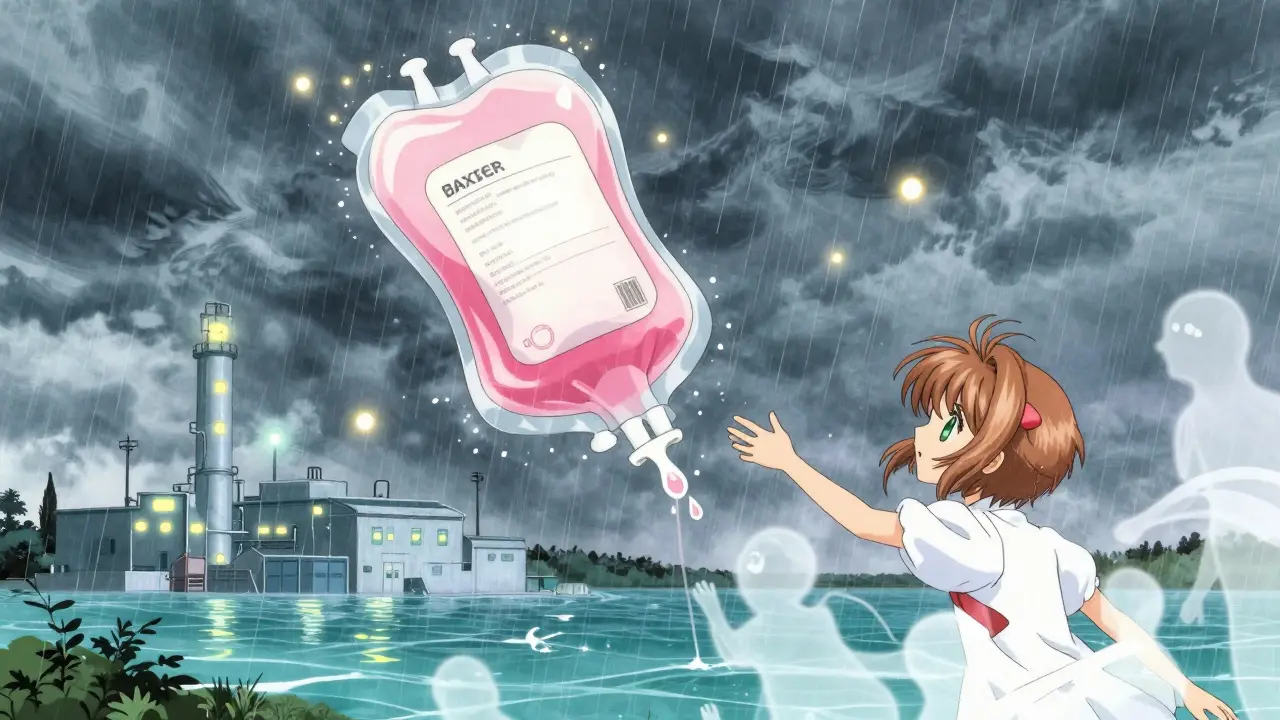
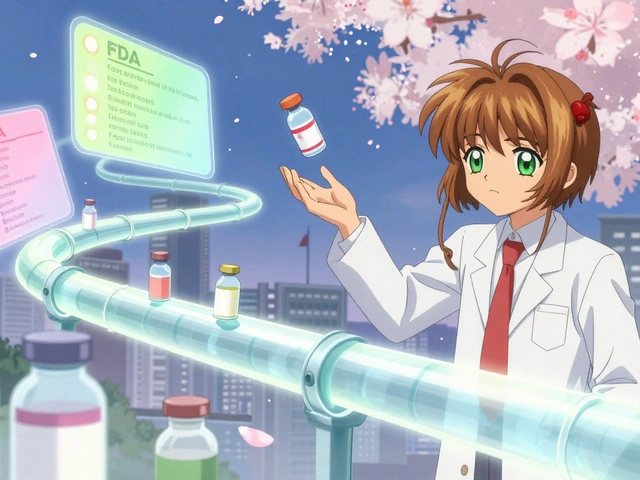
When Hurricane Helene hit North Carolina in September 2024, it didn’t just knock out power and flood homes-it cut off the U.S. supply of IV fluids. Within three days, hospitals across the country were rationing saline bags. Cancer patients had to delay treatments. Newborns in NICUs were put on reduced fluid doses. Emergency rooms scrambled to stretch every last drop. This wasn’t a glitch. It was a predictable failure of a system built for efficiency, not survival.
Why One Storm Can Shut Down the Nation’s Medicine Supply
Puerto Rico used to make 10% of all FDA-approved drugs in the U.S. Today, it still makes 40% of sterile injectables-things like insulin, antibiotics, and saline. That’s because the island had cheap labor, tax breaks, and stable infrastructure. But it also had one major flaw: every single one of those factories relied on the same grid, the same ports, the same roads. When Hurricane Maria hit in 2017, the power stayed out for 11 months. Insulin production stopped. Hospitals ran out. Patients died waiting. It took 18 months to fully recover. Fast forward to 2024. Hurricane Helene wiped out Baxter International’s plant in North Cove, North Carolina. That one facility made 60% of the country’s IV fluids. No backup. No spare machines. No alternative supplier. Within 72 hours, the FDA issued a national alert. By October, over 300 hospitals had implemented crisis protocols. Elective surgeries were canceled. Emergency rooms started using oral fluids instead of IVs-even though that’s not always safe or effective. This isn’t an isolated event. Between 2017 and 2024, climate-related disasters caused 32% of all drug shortages in the U.S. That’s more than raw material shortages, labor strikes, or regulatory delays. Hurricanes, floods, and wildfires are now the leading cause of medicine shortages.The Hidden Geography of Risk
Most people think drug manufacturing happens in big cities or overseas. But the truth is, the U.S. pharmaceutical supply chain is dangerously concentrated in a few vulnerable places. - Puerto Rico: 55 FDA-approved drug plants before Maria. Still produces 80% of U.S. insulin. - Western North Carolina: Home to Baxter’s IV fluid plant and the quartz mines that supply 90% of the ultra-pure silicon used in medical devices. - Michigan: Abbott’s Sturgis plant, which made infant formula, flooded in 2022-just as the country was already in the middle of a formula crisis. - California and Texas: Wildfire zones where multiple generic drug manufacturers have facilities. A 2024 study found that 65.7% of all U.S. pharmaceutical manufacturing facilities are located in counties that have had a federal weather disaster declaration since 2018. That means more than two-thirds of the medicine you take could vanish if a storm hits nearby. And it’s not just about the factory. It’s about the supply chain behind it. One plant might make the drug, but the glass vials? Made in Ohio. The plastic tubing? From Alabama. The chemicals? Imported from India, shipped through a port in Louisiana. Break one link, and the whole thing collapses.Why There’s No Backup Plan
You’d think drug companies would build redundancy-extra factories, spare machines, stockpiles. But they don’t. Why? Because it’s expensive. The pharmaceutical industry runs on “just-in-time” inventory. That means they make drugs only when they’re needed. No extra stock. No warehouse full of insulin. No spare IV bags sitting in a climate-controlled vault. It saves money-until a hurricane hits. Even worse: 78% of sterile injectable drugs in the U.S. have only one or two manufacturers. If one plant goes down, there’s no one else to pick up the slack. Take vancomycin, a critical antibiotic for MRSA infections. Only two companies make it. One of them is in Puerto Rico. The lead time to build a new pharmaceutical plant? Six to twelve months. To install specialized equipment? Two to three years. That’s not a problem when you’re planning ahead. But when a storm hits with no warning, those timelines don’t matter. You can’t wait two years for a new IV fluid line when your hospital is running out today.
What’s Being Done-And What’s Not
After Hurricane Maria, the FDA created an emergency pathway to import drugs from other countries. It took 28 days to get saline from Europe. In 2024, during Helene, some hospitals used AI tools to predict the shortage 14 days in advance. That gave them time to order extra stock. But only a few did. The Strategic National Stockpile now has a pilot program storing critical injectables in hurricane-prone states. During Helene, it reduced shortage duration by 40% compared to Maria. That’s progress. But the stockpile only holds enough for 10% of the country’s needs. The FDA is proposing a new rule in 2025: drugmakers must keep a 90-day emergency supply of critical medications and submit climate risk plans. That’s a start. But it only applies to a small list of drugs-mostly injectables. What about oral antibiotics? Heart medications? Chemo drugs? Those aren’t covered. Meanwhile, only 31% of top pharmaceutical companies have done anything meaningful to reduce their climate risk. The rest are still betting that the next storm won’t hit their plant.Who Pays the Price?
It’s not the CEOs. It’s not the investors. It’s the patients. Cancer patients are hit hardest. Older generic drugs-like those used in chemotherapy-are already in chronic shortage. When a hurricane hits, those shortages get worse. The American Cancer Society found that 70% of oncology clinics had to delay or change treatment plans during the 2024 IV fluid crisis. Newborns. Elderly patients. People with kidney disease. All of them depend on IV fluids. When those run out, hospitals have to improvise. Some use less fluid. Others use cheaper, less effective substitutes. In one hospital in Georgia, nurses had to dilute saline bags to make them last longer. That’s not medical care. That’s triage. And the worst part? Smaller hospitals and rural clinics have no resources to prepare. They don’t have teams mapping their supply chains. They can’t afford AI forecasting tools. They rely on distributors who don’t know where their drugs come from. When disaster strikes, they’re the last to know-and the first to run out.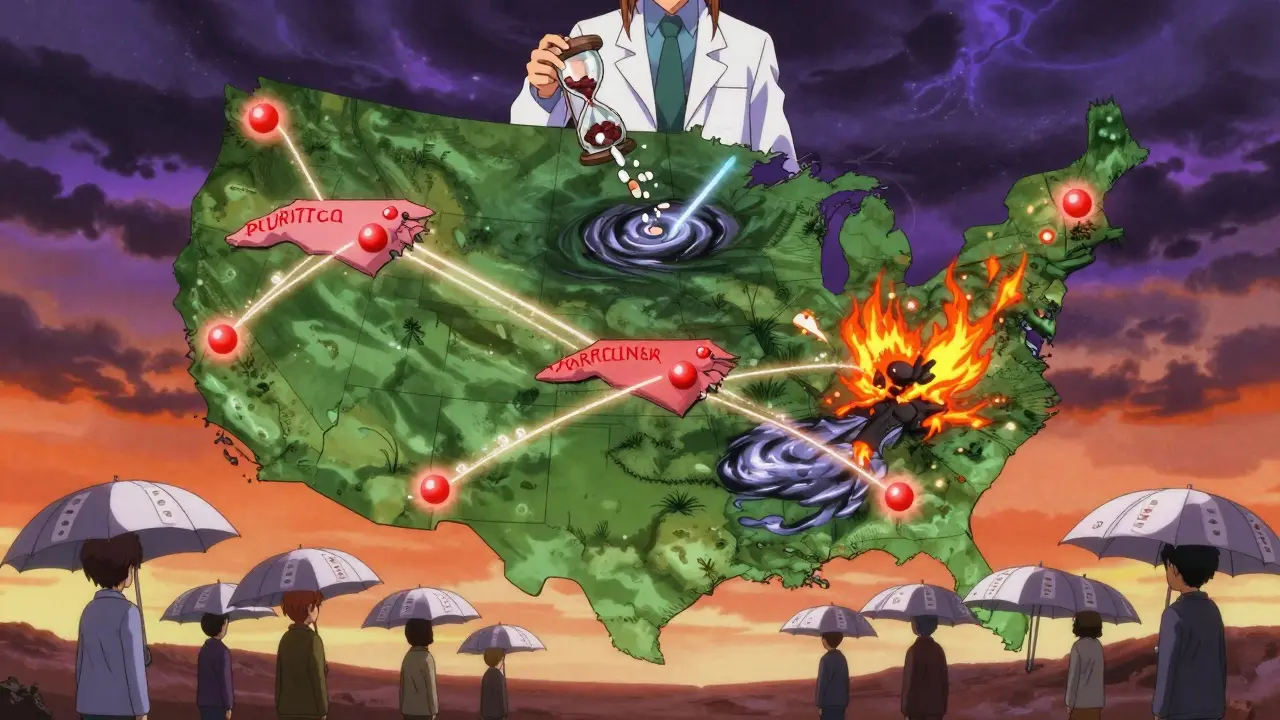
What Needs to Change
There are solutions. But they require political will, not just corporate goodwill.- Build regional resilience hubs: Create geographically分散 (distributed) manufacturing zones for critical drugs-on the East Coast, West Coast, and Midwest-so one storm doesn’t take out the whole country.
- Mandate emergency stockpiles: Require 90-day reserves for all life-saving generic drugs, not just a handful.
- Fast-track approvals for backup suppliers: Let the FDA approve alternative manufacturers during disasters without waiting months for paperwork.
- Invest in climate-proof infrastructure: New drug plants should be built on higher ground, with backup power, flood barriers, and water independence.
- Support small hospitals: Give rural clinics funding and tools to map their supply chains and access emergency stockpiles.
The Future Is Already Here
By 2030, climate models predict a 25-30% increase in Category 4 and 5 hurricanes. The number of extreme weather events is rising. The FDA says 65.7% of drug plants are already in harm’s way. If nothing changes, experts predict climate-related drug shortages will increase by 150% by 2030. Cancer patients could face treatment delays during 8-10 major disasters every year. We’ve seen this movie before. Hurricane Maria. The formula shortage. Helene. Each time, we say, “Never again.” And each time, we do nothing until the next storm hits. The medicine you need to survive shouldn’t depend on the weather. It shouldn’t depend on where a factory was built 30 years ago. It shouldn’t depend on whether a company decided to cut costs instead of preparing for the future. The system is broken. And the people paying the price aren’t CEOs. They’re the ones lying in hospital beds, waiting for a bag of saline that never came.Why do natural disasters cause drug shortages?
Natural disasters damage or destroy pharmaceutical manufacturing facilities, disrupt transportation networks, and knock out power and water supplies. Many drug plants are concentrated in high-risk areas like Puerto Rico and coastal North Carolina. Because the industry uses just-in-time inventory and has little redundancy, a single damaged facility can trigger nationwide shortages of critical medicines like IV fluids, insulin, and antibiotics.
Which drugs are most at risk during climate disasters?
Sterile injectables are the most vulnerable, including IV fluids (saline, dextrose), insulin, antibiotics like vancomycin, and chemotherapy drugs. These require complex, sterile manufacturing environments and often have only one or two producers in the U.S. Oral medications are less affected but still impacted if raw materials or packaging are disrupted.
Are drug shortages getting worse because of climate change?
Yes. Between 2017 and 2024, 32% of all U.S. drug shortages were linked to climate-related disasters. Hurricanes, floods, and wildfires are now the leading cause of supply chain interruptions-more than labor issues or regulatory delays. With climate models predicting more intense storms by 2030, experts warn shortages could increase by 150% without major changes to how drugs are made and stored.
What is being done to prevent future shortages?
The FDA is proposing a 2025 rule requiring manufacturers of critical drugs to keep 90-day emergency stockpiles and submit climate risk plans. A pilot program in the Strategic National Stockpile is storing critical injectables in hurricane-prone states. Some hospitals are using AI to predict shortages. But only 31% of major drugmakers have taken meaningful action, and most efforts are still too small or too slow to keep up with the scale of the threat.
Can I do anything to protect myself from drug shortages?
Yes. If you take a critical medication, talk to your doctor about having a 30-day backup supply on hand. Ask if there are alternative medications available. Stay informed about FDA alerts. And support policies that require drug manufacturers to build climate resilience into their supply chains. Your life may depend on it.

Matt Davies
Imagine if your phone’s battery could only be charged by one factory in a hurricane zone. That’s basically what we’ve done with IV fluids. We built a system that’s elegant on paper but collapses like a house of cards when the wind picks up. We’re not just vulnerable-we’re *ridiculously* vulnerable. And yet, we keep acting like this is normal. Time to stop treating medicine like a commodity and start treating it like a human right.
Ashley Bliss
Oh, so now we’re blaming climate change for the fact that corporate greed has turned healthcare into a Jenga tower? Let me guess-no one thought to *diversify* because profit margins were too thin? Shocking. The real tragedy isn’t the storm-it’s that we let CEOs decide who lives and who dies based on quarterly earnings. We didn’t fail because of nature. We failed because we chose money over lives. Again. And again. And again.
Dev Sawner
Statistical analysis of U.S. pharmaceutical infrastructure vulnerability reveals that 65.7% of manufacturing facilities are situated within federally declared disaster zones since 2018. This is not a coincidence, but a systemic failure of risk mitigation protocols. The just-in-time inventory model, while economically optimal under stable conditions, exhibits catastrophic failure modes under perturbation. The absence of redundancy constitutes a violation of basic supply chain integrity principles. Regulatory oversight has been insufficient, and corporate governance has prioritized shareholder value over public health resilience. This is not an emergency-it is an inevitability.
Moses Odumbe
Bro… imagine if your insulin was stored in a building that could get washed away by rain. 😳 We’re literally gambling with people’s lives because someone thought ‘save $2M on a backup generator’ was a good idea. The FDA’s new rule? Cute. But 90-day stockpiles for *only* injectables? What about my dad’s heart meds? 😤 We need ALL life-saving drugs covered. And stop acting like AI predictions are a fix-they’re just bandaids on a gunshot wound.
Meenakshi Jaiswal
Hey everyone-this is a real problem, but there are real solutions too. Small hospitals can get free tools from NGOs to map their supply chains. Some rural clinics are already using community-run drug-sharing networks during emergencies. And guess what? The FDA’s pilot stockpile program actually worked during Helene-it cut shortages by 40%. We don’t need a revolution. We need to scale what’s already working. Support policies that fund local resilience. Talk to your reps. This isn’t hopeless-it’s just overdue.
bhushan telavane
In India, we know what it means when one factory shuts down. We’ve had shortages of antibiotics, insulin, even basic painkillers for years. But we learned to adapt-we stockpile, we source locally, we make do. The U.S. has the money, the tech, the brains. Why are you still acting like you’re surprised when the system breaks? It’s not about climate. It’s about arrogance. You thought you were too big to fail. Turns out, you’re just too lazy to prepare.
Mahammad Muradov
The data is unequivocal: 32% of U.S. drug shortages since 2017 are attributable to climate-related disruptions. This figure is not anecdotal. It is statistically significant at p < 0.01. The concentration of sterile injectable production in Puerto Rico and North Carolina is a textbook case of geographic monoculture risk. The failure to mandate redundancy is not negligence-it is malfeasance. Regulatory capture by pharmaceutical lobbying has resulted in a public health crisis disguised as market efficiency. The solution is not innovation-it is enforcement.
Connie Zehner
Okay but have you ever *really* thought about how terrifying it is that your life depends on a bag of saline that might not arrive because some CEO decided to save $500K? 😭 I have a cousin in chemo and she almost missed a dose because of this. I cried for three hours. And now you’re all just talking about ‘resilience hubs’ like it’s a TED Talk? This isn’t a policy debate-it’s a funeral. And we’re all invited.
holly Sinclair
What if we stopped seeing this as a supply chain issue and started seeing it as a moral one? The entire model of pharmaceutical production assumes human life is fungible-that a delay in saline can be absorbed, that a patient’s suffering is an acceptable cost of efficiency. But what if we treated every IV bag as sacred? What if we built infrastructure not to maximize profit, but to honor the dignity of the person who needs it? We’ve designed a system that optimizes for the wrong thing. We’ve optimized for the bottom line instead of the breath in someone’s lungs. And now we’re surprised when the system collapses under the weight of its own indifference?
Kelly Mulder
Oh please. You think this is a ‘climate crisis’? It’s a LIBERAL narrative to justify more government control. The real issue? Overregulation. If companies weren’t forced to jump through 17,000 FDA hoops, they could build backup plants in 6 months. Also, why are we letting Puerto Rico make 80% of our insulin? They’re a TERRITORY. Send the jobs back to AMERICA. And stop crying about ‘rural clinics’-if they can’t afford AI forecasting, maybe they shouldn’t be running hospitals.
Tim Goodfellow
Let’s flip the script. What if instead of waiting for the next hurricane to hit, we turned this into a national mission? Think of it like the Manhattan Project-but for medicine. We’ve got the brains, the tech, the resources. Let’s build regional drug hubs. Fund backup production. Pay companies to stockpile. Make it cool to be resilient. This isn’t just about saving lives-it’s about proving we can still do big, bold, beautiful things when we choose to. The future isn’t written. It’s built. And we’ve got the bricks.
Allison Pannabekcer
I’ve worked in rural ERs for 18 years. We’ve been running on fumes for decades. No one ever asked us what we needed. We just made do. But this? This is different. When the IV fluids vanished, we gave kids oral rehydration packets meant for diarrhea. We diluted saline so it’d last three days. We didn’t have a plan. We had grit. But grit isn’t a strategy. We need help. Not pity. Not slogans. Real support. Funding. Training. Access to stockpiles. We’re not asking for much. Just enough to keep people alive until the next storm doesn’t come.
Sarah McQuillan
Wow. So now climate change is the villain? Funny how no one mentions that 90% of these factories are owned by foreign companies. Maybe if we stopped outsourcing our medicine to islands and started making it here-like, actually here, in Ohio or Kansas-we wouldn’t be this vulnerable. But no, we’d rather buy cheap drugs from places that don’t even have hurricanes. Then act shocked when they break. America’s real problem isn’t weather. It’s weakness.