
Generic Patent Case Law: Landmark Court Decisions That Shape Drug Prices
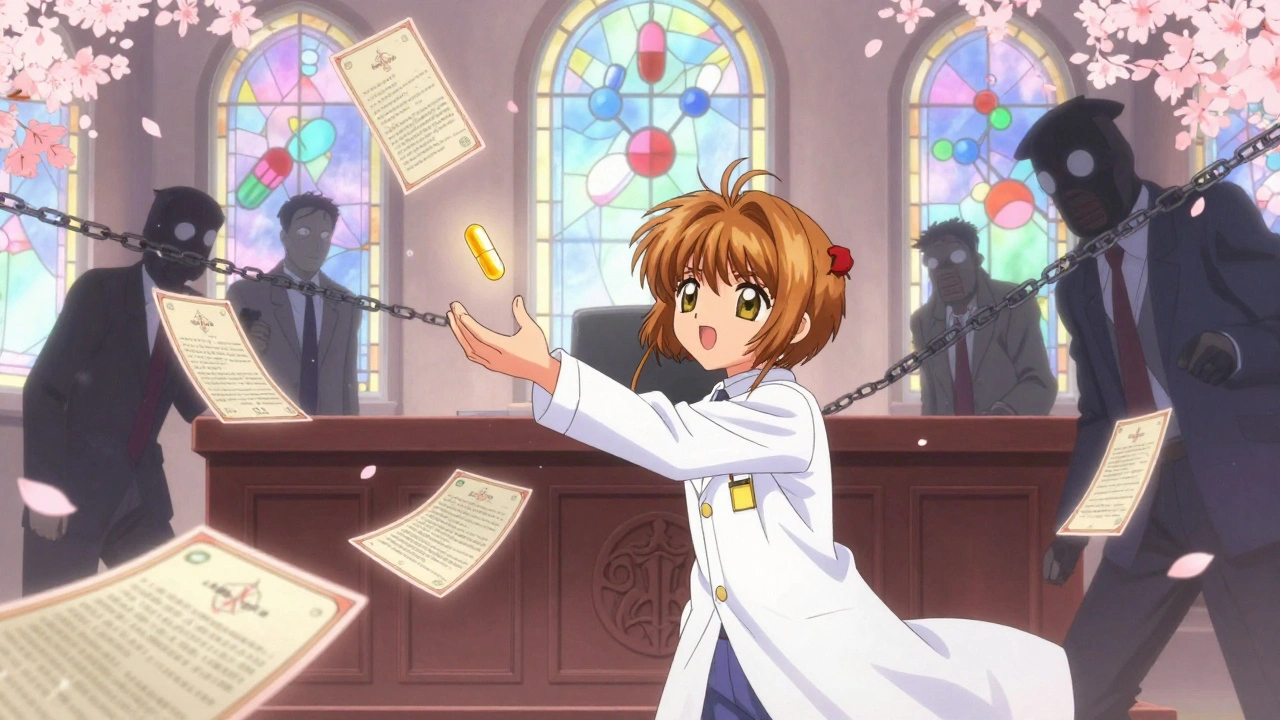
When you pick up a generic pill at the pharmacy, you probably don’t think about the legal battles that made it possible. But behind every cheap alternative to a brand-name drug is a complex web of court decisions, patent filings, and regulatory rules that determine who gets to sell what, and when. These aren’t abstract legal theories-they directly affect how much you pay for insulin, blood pressure meds, or cancer treatments. In the U.S., generic patent law is the invisible force balancing innovation with affordability, and a handful of landmark cases have reshaped the entire landscape.
How the Hatch-Waxman Act Created the Modern Generic Market
The foundation of today’s generic drug system isn’t a law passed yesterday-it’s the Drug Price Competition and Patent Term Restoration Act of 1984, better known as the Hatch-Waxman Act. Named after its sponsors, Senators Orrin Hatch and Henry Waxman, this law was designed to fix a broken system. Before 1984, brand-name companies held monopolies long after their patents expired because generic manufacturers had to repeat expensive clinical trials just to prove a drug worked. That made generics too costly to produce.
Hatch-Waxman changed that. It let generic companies file an Abbreviated New Drug Application (ANDA), proving their product is bioequivalent to the brand drug without redoing full clinical trials. In exchange, they had to respect existing patents. But here’s the twist: if a generic company believed a patent was invalid or wouldn’t be infringed, they could file what’s called a Paragraph IV certification. That triggered a 30-month clock where the FDA couldn’t approve the generic-giving the brand company time to sue for infringement.
This created a legal battlefield. Suddenly, generic companies had a financial incentive to challenge patents, and brand companies had a powerful tool to delay competition. The result? Today, 85% of U.S. prescriptions are filled with generics. But getting there wasn’t easy. The courts had to step in to define the rules-and they did, decisively.
Amgen v. Sanofi: The End of Overly Broad Biologic Patents
In 2023, the Supreme Court handed down a decision that sent shockwaves through the biotech industry: Amgen v. Sanofi. Amgen held a patent on a class of cholesterol-lowering drugs, claiming protection over “potentially millions” of antibody variations-yet only provided detailed data for 26 of them. Sanofi, a generic competitor, argued the patent was too vague to be valid.
The Court agreed. In a unanimous ruling, they said a patent can’t claim an entire universe of molecules based on just a few examples. This wasn’t just about cholesterol drugs. It hit biologics-the complex, protein-based drugs used to treat cancer, autoimmune diseases, and rare conditions-harder than anything before. Biotech companies had long relied on broad, sweeping patent language to lock out competitors. After Amgen, that strategy collapsed.
The impact? Generic manufacturers now have a clearer path to challenge biologic patents. But it also raised the bar for innovation. Companies can’t just file a patent saying “we made one version, so we own all similar ones.” They must show enough detail to let others replicate the invention. As Duke Law Professor Arti Rai put it, this decision “creates a higher bar for biologic patentees that may reduce follow-on innovation.” For patients, it means more generic options could arrive faster-especially for expensive drugs like Humira or Enbrel.
Allergan v. Teva: Protecting the First-to-File Advantage
Not all rulings favored generics. In 2024, the Federal Circuit decided Allergan v. Teva, a case that strengthened the hand of brand companies. Allergan held a patent on a glaucoma drug, and Teva filed an ANDA challenging it. But here’s the twist: Teva’s patent had an earlier expiration date than Allergan’s, even though it was filed later. Teva argued that since their patent expired sooner, Allergan’s patent shouldn’t block them.
The court said no. The timing of when a patent was filed doesn’t matter if it’s still active. What matters is whether it’s listed in the FDA’s Orange Book-and whether it’s valid. This decision reinforced a key principle: the first company to file an ANDA with a Paragraph IV challenge gets 180 days of exclusive market access. But if multiple companies challenge the same patent, the first to file wins that exclusivity. The court made it clear: you can’t sidestep a valid patent just because another patent expired earlier.
This ruling made brand companies more confident in listing patents in the Orange Book. It also gave them more leverage in settlement negotiations. Some critics say this encourages “patent thickets”-filing dozens of minor patents around a drug to delay generics. But for now, the law favors the patent holder who plays by the rules.
Amarin v. Hikma: The Danger of Off-Label Marketing
One of the sneakiest ways brand companies fight generics isn’t through patents-it’s through marketing. In Amarin v. Hikma, Amarin had a patent on a fish-oil-based heart drug approved for one use: reducing triglycerides in high-risk patients. Hikma, a generic maker, wanted to sell the same drug but only labeled it for a different, unapproved use: lowering cholesterol in people with normal triglycerides.
That’s legal under FDA rules-doctors can prescribe drugs off-label. But Amarin argued that Hikma’s marketing materials, website content, and sales training materials were encouraging doctors to use the drug in ways not approved by the FDA. The court agreed. Even though the label was technically correct, the marketing crossed the line into “induced infringement.”
This case changed the game. Generic companies now have to be hyper-careful with every word they use in promotional materials. A single phrase like “also effective for cholesterol” could trigger a lawsuit. In 2023, 63% of branded companies’ induced infringement claims succeeded in court, according to PTAB data. The takeaway? You can’t just copy the pill-you have to copy the label exactly, and avoid anything that suggests unapproved uses.
How Patent Challenges Are Changing: IPRs and the PTAB
Before 2011, the only way to challenge a patent was through federal court. That was slow, expensive, and unpredictable. The America Invents Act changed that by creating the Patent Trial and Appeal Board (PTAB), a specialized administrative court within the USPTO. Here, companies can file an Inter Partes Review (IPR) to challenge a patent’s validity based on prior art-like old research papers or earlier patents.
IPRs are faster and cheaper than court cases. In 2023, 78.3% of generic drug challenges used IPRs, according to the Federal Circuit Bar Journal. That’s up from just 22% in 2015. Generic manufacturers now routinely file IPRs alongside court lawsuits. It’s a two-pronged strategy: use the PTAB to knock out weak patents, then use the courts to handle infringement claims.
But IPRs aren’t foolproof. The USPTO has rejected some IPR petitions for being too vague or based on weak prior art. And brand companies have learned to write patents more carefully, adding more detailed claims to survive scrutiny. Still, IPRs have shortened the average litigation timeline from 36 months to 28.7 months, according to Rock Ridge Law’s 2024 analysis.
What’s Next for Generic Patent Law?
The legal battlefield is evolving. The FDA is pushing for stricter rules on what patents get listed in the Orange Book. In 2025, they proposed a new rule that would require companies to prove each listed patent actually covers the drug’s active ingredient or method of use. This targets “evergreening”-the practice of filing patents on minor changes like a new pill coating or dosage form just to extend exclusivity.
Meanwhile, biosimilars (generic versions of biologics) are rising fast. In 2024, they made up 27% of all generic patent challenges. By 2027, that number could hit 31%. But biosimilars are harder to copy than small-molecule drugs. They’re made from living cells, not chemicals. That means more complex patents, more litigation, and higher costs. Teva’s general counsel said the Amgen decision increased their pre-filing legal costs by $1.2 million per product.
Patients are feeling the squeeze. One Reddit user shared that their insulin alternative was delayed 22 months due to patent litigation-costing them $8,400 out of pocket. Evaluate Pharma estimates unresolved patent disputes will delay $127 billion in generic sales through 2026.
The FTC is watching closely. Their 2024 policy statement promises to crack down on “improperly listed patents.” If they follow through, we could see a 15-20% drop in artificial patent barriers. That could mean faster access to cheaper drugs for millions.
Why This Matters to You
Generic drugs save the U.S. healthcare system over $300 billion a year. That’s not just corporate profit-it’s real money in people’s pockets. A 2023 FTC study found that once a generic hits the market, prices drop by 80-85% within a year. That’s why these court cases matter. Every decision shapes whether a life-saving drug becomes affordable-or stays locked behind a legal wall.
It’s not just about big pharma vs. big generics. It’s about whether a single mother with diabetes can afford her insulin. Whether a veteran with arthritis can get his pain meds without choosing between rent and refills. The law isn’t just about patents-it’s about access. And the courts, for better or worse, are the ones deciding who gets left behind.
What is the Hatch-Waxman Act and how does it affect generic drugs?
The Hatch-Waxman Act of 1984 created the modern system for generic drug approval. It lets generic manufacturers prove their drugs are bioequivalent to brand-name drugs without repeating full clinical trials, using an Abbreviated New Drug Application (ANDA). In return, generics must respect existing patents. If they believe a patent is invalid, they can file a Paragraph IV certification, triggering a 30-month stay on FDA approval while the patent is litigated. This law balanced innovation incentives with competition, leading to 85% of U.S. prescriptions now being filled with generics.
What was the impact of Amgen v. Sanofi on biologic patents?
The Supreme Court’s 2023 decision in Amgen v. Sanofi ended the practice of claiming broad patent protection over millions of possible molecules based on just a few examples. Amgen’s patent covered a class of cholesterol drugs but only provided detailed data for 26 antibody variations. The Court ruled this was insufficient for patent validity under the enablement requirement. This raised the bar for biologics patents, making it harder for companies to use vague, sweeping claims to block competition. It opened the door for more generic biosimilars but also increased the cost and complexity of developing new biologic drugs.
Why do generic companies use IPRs to challenge patents?
Inter Partes Reviews (IPRs) at the Patent Trial and Appeal Board (PTAB) are faster and cheaper than traditional court litigation. In 2023, 78.3% of generic drug patent challenges used IPRs. Companies file IPRs to argue a patent is invalid based on prior art-like old research or earlier patents. This strategy lets them knock out weak patents before or alongside court cases. IPRs have reduced the average patent litigation timeline from 36 months to 28.7 months, making it easier for generics to enter the market sooner.
Can a generic drug company be sued for marketing a drug differently than the brand?
Yes. In Amarin v. Hikma, a court ruled that even if a generic drug’s label matches FDA-approved uses, marketing materials that suggest unapproved (off-label) uses can constitute induced patent infringement. This means generic companies must avoid any language in websites, brochures, or sales training that implies the drug works for conditions not listed on the official label. In 2023, 63% of such induced infringement claims by brand companies succeeded in court.
How do patent listings in the Orange Book affect generic drug entry?
The FDA’s Orange Book lists patents that brand companies claim cover their drugs. Generic manufacturers must address every listed patent in their ANDA filing. If they challenge a patent with a Paragraph IV certification, it triggers a 30-month delay in FDA approval. Some brand companies have abused this system by listing patents that don’t actually cover the drug’s active ingredient-like patents on packaging or manufacturing methods. The FDA is now proposing stricter rules to prevent this “evergreening” tactic and ensure only relevant patents are listed.
What are the biggest challenges facing generic drug makers today?
The biggest challenges include increasingly complex biologic patents, rising legal costs (up to $1.2 million per product for pre-filing analysis), and aggressive litigation tactics like induced infringement claims based on marketing materials. The rise of biosimilars adds another layer of complexity, as they’re harder to replicate than traditional small-molecule drugs. Also, the 180-day exclusivity period for first-filers creates pressure to be first, but only one company can claim it. Many small generics can’t afford the legal battles, leaving the market dominated by a few large players.

jagdish kumar
Patents are just modern feudalism.
Heidi Thomas
The system is rigged and you know it the moment you see how long it takes for insulin generics to hit the market after a patent expires
zac grant
The Hatch-Waxman Act was a masterstroke in balancing innovation and access but the PTAB has become the real battleground now. IPRs have cut litigation timelines by nearly 8 months on average and forced pharma to write tighter claims. The real win? More biosimilars entering the pipeline without needing to litigate every single claim. That’s structural change.
Rudy Van den Boogaert
I’ve seen this play out in my family. My dad’s biologic for rheumatoid arthritis cost $12k a year until a biosimilar came out. Took five years. Five years of him choosing between meds and groceries. The Amgen decision helped but it’s still too slow. We need faster PTAB reviews and stricter Orange Book rules.
Rachel Bonaparte
You think this is about science? Nah. It’s about who owns the right to life. The FDA, the courts, the pharma lobbyists-they’re all part of the same machine. Did you know some companies file patents on *color* of the pill? Or the *shape*? That’s not innovation, that’s legal terrorism. And the 180-day exclusivity? That’s just a cartel loophole. The real winners aren’t the generics-they’re the lawyers. And the patients? They’re just collateral damage in a game where the board is rigged from the start.
Carolyn Ford
Oh please. You’re all so naive. The real problem? The FTC doesn’t have the guts to do anything. They talk about ‘improperly listed patents’ but they’ve never blocked a single one. And don’t get me started on how brand companies pay off judges through ‘consulting fees’-it’s all documented. You think Amgen v. Sanofi was about patent clarity? It was about protecting Big Pharma’s $200 billion annual revenue stream. Wake up.
Libby Rees
I lived in India for three years. There, generics are sold in open-air markets for pennies. No lawsuits. No patents. Just medicine. I used to buy insulin for $2 a vial. Back here, the same thing costs $120. It’s not about innovation. It’s about who gets to live. The law doesn’t care about that. But we should.
Dematteo Lasonya
I appreciate how detailed this is. My sister just started on a biosimilar for MS and it cut her monthly cost from $8,000 to $300. But she almost didn’t make it-her insurance denied it for 11 months because the brand company listed 17 patents, all of them questionable. I hope the FDA’s new rules actually stick. People are dying while lawyers argue over wording.
Gillian Watson
I’m British and we don’t have this mess. Our NHS negotiates bulk prices and generics arrive within months. No patent theatrics. No 30-month stays. Just drugs that work, at prices people can afford. Maybe we need to stop treating medicine like a stock market and start treating it like a public good.
michael booth
The truth is this system works better than most people realize. Without Hatch-Waxman we’d still be waiting a decade for generics. Without IPRs we’d be stuck in court for years. Yes there are abuses but the data shows 85 of prescriptions are filled with generics because the system allows competition to happen. The real enemy isn’t the law its the delay tactics and the lack of transparency. Fix that and we fix the crisis
Alex Piddington
I’m a pharmacist. Every day I see people choosing between their meds and their rent. The Amgen decision was a win. The PTAB is a tool. But the real hero? The generic companies that spend millions just to file an ANDA. They’re not villains. They’re the only thing standing between patients and financial ruin. Let’s celebrate them-not the lawyers.