Save Money on Meds: The Real Impact of Generic Medications
The bottom line on savings
Let's be real: the primary reason people switch to generics is the price. In the U.S., generics and their complex cousins, biosimilars (which are similar to generics but used for complex biological proteins), saved patients and the healthcare system a record $408 billion in 2022 alone. Over the last decade, that number has ballooned to a staggering $2.9 trillion. Why is the difference so extreme? When a company creates a new drug, they get a patent. This gives them a monopoly for years so they can recoup the billions spent on research and development. Once that patent expires, other companies can step in. They don't have to repeat the expensive clinical trials to prove the drug works from scratch-they only have to prove it's the same as the original. This eliminates the research cost, allowing them to sell the drug for a fraction of the price.| Feature | Generic Medication | Brand-Name Drug |
|---|---|---|
| Average Copay | $6.16 | $56.12 |
| Prescription Volume | ~90% of all scripts | ~10% of all scripts |
| Share of Total Spending | ~1.5% to 18% | ~82% (of drug expenditures) |
| FDA Standard | Must be bioequivalent | Original innovator |
Are they actually the same?
This is where most people get nervous. "If it's this much cheaper, is it actually safe?" To keep the public safe, the FDA (Food and Drug Administration) enforces strict rules. A generic drug must have the same active ingredient, strength, purity, and potency as the brand-name version. Specifically, they look for bioequivalence. This means the generic drug must deliver the same amount of active ingredient into your bloodstream at the same rate as the brand drug. The FDA typically requires an 80-125% equivalence in pharmacokinetic parameters. In plain English: it hits your system the same way the expensive version does. Most generics are rated "AB" in the FDA's Orange Book, meaning they are therapeutically equivalent. While a tiny minority of people might react differently to the "inactive ingredients" (the fillers or dyes), the actual medicine doing the heavy lifting is identical.
Beyond the basic switch: Therapeutic substitution
If you think switching from Brand A to Generic A is the only way to save, think again. There is a deeper level of savings called therapeutic substitution. This happens when a doctor switches you to a completely different drug that is in the same class and provides the same clinical benefit but costs significantly less. For example, a study in Colorado found that substituting high-cost generics with lower-cost therapeutic alternatives could yield savings of up to 88.3%. In some cases, high-cost generics were 15.6 times more expensive than their therapeutic alternatives. Sometimes this just means changing the dosage form or the strength of the drug, which can lead to discounts of nearly 95%.Why some drugs aren't generic yet
You might wonder why your specific medication doesn't have a cheap version. There are a few reasons for this:- Patent Thicketing: Some brand-name companies file dozens of patents (sometimes up to 17.5 patents per drug) to extend their monopoly and block generics from entering the market.
- Narrow Therapeutic Index (NTI): Some drugs, like levothyroxine for thyroid issues, are very sensitive. A tiny difference in dosage can lead to a big change in how the patient feels. Because of this, some doctors prefer the consistency of a single brand.
- Complex Manufacturing: Biologics (drugs made from living cells) are much harder to copy than simple chemical pills. This is why biosimilars are taking longer to become common than standard generics.
How to lower your pharmacy bill today
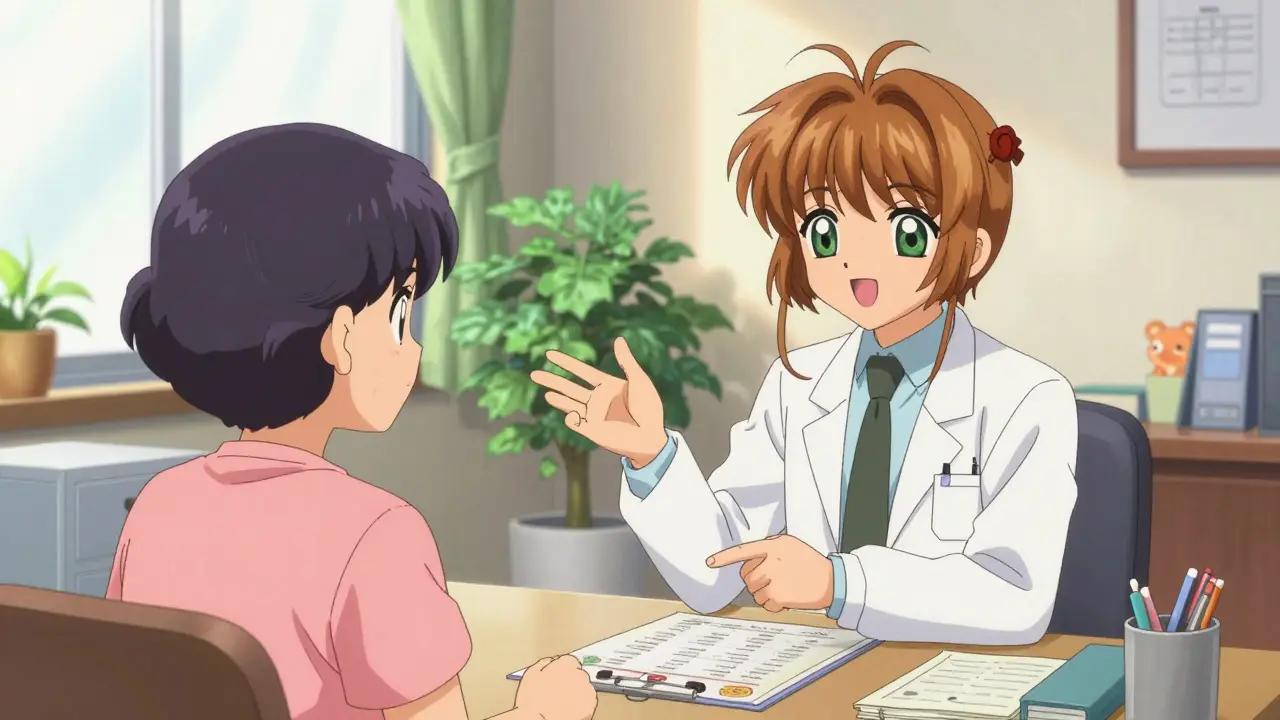
Saving money doesn't always happen automatically. While pharmacists in 49 states can substitute generics automatically, you still have to be your own advocate. First, ask your doctor, "Is there a generic version of this?" or "Is there a cheaper therapeutic alternative in the same class?" Many doctors prescribe the brand name simply because it's what they're used to, not because it's better for you. Second, check your insurance formulary. Sometimes a "preferred generic" is significantly cheaper than a "non-preferred generic." If your copay seems high, ask the pharmacist if there is a different manufacturer of the same generic that your insurance likes better. Lastly, be aware of the "generic trap." In some cases, as the price of a generic drug drops for the pharmacy, insurance companies actually *increase* the copay for the patient. If you feel you're paying too much, look for manufacturer coupons or pharmacy discount cards.Will switching to a generic medication affect how well my treatment works?
For the vast majority of people, no. The FDA requires generic drugs to be bioequivalent to brand-name drugs, meaning they have the same active ingredient and work the same way in your body. While inactive ingredients (like dyes or binders) may differ, the therapeutic effect remains the same.
Why are generic drugs so much cheaper than brand-name drugs?
Generic manufacturers don't have to pay for the initial research, development, and massive clinical trials that the original company funded. They only need to prove that their version is bioequivalent to the original, which drastically lowers their production costs.
What is a biosimilar, and is it the same as a generic?
Biosimilars are similar to generics but are used for biological drugs (made from living organisms) rather than chemically synthesized drugs. Because biological molecules are much more complex, biosimilars are "highly similar" rather than "identical," but they are designed to provide the same clinical result.
Can my pharmacist change my brand drug to a generic without asking?
In 49 U.S. states, pharmacists are generally allowed to substitute a generic for a brand name unless the doctor specifically writes "Dispense as Written" (DAW) on the prescription. This is designed to help patients save money automatically.
Are there any risks to using generic medications?
Risks are very low. The main issue some patients face is sensitivity to inactive ingredients (fillers). Additionally, for Narrow Therapeutic Index (NTI) drugs, some patients may experience slight fluctuations in efficacy, though this is rare. Always discuss your specific health needs with your doctor before switching.
Next steps for patients
If you're currently on a brand-name medication and want to lower your costs, start by reviewing your current list of meds. Identify which ones are "innovator