
Rifampin Induction: How It Lowers Anticoagulant and Antiviral Levels
Rifampin Anticoagulant Adjustment Calculator
Anticoagulant Interaction Assessment
Rifampin accelerates the metabolism of anticoagulants through CYP enzyme induction, potentially reducing drug effectiveness by 15-74%. This tool provides general guidance for dose adjustment, but clinical decisions require medical supervision.
Adjusted Dose Recommendation
Critical Safety Warning
Important: This calculator provides general guidance only. All dose adjustments should be made under medical supervision with close monitoring of clinical outcomes and laboratory parameters. Never adjust your medication without consulting your healthcare provider.
When you’re on antibiotics like rifampin for tuberculosis or to prevent meningitis, you might not think twice about other meds you’re taking. But if you’re also on a blood thinner or an antiviral, this one drug can quietly undo months of careful treatment. Rifampin doesn’t just kill bacteria-it flips a switch in your liver that speeds up how fast your body breaks down other drugs. And for anticoagulants and antivirals, that switch can mean the difference between protection and disaster.
What Rifampin Does to Your Liver
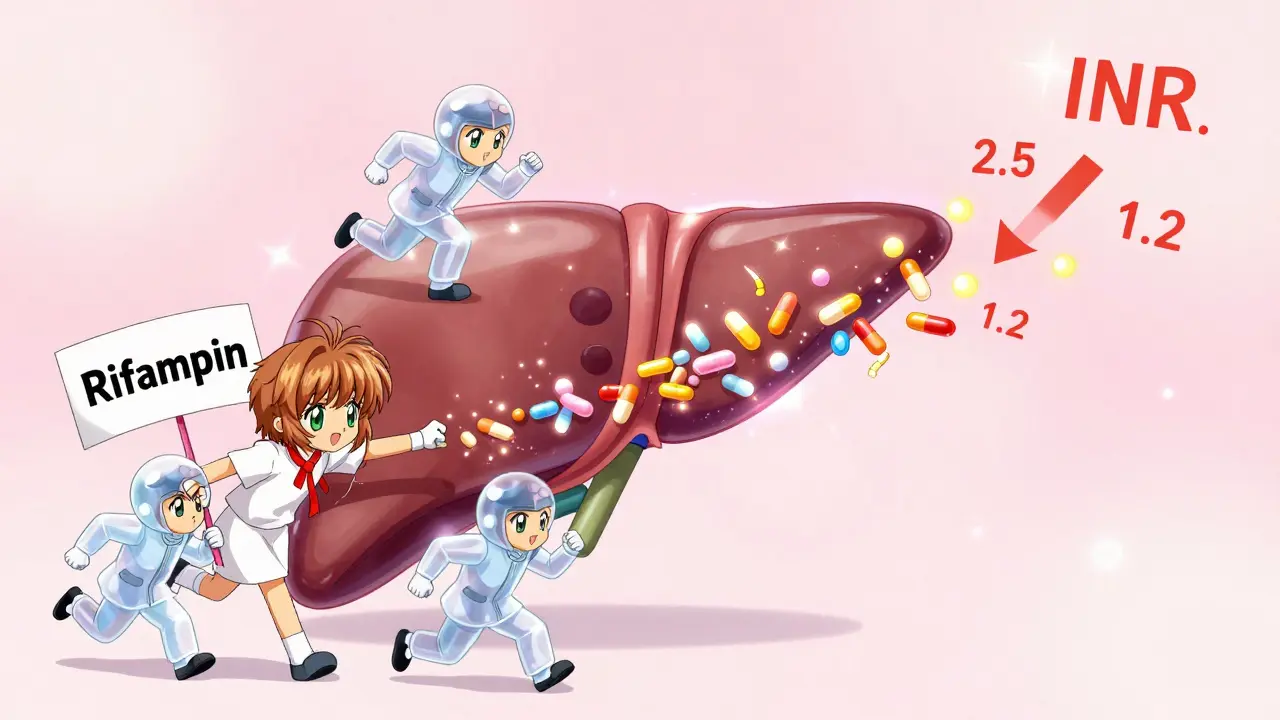
Rifampin is a powerful antibiotic, but its real danger lies in what it does to your liver’s drug-processing system. It doesn’t block enzymes-it turns them up to full blast. Specifically, it activates something called the pregnane X receptor, which tells your liver to make more of the CYP3A4 and CYP2C9 enzymes. These enzymes are like factory workers that break down drugs so your body can get rid of them. When rifampin shows up, it’s like hiring a hundred extra workers overnight.
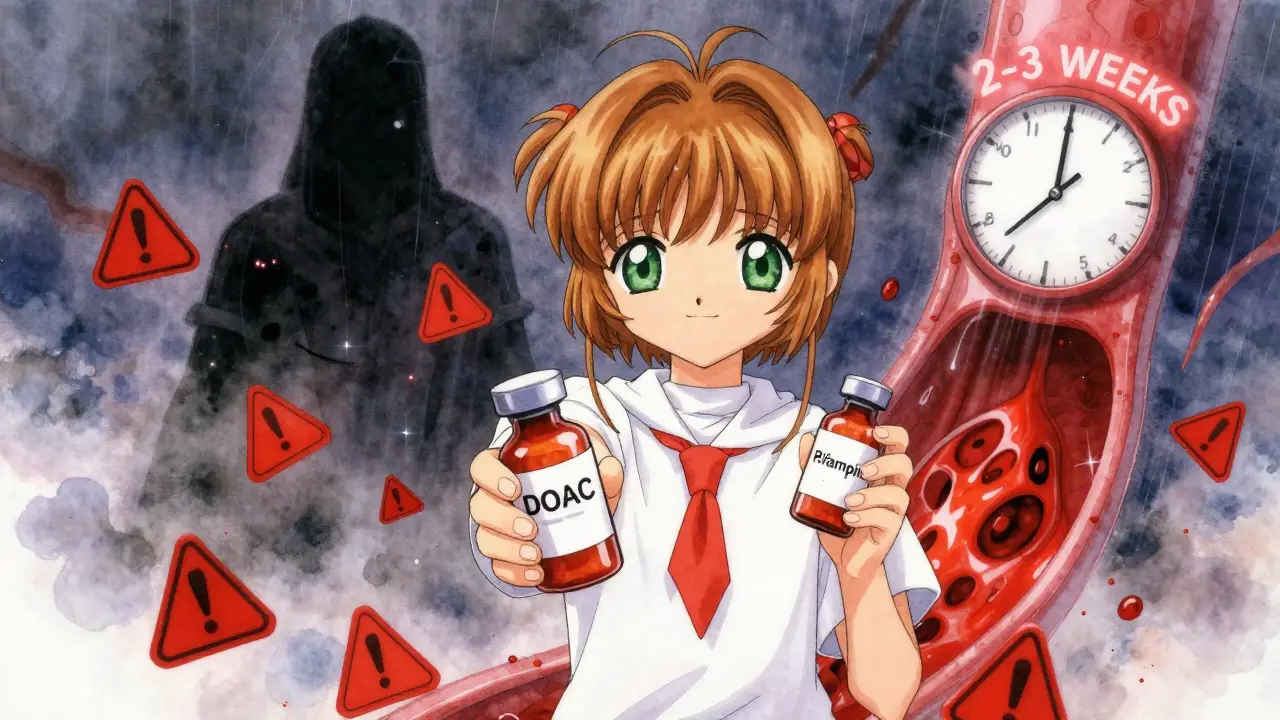
The effect starts within 24 to 48 hours. By day five or seven, your body is breaking down other drugs at up to 80% faster rates. And here’s the kicker: even after you stop rifampin, those extra enzymes don’t vanish right away. They stick around for two to three weeks. That means if you stop rifampin and go back to your normal dose of warfarin or rivaroxaban without adjusting, you could suddenly have too much drug in your system-and risk dangerous bleeding.
How Anticoagulants Get Knocked Down
Let’s talk about blood thinners. There are two main types: warfarin (a vitamin K antagonist) and the newer direct oral anticoagulants, or DOACs, like apixaban, rivaroxaban, dabigatran, and edoxaban. All of them are affected by rifampin, but in different ways.
Warfarin is broken down mostly by CYP2C9 and CYP3A4. When rifampin induces these enzymes, warfarin levels can drop by 15% to 74%. That’s not a small change. A patient on a steady warfarin dose might suddenly see their INR-a measure of how long it takes blood to clot-plummet from 2.5 to 1.2. For someone with a mechanical heart valve, that’s a red flag. One documented case involved a woman with a replaced aortic valve whose INR dropped to normal levels after starting rifampin for suspected endocarditis. She didn’t bleed-but she nearly had a stroke. It took 15 days after stopping rifampin for her INR to return to a safe range.
DOACs are even trickier. Unlike warfarin, they don’t have a simple blood test to check levels. So if rifampin cuts their concentration by half, you won’t know until it’s too late. Studies show:
- Dabigatran: 50-67% drop in blood levels
- Apixaban: 50-67% drop
- Rivaroxaban: 50-67% drop
- Edoxaban: 35% drop, but its active metabolites increase slightly
The European Heart Rhythm Association says combining DOACs with rifampin is generally not recommended. The risk of a clot forming-like a pulmonary embolism or stroke-is too high. And because DOACs can’t be monitored like warfarin, there’s no safety net.
What About Antivirals?
Rifampin doesn’t just mess with blood thinners. It also slashes levels of many antivirals. HIV medications like darunavir, atazanavir, and rilpivirine are broken down by CYP3A4. When rifampin is added, their blood levels can crash by 70% or more. That’s not just inconvenient-it can lead to drug resistance. If the virus isn’t fully suppressed, it mutates. And once it does, the drugs may never work again.
For hepatitis C, drugs like elbasvir/grazoprevir and ledipasvir/sofosbuvir also interact. Rifampin can make them useless. Even newer antivirals like nirmatrelvir/ritonavir (Paxlovid) aren’t safe. Ritonavir is a booster that keeps nirmatrelvir in your system longer-but rifampin destroys it. The FDA explicitly warns against combining Paxlovid with rifampin.
One study tracked 2,090 people taking either warfarin or DOACs along with rifampin between 2010 and 2020. The number of people on DOACs rose from 15% to 85% over that decade-even though we’ve known about these interactions for years. Why? Because DOACs are easier to prescribe. But that convenience comes with hidden risk.
What Should You Do?
If you’re prescribed rifampin and already take an anticoagulant or antiviral, don’t panic-but don’t wait either. Here’s what works:
- For warfarin users: Switch to a low molecular weight heparin (like enoxaparin) while on rifampin. These are injected and aren’t affected by liver enzymes. Once rifampin is stopped, wait two to three weeks before restarting warfarin, then carefully adjust the dose based on INR checks.
- For DOAC users: Avoid combining them with rifampin if at all possible. If there’s no alternative-like in cases of prosthetic joint infection-some experts suggest doubling the rivaroxaban dose (from 20mg to 40mg daily) under strict supervision. But this isn’t FDA-approved and should only be done in specialized settings with frequent clinical monitoring.
- For antivirals: Switch to alternatives that don’t rely on CYP3A4. For HIV, dolutegravir or raltegravir are safer. For hepatitis C, sofosbuvir/velpatasvir may be an option. Always check with your infectious disease specialist.
Point-of-care INR devices are now 95% accurate and widely available. If you’re on warfarin, use one at home during rifampin therapy. But remember: DOACs have no such tool. That’s why experts say the safest path is to avoid the combo altogether.
Why This Keeps Happening
You’d think with all the research, doctors would know better. But here’s the reality: rifampin is cheap, effective, and often the only option for TB or endocarditis. Meanwhile, DOACs are prescribed more than ever because they’re easier than warfarin. The problem? Many prescribers don’t realize how strong rifampin’s induction effect is. A 2022 survey found only 12% of U.S. hospitals had protocols in place for managing rifampin-DOAC interactions.
Even worse, some patients don’t tell their doctors they’re taking rifampin because they think it’s just an “antibiotic.” But this isn’t a typical antibiotic. It’s a metabolic storm.

The Future: New Anticoagulants That Don’t Care About Rifampin
Scientists are already designing the next generation of anticoagulants to avoid this problem. One promising candidate is milvexian, a factor XIa inhibitor. Early studies suggest it’s not metabolized by CYP3A4. That means rifampin won’t break it down. If it gets approved, it could be a game-changer for patients who need long-term anticoagulation and also face infections requiring rifampin.
The FDA now requires all new drugs to be tested against strong inducers like rifampin before approval. That’s a step forward. But for now, we’re stuck with the drugs we have-and the risks they carry.
Bottom Line
Rifampin isn’t just an antibiotic. It’s a metabolic disruptor that can turn life-saving drugs into useless ones. If you’re on a blood thinner or antiviral and your doctor prescribes rifampin, ask: What’s the plan to keep me safe? Don’t assume they know. Don’t assume it’s fine. This interaction is well-documented, dangerous, and preventable.
There’s no room for guesswork. Either switch to a safer alternative, adjust doses under close supervision, or delay rifampin until your anticoagulation or antiviral treatment is complete. The stakes are too high to risk it.
Can I take rifampin with warfarin if I increase the dose?
Yes, but only under strict medical supervision. Rifampin can reduce warfarin levels by up to 74%, so your dose may need to be tripled or even higher. However, INR levels can fluctuate wildly during and after rifampin use. Switching to low molecular weight heparin during rifampin therapy is safer and preferred by guidelines. Never adjust your warfarin dose on your own.
Is it safe to take rivaroxaban with rifampin?
Generally, no. Rifampin cuts rivaroxaban levels by 50-67%, greatly increasing the risk of clotting. Some studies suggest doubling the dose (to 40mg daily) might work in rare cases like prosthetic joint infections, but this is off-label, not FDA-approved, and requires expert monitoring. Most guidelines recommend avoiding the combination entirely.
How long after stopping rifampin should I wait before restarting my anticoagulant?
Wait at least two to three weeks after your last rifampin dose. The liver enzymes induced by rifampin take that long to break down. Restarting your anticoagulant too soon can lead to dangerously high drug levels and bleeding. Always recheck INR (for warfarin) or consult your doctor before restarting DOACs.
Can rifampin cause bleeding?
Not directly. But if you stop rifampin and go back to your original anticoagulant dose too soon, your drug levels can spike, leading to bleeding. In rare cases, rifampin may also interfere with vitamin K metabolism, though this is debated. The main risk is clotting during rifampin use and bleeding after stopping it.
What antivirals are safest to use with rifampin?
For HIV, dolutegravir and raltegravir are not metabolized by CYP3A4 and are preferred. For hepatitis C, sofosbuvir/velpatasvir has fewer interactions than other regimens. Avoid darunavir, atazanavir, rilpivirine, and Paxlovid entirely when taking rifampin. Always consult an infectious disease specialist before making changes.
What to Do Next
If you’re currently on rifampin and an anticoagulant or antiviral, schedule a medication review with your doctor or pharmacist immediately. Bring a full list of everything you take-including over-the-counter meds and supplements. Ask:
- Is this combination safe?
- Do I need to switch medications?
- How will we monitor my levels?
- What signs of clotting or bleeding should I watch for?
If you’re a caregiver or family member, don’t assume the doctor has it covered. These interactions are complex and often missed. Speak up. Ask questions. Your life-or someone else’s-could depend on it.

vivek kumar
Rifampin is basically a metabolic nuke disguised as an antibiotic. I've seen this in TB clinics in Delhi - docs prescribe it like it's Advil, then wonder why the patient clots or bleeds. The enzyme induction isn't subtle - it's a full-system reboot. If you're on DOACs, you're playing Russian roulette with a loaded gun and no way to check the chamber. This needs to be in every med school curriculum, not just tucked in a footnote.
swarnima singh
i mean like… why do we even make drugs that break each other? its sooo frustrating. like why cant we just have one magic pill that does everything without being a drama queen? i feel like pharma companies just wanna make us take more stuff. also i think rifampin smells bad lol
Isabella Reid
This is one of those posts that makes you realize how fragile our medical system is. I’m a nurse in Chicago and I’ve had patients on rivaroxaban get rifampin for TB and just… assume it’s fine because ‘it’s just an antibiotic.’ No one tells them. No one checks. And then we’re scrambling in the ER. The fact that DOACs have no monitoring tool is a systemic failure. We need better education, not just more pills.
Jody Fahrenkrug
My uncle was on warfarin for AFib and got rifampin for a sinus infection. He didn’t tell his doctor because he thought it was ‘just a cold pill.’ Ended up in the hospital with a stroke. We’re lucky he survived. This needs to be on every prescription label. Like, bold red letters: ‘DO NOT TAKE WITH RIFAMPIN.’
Kasey Summerer
So rifampin is the Kirby of drugs - it sucks up every other med and turns it into dust 😂 Meanwhile, doctors are like ‘oh you’re on Paxlovid? Cool, here’s rifampin!’ and then we’re all just… watching the fireworks. FDA warnings? More like suggestions for people who still believe in healthcare.
Allen Davidson
Let’s be real - this isn’t about rifampin. It’s about how we treat chronic conditions like they’re hobbies. You don’t just ‘take a pill’ and forget it. Anticoagulants and antivirals require constant attention. The fact that DOACs are pushed as ‘easier’ while hiding their blind spots is dangerous marketing. If your doctor doesn’t know this interaction cold, find a new one. Your life isn’t a clinical trial.
john Mccoskey
The entire modern pharmacopeia is a house of cards built on corporate convenience and physician laziness. Rifampin is not the villain - it’s the mirror. We’ve replaced warfarin with DOACs because they’re easier to prescribe, not because they’re safer. We’ve outsourced monitoring to patients who don’t understand CYP3A4 induction because we don’t want to do the work. And now we’re surprised when people die? This isn’t an interaction - it’s a moral failure dressed up in clinical jargon. The fact that only 12% of hospitals have protocols? That’s not negligence. That’s systemic malice disguised as bureaucracy.
Henry Ip
Big thanks for laying this out so clearly. I’m a pharmacist and this exact thing happened last month - patient on apixaban got rifampin for a dental infection. No one caught it until the INR dropped and they had a TIA. We switched to enoxaparin right away. The takeaway? Always ask about antibiotics - even if the patient says ‘it’s just for a cold.’
waneta rozwan
OMG I can’t believe this is still happening. I read this and I literally screamed at my screen. My sister almost died because her doctor didn’t know. She had a mechanical valve. She was on warfarin. They gave her rifampin for ‘possible strep’ and didn’t even check her INR for two weeks. She had a stroke. This isn’t science - it’s a crime.
Chelsea Harton
milvexian sounds like the future. no cyp3a4 = no rifampin drama. just sayin.
Travis Craw
my dad took rifampin for TB and didn’t tell his cardiologist. he’s fine now but i still get anxious thinking about it. i wish there was a simple checklist for this stuff. like a ‘don’t mix’ app or something.