
How to Talk to Doctors About Senior Medications: A Clear Guide for Patients and Caregivers

Almost every senior in Australia takes at least two prescription drugs. Many take five, ten, or even more. With that many medications, even small misunderstandings can lead to serious problems - dizziness, falls, hospital visits, or worse. The good news? You don’t have to navigate this alone. Talking clearly with your doctor or pharmacist about your medications isn’t just helpful - it’s one of the most powerful ways to stay safe and healthy as you age.
Start with a Complete Medication List
Don’t rely on memory. Write everything down. Include prescription drugs, over-the-counter pills like pain relievers or sleep aids, vitamins, herbal supplements, and even patches or creams. If you’re unsure whether something counts, include it anyway. A 2022 study found that 25% of seniors have discrepancies between what they think they’re taking and what’s actually in their medicine cabinet. Bring the actual bottles to your appointment. Not a list. Not a photo. The real bottles. This lets your doctor see the exact names, dosages, and instructions printed on the label. It also helps catch mistakes - like a pill that was refilled at the wrong strength, or a supplement that interacts with a prescription.Prepare Three Key Questions Before Your Visit
Time with your doctor is short. Make it count. Ask these questions for every medication:- How does this medicine help me right now? Is it for blood pressure? Pain? Sleep? Knowing the purpose helps you understand why it matters.
- What are the side effects I should watch for? Some are mild - dry mouth, drowsiness. Others are dangerous - confusion, swelling, bleeding. Know which ones need immediate attention.
- What happens if I miss a dose? Should you take it late? Skip it? Double up? There’s no one-size-fits-all answer. Get clear instructions.
Bring Someone With You
It’s not weak to bring a family member, friend, or caregiver. It’s smart. When you’re in a medical room, listening to new information, your brain is working hard. You might miss details. Someone else can listen, take notes, and ask questions you didn’t think of. They can also help after the visit. Did the doctor say to take the pill with food or on an empty stomach? Did they mention a new warning? A second set of ears helps avoid costly mistakes.Speak Up About Problems - Even Small Ones
Don’t brush off symptoms like fatigue, constipation, or confusion. You might think, “It’s just getting older.” But many of these are signs your meds aren’t working right. A 2022 report found that 30% of hospital admissions for seniors were caused by medication problems - not illness, not accidents. Just wrong doses, bad combinations, or side effects nobody noticed. If you feel dizzy after taking your blood pressure pill, say so. If your stomach hurts after your arthritis medicine, tell your doctor. If you’re sleeping more than usual or forgetting to take pills, bring it up. These aren’t small things. They’re red flags.
Ask About Cutting Back
Just because you’re on a medication doesn’t mean you need it forever. Doctors sometimes keep prescribing out of habit - especially when multiple providers are involved. Ask: “Is this still necessary?” or “Can we try stopping this one to see how I feel?” The American Geriatrics Society’s 2023 Beers Criteria lists 30 types of medications that are risky for seniors - including certain sleep aids, antihistamines, and painkillers. Many of these can be replaced with safer options or even eliminated. A 2022 study in BMJ Quality & Safety showed that seniors who had regular medication reviews cut their number of pills by nearly 30%. Their energy improved. Their fall risk dropped. Their quality of life went up.Use Tools to Stay on Track
Taking five or more pills a day is hard. Even the most careful person can mix them up. That’s where tools help.- Pill organizers - Daily or weekly boxes with compartments for morning, afternoon, evening. Simple, cheap, and effective.
- Medication apps - Apps like Medisafe or Round Health send phone alerts, track doses, and even notify a family member if you miss a pill.
- Automated dispensers - Devices that unlock at set times, release the right pill, and record when it was taken.
Schedule Regular Medication Reviews
Don’t wait for a crisis. Set a reminder: every six months, sit down with your doctor or pharmacist and go through every medication you’re taking. This isn’t a one-time fix. It’s an ongoing process. Your body changes. Your health changes. New conditions appear. Old ones get better. Your meds should change with you. In January 2024, Medicare started requiring full medication reviews for anyone taking eight or more prescriptions. That’s a good start. But you don’t need to wait for a rule to act. Ask for a review - even if you’re only on three or four drugs.
Know When to Talk to a Pharmacist
Your pharmacist is one of your best allies. They see your full medication history. They know how drugs interact. And they’re often easier to reach than your doctor. Many pharmacies now offer free medication reviews. Some even sync all your refills to the same day so you don’t have to make five trips to the pharmacy each month. Ask your pharmacist: “Can you check all my meds for interactions?” or “Can you help me simplify my schedule?” In 2024, 74% of independent pharmacies in Australia began offering medication synchronization programs. Seniors who used them were 28% more likely to take their pills on time.What If You’re Not Heard?
Sometimes, doctors rush. They don’t listen. You feel dismissed. That’s not okay. You have the right to be heard. If you feel ignored, say: “I’m worried about these side effects. Can we take more time to talk?” Or: “Can we schedule a follow-up in two weeks to check how this is working?” If that doesn’t work, ask for a referral to a geriatric specialist - a doctor trained specifically in senior care. They know the risks of polypharmacy. They know how to ask the right questions.It’s Not Just About Pills - It’s About Your Life
Medications aren’t just chemicals. They’re part of your daily rhythm. They affect your energy, your mood, your ability to walk, to think, to enjoy time with family. Talking about them isn’t about being difficult. It’s about being smart. It’s about making sure your meds are helping - not hurting. About keeping your independence. About living well, not just surviving. The data is clear: structured conversations reduce hospital visits by 22%. They cut down on dangerous side effects. They save money. And most importantly, they give you back control. Start today. Make your list. Bring your bottles. Ask your questions. You’ve earned the right to understand what’s in your body - and why.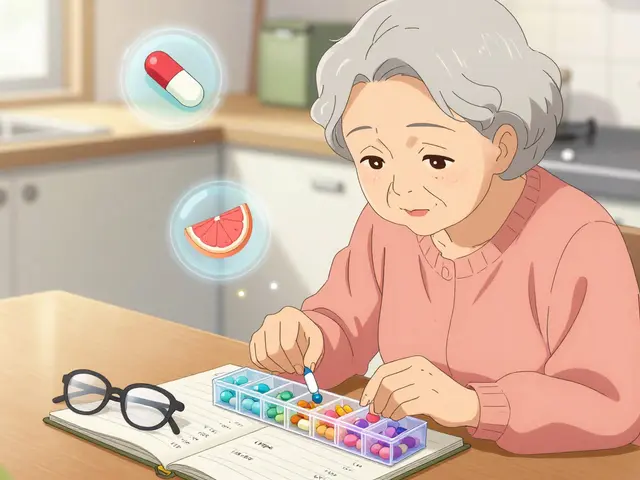


Martyn Stuart
Just had my mum’s med review last week-brought all 12 bottles, wrote down every symptom she’s been ignoring (‘it’s just aging,’ she says). Turns out, her sleep aid was making her dizzy, and her blood pressure med was interacting with that fish oil she swore was ‘natural, so it’s fine.’ We cut two, adjusted two, and now she’s sleeping better and hasn’t fallen in three months. This guide? Spot on.
Shofner Lehto
My dad’s on eight meds. We started using Medisafe last year. It sends alerts to my phone if he misses a dose. Last month, it flagged a potential interaction between his statin and a new OTC cold pill he grabbed at the store. Pharmacist caught it before he took it. Tools like this aren’t luxury-they’re lifelines.
Isabelle Bujold
It’s so important to remember that doctors don’t always know what’s going on at home. I’ve seen elderly patients come in with pill bottles from three different pharmacies, none of which talk to each other, and they’re taking overlapping doses of the same drug because no one’s coordinating. Even if your doctor seems busy, just say, ‘I’m worried about interactions’-it triggers a whole different response. And don’t forget: pharmacists are trained specifically for this. They’re the unsung heroes of medication safety. Many don’t even know they can walk in and ask for a free med review. You don’t need a referral. Just show up with your bottles. It’s that simple. And if you’re a caregiver, bring a notebook. Write everything down. Even if it seems obvious. Because when you’re stressed, your brain forgets things. I’ve seen it too many times.
Augusta Barlow
Let’s be real-this whole ‘talk to your doctor’ advice is just corporate propaganda. Big Pharma doesn’t want you questioning your meds. They profit off polypharmacy. The Beers Criteria? It’s been watered down by lobbying. And Medicare’s new review rule? Only kicks in at eight pills. What about the 60% of seniors on five? They’re still being overmedicated. And don’t get me started on automated dispensers-those things are tracked, monitored, data-harvested. Who’s accessing that info? Insurance companies? Employers? Your pills are being turned into surveillance tools. They want you to think you’re in control, but you’re just another data point in their algorithm. Wake up.
Joe Lam
Wow. This is so basic. Like, kindergarten-level advice. If you can’t manage your meds, maybe you shouldn’t be living alone. I’ve seen 85-year-olds on ten drugs who run marathons and remember every pill’s name and time. This isn’t rocket science. It’s personal responsibility. Stop treating seniors like fragile china. Empower them-or get a caregiver. Don’t turn medication management into a public health crisis because someone didn’t write things down.
Rachel Bonaparte
I get why people love this guide-it’s comforting. But let’s not pretend this is a silver bullet. My aunt was told to ‘ask questions’-she did. Her doctor rolled his eyes and said, ‘You’re fine.’ She went to a geriatric specialist on her own dime, and they found she was being prescribed a drug that’s banned in the EU for seniors. Turns out, her primary care doc was just following a template. So yes, ask questions. But also: get a second opinion. Don’t trust the system. It’s designed to keep you dependent. And if you’re on SSRIs, anticholinergics, or benzodiazepines? Run. Not walk. Those are the real killers. Not the pills themselves-your doctor’s complacency.
Ollie Newland
As a paramedic who’s seen too many elderly patients admitted for ‘unexplained confusion,’ I can confirm: 70% of these cases are medication-related. Polypharmacy isn’t just a buzzword-it’s a clinical emergency. The real issue? Fragmented care. One doc prescribes for heart, another for arthritis, another for insomnia. No one’s looking at the whole picture. That’s why pharmacist-led reviews are the future. They have the full script history, they know interactions cold, and they’re not billing you for a 12-minute visit. Advocate for that. And yes-use pill organizers. But don’t just buy one off Amazon. Get one with a lock. My patient last week took her granddaughter’s ADHD meds by accident. She was 82. That’s not a joke. That’s preventable.
Rebecca Braatz
You’ve got this. Seriously. I used to think my grandma was just ‘forgetful’-until I helped her organize her meds. Now she’s hiking every weekend. Small changes = huge wins. Start with one bottle. One question. One day. You don’t need to fix everything at once. Just begin. And if you’re scared to talk to your doctor? Say this: ‘I care about staying healthy, and I want to make sure I’m not taking anything I don’t need.’ That’s powerful. And if they brush you off? Find a new doctor. Your health isn’t negotiable.
Heidi Thomas
Just bring the bottles and ask the three questions. Done.
Libby Rees
Thank you for this thoughtful and practical guide. It is clear, well-researched, and respectful of the dignity of older adults. The emphasis on pharmacist involvement and regular reviews is particularly commendable. Many systems fail to recognize that medication management is not merely a clinical task but a deeply personal one, intertwined with autonomy, identity, and quality of life. This approach-centered on communication and collaboration-is the standard we should all expect.
Jordan Wall
Brooo I just brought my nan’s meds to the doc and she was like ‘oh wow you’ve got 11 things’ and I was like ‘yesss we’re doing the full 100% med review baby’ 😎💊 #MedicationMastery #PharmacistBFF #SeniorPower 🙌 I used this app called Medisafe and it sent me a notification when she missed her 4pm pill and I FaceTimed her to remind her and she yelled ‘I’m not a child!’ but then she took it 😂 She’s down to 8 now after cutting the old antihistamine and the sleep patch-she says she’s got more energy! Also, my doc said I should ask about deprescribing but I didn’t know the word so I just said ‘can we get rid of some?’ and he was like ‘oh you’re the cool kid’ 😎