
How to Coordinate Multiple Prescriptions to Avoid Conflicts
Why Multiple Prescriptions Can Be Dangerous
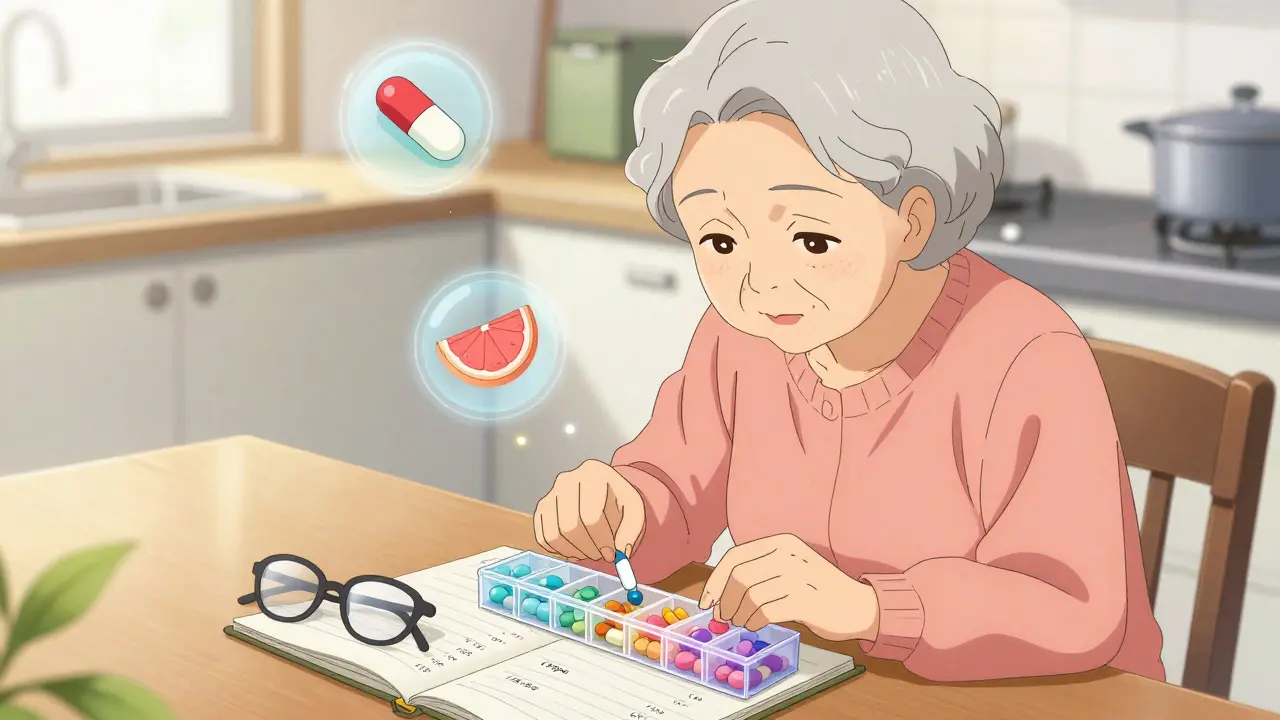
Taking five or more prescription drugs at once isn’t uncommon-especially for people over 65. In fact, 41% of adults 75 and older are doing it, according to the Journal of the American Medical Association. But each extra pill adds risk. Medications don’t just work on their own-they react with each other. A blood pressure drug might make a cholesterol pill less effective. An anti-inflammatory could damage your kidneys when mixed with a diuretic. Even something as simple as a calcium supplement can block your thyroid medication if taken at the same time.
These aren’t rare mistakes. A 2022 study in the Annals of Internal Medicine found that people using multiple pharmacies had a 58% higher chance of a serious drug interaction. And it’s not just prescriptions. Eighty-two percent of dangerous reactions happen because patients don’t tell their doctor they’re taking over-the-counter painkillers, herbal teas, or vitamins. That’s why a complete list-every pill, every drop, every capsule-is your first line of defense.
Build a Complete Medication List
Start with every single thing you take. Not just the ones your doctor wrote down. Include:
- Brand and generic names (e.g., Lisinopril or Zestril)
- Dosage (e.g., 10 mg, not just "one pill")
- Time of day (e.g., "take with breakfast," "take at bedtime")
- Why you take it (e.g., "for high blood pressure," "for joint pain")
- Special instructions (e.g., "avoid grapefruit," "take on empty stomach")
Don’t forget supplements. Turmeric, fish oil, magnesium, melatonin-they all interact. A 2023 analysis by StatPearls showed that nonsteroidal anti-inflammatory drugs (NSAIDs) like ibuprofen, when taken with blood thinners or kidney medications, cause 22% of preventable hospital stays in seniors. Write it all down. Use a notebook, a phone note, or a printed sheet. Keep it updated. Bring it to every appointment-even if you think your doctor already knows.
Use One Pharmacy Only
Switching between pharmacies might seem convenient, but it’s risky. When prescriptions are spread across three or four different locations, no single pharmacist has the full picture. A 2023 Health Affairs study showed that single-pharmacy users had a 47% better chance of catching dangerous interactions. Why? Because pharmacists can see everything you’ve filled in the last year. They can spot when two drugs clash, when a dose is too high, or when a new prescription contradicts an old one.
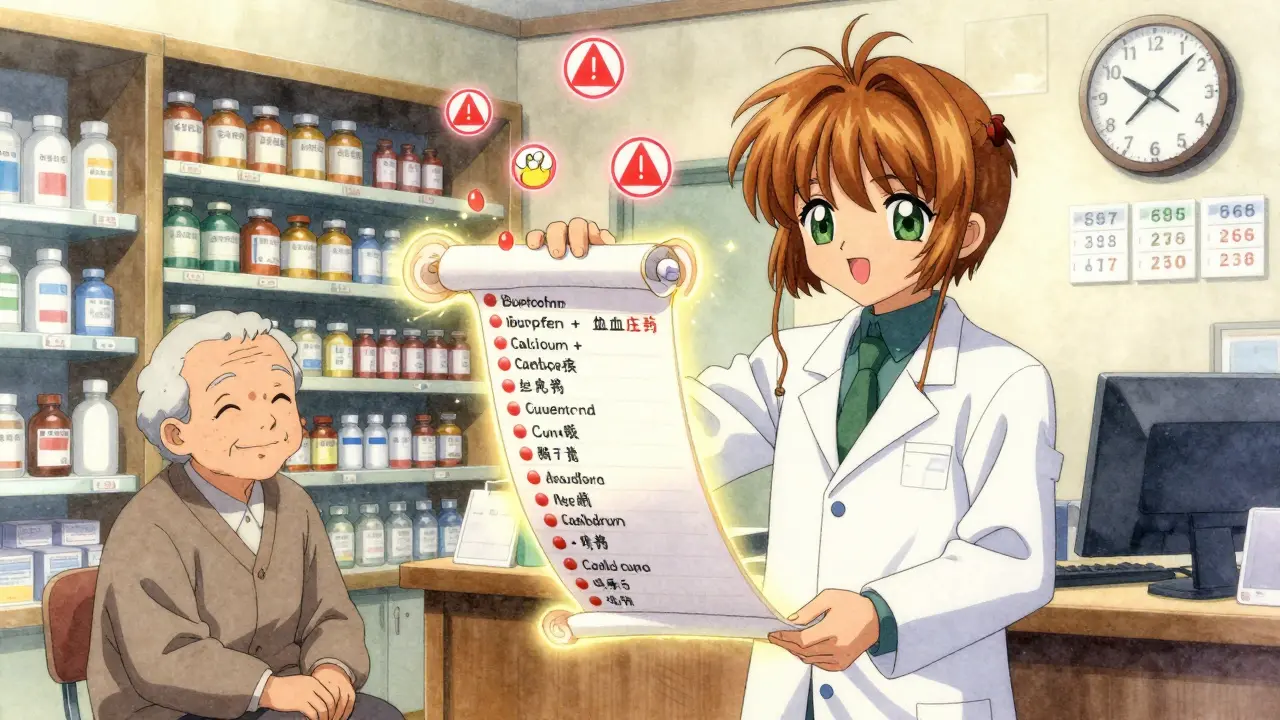
Find a pharmacy you trust. One that knows your name, your history, your allergies. Ask them to flag any new prescriptions that might conflict with what you’re already taking. Many community pharmacies now offer free medication reviews-no appointment needed. Just walk in with your list. In Melbourne, pharmacies like Chemist Warehouse and TerryWhite Chemmart have pharmacists trained to do this. It’s not just service-it’s protection.
Try Medication Synchronization
Imagine getting all your prescriptions ready on the same day each month. No more juggling refill dates, no more running out of pills mid-week. That’s medication synchronization. It’s not a fancy app or a smart device-it’s a simple system used by community pharmacies across Australia and the U.S.
The process works like this: your pharmacist looks at all your maintenance medications (the ones you take daily), then lines up their refill dates to one day a month. Need your blood pressure pill on the 5th? Your cholesterol pill gets moved to the 5th too. Your diabetes meds? Same day. You pick up everything at once. The American Society of Health-System Pharmacists says this reduces missed doses by 31% and saves $1,200-$1,800 per person per year in avoided hospital visits.
It takes two to three weeks to set up. You’ll need to give consent. The pharmacist will separate your "as-needed" meds (like painkillers for flare-ups) from your daily ones. But once it’s running, it’s automatic. Ask your pharmacy if they offer it. If they don’t, ask them to start. It’s free for most Medicare and private insurance holders.
Use a Pill Organizer-But Choose the Right One
Pill organizers aren’t just for forgetful people. They’re for everyone taking more than three daily medications. A 2023 study in the Journal of General Internal Medicine tracked 1,245 seniors. Those who used a simple 7-day AM/PM organizer boosted their adherence from 62% to 87% in six months.
Don’t just grab any plastic box. Look for one with:
- Separate compartments for morning, afternoon, evening, and bedtime
- Clear labels you can read without squinting
- A lid that locks to prevent spills
Some even have alarms. Hero Health’s device costs $899, but it calls your family if you miss a dose. For most people, a $15 basic organizer works fine. Fill it once a week-Sunday evening works well. Make it part of your routine, like watching your favorite show. Set a reminder on your phone: "Fill the box."
Watch for Warning Signs
Confusion, dizziness, nausea, dry mouth, sudden fatigue-these aren’t just "getting older." They’re red flags. Ami Patel, a clinical pharmacist, says 82% of dangerous interactions start with mild side effects people ignore. If you feel different after starting a new pill or changing a dose, write it down. Note the day, the time, what you took, and how you felt.
Common dangerous combinations include:
- NSAIDs (ibuprofen, naproxen) + blood pressure meds → kidney damage
- Calcium supplements + thyroid meds → blocked absorption
- Antidepressants + migraine meds → serotonin syndrome (can be fatal)
- Statin drugs + grapefruit juice → muscle breakdown
Keep a small notebook in your wallet or purse. Jot down anything unusual. Bring it to your next appointment. Your pharmacist can spot patterns your doctor might miss.

Ask About Deprescribing
Just because a pill was prescribed years ago doesn’t mean you still need it. The American Geriatrics Society’s 2023 Beers Criteria lists 30 high-risk drug combinations that should be avoided in older adults. Many of these were started for temporary issues-like a short-term antibiotic or a painkiller after surgery-that became permanent.
Ask your doctor: "Is this medication still necessary?" or "Can we try stopping this one?" Deprescribing isn’t about cutting pills-it’s about simplifying. A 2023 Commonwealth Fund analysis found that every dollar spent on medication reviews saves $7.20 in avoided hospital care. You don’t have to stop everything at once. Work with your pharmacist and doctor to slowly reduce one drug at a time. Monitor how you feel. Sometimes, you’ll feel better without it.
Use Digital Tools Wisely
Apps like Medisafe and MyMeds send reminders, track refills, and even alert you to interactions. A 2022 JAMA Internal Medicine trial showed they improve adherence by 28% compared to paper logs. But here’s the catch: 62% of adults over 75 don’t use smartphones regularly. If you’re comfortable with tech, use them. If not, don’t force it. A printed list and a pill box are just as powerful.
Some pharmacies offer free apps with refill alerts. CVS Health’s app, for example, texts you 72 hours before you run out. That’s helpful. But the real power comes from combining tech with human care. Use the app to remind you to bring your list to the pharmacy. Let it help-but don’t let it replace talking to your pharmacist.
What to Do Next
Start today. Here’s your action plan:
- Write down every medication, supplement, and OTC drug you take-exact names, doses, times.
- Call your pharmacy and ask if they offer medication synchronization.
- Book a free medication review with your pharmacist.
- Buy a 7-day AM/PM pill organizer and fill it this Sunday.
- Ask your doctor: "Are there any medications I can stop?"
Coordination isn’t complicated. It’s just consistent. The goal isn’t to take fewer pills-it’s to take the right ones, at the right time, without risk. And that’s something no app or machine can replace: a clear list, a trusted pharmacist, and the courage to ask, "Do I still need this?"




Harriot Rockey
This is so needed! 🙌 I just helped my grandma organize her meds last week-she was taking 12 different things and didn’t even know half of them were for the same thing. Now she uses a pill box and her pharmacy does sync. She says she feels like a new person. 🌞💊
Alec Stewart Stewart
I never thought about using one pharmacy until my uncle ended up in the ER because two different places gave him conflicting blood thinners. Just stick with one. It’s not that hard.
Geri Rogers
Let me be real for a second-this post is GOLD. But honestly? Most doctors don’t care. They write the script, hand it to you, and move on. The real hero is the pharmacist who actually reads the list. If yours doesn’t offer a free med review, FIRE THEM. Your life is worth more than their laziness. 🚨💊
Samuel Bradway
I’ve been using a simple $12 pill organizer for years. Sunday night, right after my coffee. No apps, no fancy stuff. Just me, my list, and a little routine. It’s not sexy, but it works.
Katherine Urbahn
I must emphasize-this is not merely a suggestion; it is an imperative. The failure to maintain a comprehensive, updated, and legible medication log constitutes a gross negligence of personal health stewardship. Furthermore, the use of multiple pharmacies is not merely 'risky'-it is statistically indefensible. You are not 'busy'; you are endangering yourself.
Joseph Cooksey
Look, I’ve been around the block a few times-seen people take everything from aspirin to kratom to ‘miracle’ turmeric gummies like they’re candy. And you know what? The system’s broken. Doctors are overworked, pharmacists are underpaid, and patients? They’re just trying to survive. But here’s the truth: if you’re taking more than five pills and you haven’t sat down with your pharmacist and said, ‘Hey, what the hell am I even taking?’ then you’re not managing your health-you’re just collecting prescriptions like baseball cards. And guess what? Your kidneys don’t care about your collection.
Justin Fauth
America’s got the best meds in the world, but we’re too lazy to use them right. You want to live to 90? Then stop being a couch potato with a pharmacy bag. Get your list. Go to one place. Ask the damn questions. This isn’t rocket science-it’s basic adulting. And if you can’t do it, maybe you shouldn’t be taking pills at all.
Meenal Khurana
I started this after my mother had a bad reaction. Simple list. One pharmacy. One day a week to fill the box. Changed everything.
Joy Johnston
I am a clinical pharmacist with over 18 years of experience, and I can unequivocally affirm that the protocols outlined in this post are not only evidence-based but represent the gold standard of polypharmacy management in geriatric populations. I routinely implement these exact strategies in my practice, and the outcomes are consistently favorable. I strongly encourage all patients to adopt these measures without delay.
Coy Huffman
i was just thinkin… what if we just stopped giving people so many pills in the first place? like, why do we treat aging like a disease? i mean, yeah, i get it-blood pressure, joints, sleep-but what if we just… ate better, walked more, and talked to someone instead of popping 10 things a day? 🤔 maybe the real fix isn’t the pillbox… it’s the life before the pills.
Keith Harris
Oh wow, another ‘just ask your pharmacist’ fairy tale. You really think the guy behind the counter at Walgreens gives a flying fuck about your thyroid med? He’s got 17 people in line, a screaming kid, and a manager breathing down his neck. And don’t get me started on ‘med sync’-that’s a marketing ploy to get you to come in once a month so they can upsell you protein powder and hearing aids. This whole post reads like a pharmaceutical ad written by a grandma with a thesaurus. Do you even know how many people die from polypharmacy? It’s not because they didn’t use a pill organizer. It’s because the system is designed to keep you medicated, not healthy.
Mandy Vodak-Marotta
Okay, I’m gonna be real-I’m 42 and I’ve been helping my mom with her meds since I was 16. She’s 78, takes 14 things, and I swear to god, I used to think she was just being dramatic when she said she felt weird after a new script. But then one day she said, ‘I feel like I’m underwater,’ and I looked up every single thing she was on. Turns out, her blood pressure med and her sleep aid were teaming up to make her dizzy as hell. We switched one, and now she’s back to gardening and baking pies. I don’t know why this isn’t common knowledge. Like, why is this not taught in high school? We learn how to balance a checkbook but not how not to accidentally poison ourselves with pills? We’re all just winging it, and honestly? That’s terrifying. I keep a printed list in my purse, my car, and my laptop. I’ve even started doing it for my friends. If you’re over 60 and not doing this, you’re not being careful-you’re being lucky. And luck runs out.