
Grapefruit and Statins: What You Need to Know About the Dangerous Interaction
Statin-Grapefruit Interaction Checker
Check Your Statin Safety
This tool checks if your statin medication interacts dangerously with grapefruit juice. Select your statin below to see if grapefruit is safe for you.
If you're taking a statin to lower your cholesterol, drinking a glass of grapefruit juice might seem like a healthy choice. But for some statins, that habit could be putting your muscles - and even your kidneys - at serious risk. This isn't a myth. It's a well-documented, potentially life-threatening interaction backed by decades of clinical research.
Why Grapefruit Changes How Your Body Handles Statins
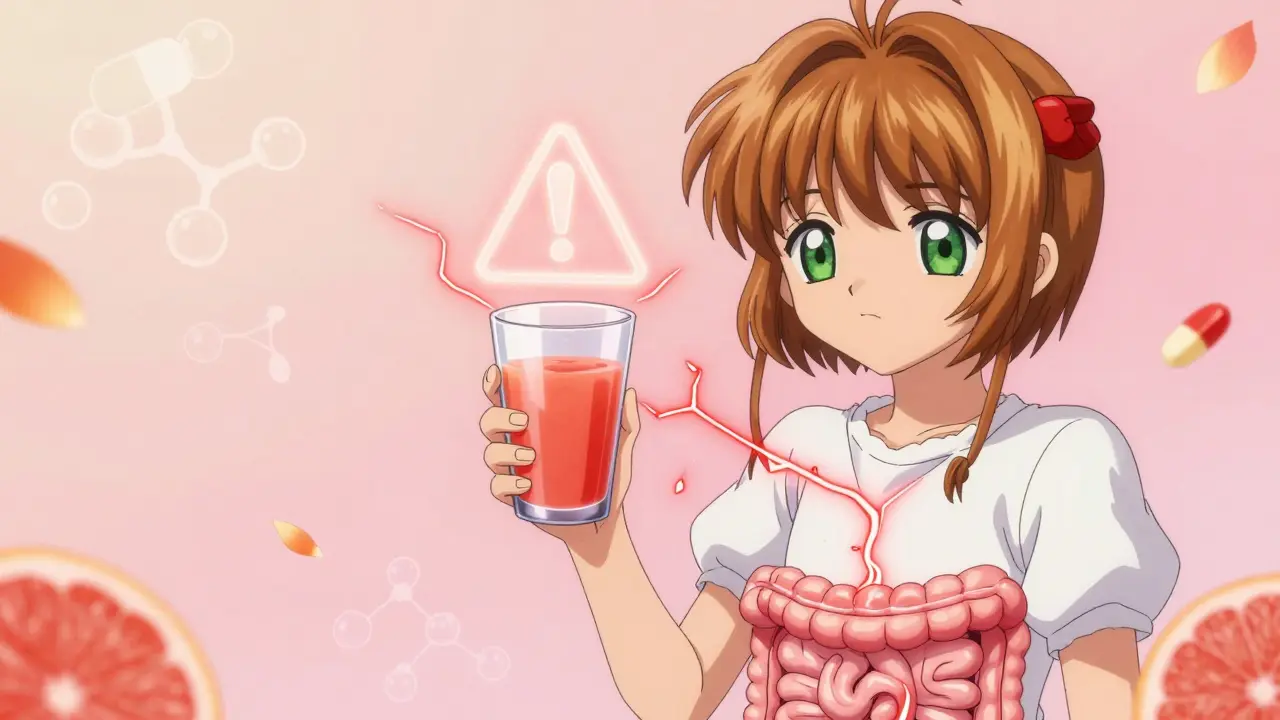
Grapefruit doesn't just taste different from other citrus fruits - it behaves differently in your body. The problem lies in chemicals called furanocoumarins, found almost exclusively in grapefruit, Seville oranges, and pomelos. These compounds don't just pass through your system. They latch onto an enzyme in your small intestine called CYP3A4, which normally breaks down many medications before they enter your bloodstream. When furanocoumarins block CYP3A4, your body can't process certain statins the way it should. Instead of being broken down, more of the drug gets absorbed. That means you end up with much higher levels of the statin in your blood than your doctor prescribed. It's like taking a double or triple dose without realizing it. This isn't a minor issue. A landmark 1998 study showed that just 200 mL of grapefruit juice - about two-thirds of a cup - increased the concentration of simvastatin in the blood by up to 16 times. That's not a small bump. That's a massive surge.Which Statins Are Safe? Which Are Not?
Not all statins react the same way. The risk depends entirely on how your body metabolizes the drug. Statins that rely heavily on CYP3A4 are the ones you need to watch out for:- High risk: Simvastatin (Zocor), lovastatin (Mevacor), atorvastatin (Lipitor)
- Low to no risk: Pravastatin (Pravachol), rosuvastatin (Crestor), fluvastatin (Lescol), pitavastatin (Livalo)
The Real Danger: Muscle Damage and Kidney Failure
The most feared outcome of this interaction isn't just muscle soreness. It's rhabdomyolysis - a condition where muscle tissue breaks down and spills its contents into your bloodstream. One of those substances, myoglobin, can clog your kidneys and cause acute kidney failure. This is rare - less than 1 in 10,000 statin users experience it annually - but the risk jumps dramatically if you're drinking grapefruit juice while taking high-risk statins. A documented case from 2022 involved a 40-year-old woman who developed rhabdomyolysis after eating grapefruit daily for 10 days while taking simvastatin. She didn't have a history of muscle problems. She wasn't exercising intensely. The only change? The grapefruit. Her symptoms? Severe muscle pain, weakness, and dark, tea-colored urine - classic signs of myoglobin leaking into the blood. Even if you don't get rhabdomyolysis, you're still at higher risk for myalgia - muscle pain and tenderness. Studies show this occurs in 5-10% of people who combine grapefruit with simvastatin or lovastatin. Many dismiss it as normal aging or exercise soreness. But if it starts after you begin drinking grapefruit juice, it's not coincidence.
Time Doesn't Fix It - Even If You Separate Them
You might think, "I'll just drink my grapefruit juice in the morning and take my statin at night." That won't work. The damage isn't temporary. Furanocoumarins don't just pause CYP3A4 - they permanently disable it. The enzyme needs about 72 hours to regenerate. That means if you drink grapefruit juice on Monday, your body is still vulnerable on Thursday. Even one glass every few days can keep your statin levels dangerously high. This is why the FDA and Cleveland Clinic stress that timing doesn't matter. You can't outsmart this interaction with a schedule. Either you avoid grapefruit entirely with high-risk statins, or you switch to a safer medication.What About Other Citrus Fruits?
Don't panic and throw out your entire citrus basket. Regular oranges, lemons, limes, and tangerines don't contain significant amounts of furanocoumarins. You can enjoy them without worry. The only other citrus to watch for is Seville oranges - the bitter kind used in marmalade. Pomelos, a large citrus fruit related to grapefruit, are also risky. If you're unsure, check the label. If it says "grapefruit" or "pomelo," skip it.
What Should You Do If You're Taking a Statin?
Here's what to do right now:- Check your statin name. Look at the prescription bottle. Is it simvastatin, lovastatin, or atorvastatin? If yes, stop drinking grapefruit juice immediately.
- Don't stop your statin. Stopping your medication increases your risk of heart attack or stroke far more than grapefruit ever could. Talk to your doctor before making any changes.
- Ask your pharmacist. Pharmacists are trained to spot these interactions. They can tell you if your statin is risky and suggest alternatives.
- Consider switching. If you love grapefruit, ask your doctor about switching to pravastatin or rosuvastatin. Both are just as effective at lowering cholesterol, with no grapefruit risk.
- Tell your doctor if you've been drinking grapefruit juice. Many patients don't mention it because they think it's harmless. But your doctor needs to know to assess your risk properly.
Why Do So Many People Still Risk It?
Despite the clear warnings, a 2021 survey found that only 42% of doctors routinely ask patients about grapefruit consumption when prescribing high-risk statins. And only 28% of patients say they were ever told about the danger. Part of the problem is confusion. People hear "avoid grapefruit" and assume all citrus is off-limits. Others think, "I only have a little bit once in a while - it can't hurt." But the science doesn't support that. Even small, occasional amounts can build up over time. Pharmacist-led interventions have proven effective. One 2021 study showed that when pharmacists flagged these interactions in Medicare patients, inappropriate grapefruit-statin combinations dropped by 78%. That's a huge win - and it shows how simple education can save lives.What's Next? A Grapefruit Without the Danger?
Scientists aren't giving up on grapefruit. Researchers at the University of Florida are working on breeding new varieties with drastically reduced furanocoumarins - while keeping the flavor and nutrients intact. Early results are promising. Within the next decade, we might have a "safe grapefruit" that won't interfere with statins. Until then, the message is simple: Know your statin. Know your juice. And don't gamble with your health.Can I drink grapefruit juice if I take rosuvastatin?
Yes. Rosuvastatin (Crestor) is not metabolized by the CYP3A4 enzyme, so grapefruit juice does not affect its levels in your blood. You can safely enjoy grapefruit if you're on rosuvastatin, pravastatin, fluvastatin, or pitavastatin.
How much grapefruit is dangerous with simvastatin?
There is no safe amount. Even a single glass of grapefruit juice can significantly increase simvastatin levels in your blood. The FDA and medical guidelines recommend complete avoidance. If you're on simvastatin, skip grapefruit entirely.
I’ve been drinking grapefruit juice with my statin for years. Should I be worried?
If you're on simvastatin or lovastatin and have been drinking grapefruit juice regularly, you've been at increased risk for muscle damage. You may not have had symptoms yet, but the risk has been building. Stop the juice immediately and talk to your doctor. They can check your muscle enzymes and consider switching you to a safer statin.
Can I take my statin at night and grapefruit in the morning?
No. The enzyme inhibition caused by grapefruit lasts up to 72 hours. Separating the timing by hours or even a full day won't prevent the interaction. The only safe option is to avoid grapefruit completely if you're on a high-risk statin.
What are the signs I should see a doctor right away?
If you're on a statin and experience unexplained muscle pain, weakness, or dark urine (like tea or cola), stop the grapefruit immediately and contact your doctor. These could be signs of rhabdomyolysis, a medical emergency. Don't wait for symptoms to get worse.

Tatiana Bandurina
My dad took simvastatin for years and drank grapefruit juice every morning like clockwork. He never had symptoms until he ended up in the ER with kidney failure. No one told him about the risk-not his doctor, not the pharmacist. Just a little juice. That’s all it took. Now he’s on rosuvastatin and drinks it without a second thought. Don’t wait for the crash to learn this lesson.
Philip House
Let’s be real-this whole thing is a pharmaceutical industry scare tactic. Statins are overprescribed anyway. If you’re taking them, you’ve already lost the battle against your own biology. Grapefruit isn’t the enemy; the system is. People get so obsessed with ‘safe’ meds they forget the body’s got its own way of balancing things. Maybe your muscles are just telling you to stop the pills.
Jasmine Bryant
Just checked my prescription-got rosuvastatin! So glad I read this. I love grapefruit, and I was terrified I’d have to give it up. I asked my pharmacist last week and she said I was fine, but I didn’t know why. Now I do. Also, side note: if you’re on atorvastatin and really want grapefruit, maybe just stick to one small slice once a week? I’ve heard some docs say that’s okay if you’re low dose and no other meds. But I’m not a doctor. Just sharing what I read.
Sarvesh CK
The interaction between furanocoumarins and CYP3A4 is a profound example of how molecular biology intersects with everyday dietary habits. One must recognize that the human pharmacokinetic system is not merely a passive vessel for drug absorption but an intricate, dynamic network of enzymatic regulation. The irreversible inhibition of CYP3A4 by grapefruit constituents underscores the necessity for precision in pharmacotherapy, particularly in populations with polypharmacy or age-related metabolic decline. It is not merely a matter of avoiding a fruit, but of cultivating a deeper understanding of metabolic pathways and their vulnerability to seemingly benign substances. This is not alarmism-it is pharmacological literacy.
Brenda King
My sister’s cardiologist told her to avoid grapefruit but she didn’t know why. She thought it was just because it’s ‘acidic.’ Now she knows. She switched to pravastatin and is back to her morning grapefruit. 😊 She says it’s the highlight of her day. Also, if you’re on statins and don’t know which one, go to the pharmacy and ask. They’ll tell you for free. Don’t guess. Your muscles will thank you.
Neil Ellis
I used to think grapefruit was just a fancy breakfast garnish. Now I see it as this tiny, tart little saboteur hiding in plain sight. It’s like a ninja in citrus form-quiet, unassuming, but ready to wreck your statin like it’s a bad action movie. And the worst part? You don’t feel it until it’s too late. My uncle didn’t know until his legs turned to jelly. Now he drinks orange juice and calls grapefruit ‘the traitor fruit.’ Honestly? I respect that.
arun mehta
Wow, this is such an important post! 🙏 I work in a clinic in Delhi and we see so many patients on statins who drink grapefruit juice because they think 'natural = safe.' We’ve had two cases of rhabdomyolysis in the last year-both linked to simvastatin + grapefruit. We now have a printed handout we give out with every statin prescription. Simple, clear, no jargon. It’s saved lives. Please share this widely. Education is the real medicine here.
Lauren Wall
Stop drinking grapefruit juice if you’re on statins. That’s it. No excuses.
shivani acharya
Okay but what if this whole thing is a big pharma lie to sell more expensive statins? Like, what if they just want you to switch to rosuvastatin so they can charge $500 a month instead of $5 for simvastatin? And what if grapefruit is actually protecting you from the statin’s side effects? I mean, my cousin’s friend’s neighbor’s dog walker’s yoga instructor said her doctor told her grapefruit ‘rebalances the liver’ and that’s why she’s been fine for 12 years. Coincidence? I think not. The FDA’s been lying since the 90s. They don’t want you to know the truth.
Patrick Roth
Actually, the 1998 study they cited? It was on healthy volunteers, not people with metabolic syndrome or liver disease. And the 72-hour enzyme recovery? That’s from rat studies. Human data is way more variable. Plus, I’ve been drinking grapefruit juice with my Lipitor for 8 years and my CK levels are normal. So maybe the whole thing is overblown. You’re not a lab rat. Your body’s not a textbook.
Kenji Gaerlan
wait so i can drink orange juice? lol i thought all citrus was bad. also i take atorvastatin and i eat a whole grapefruit every day. am i gonna die?
Oren Prettyman
While the empirical evidence presented in the aforementioned article is indeed compelling and corroborated by peer-reviewed clinical literature, one must also consider the epistemological limitations inherent in population-based pharmacokinetic studies. The generalization of risk across heterogeneous patient populations-accounting for genetic polymorphisms in CYP3A4, dietary variability, and concurrent medication regimens-may inadvertently lead to overmedicalization of benign dietary behaviors. Furthermore, the assertion that no safe threshold exists for grapefruit consumption with simvastatin lacks robust dose-response validation in longitudinal cohorts. A more nuanced, individualized risk-benefit analysis is warranted, rather than blanket avoidance protocols.
Rob Sims
Of course the FDA says it’s dangerous. They’re the same people who told us trans fats were fine. You think they care if you live or die? They care about liability. Meanwhile, your doctor’s paycheck comes from your prescriptions. They don’t want you switching to the cheaper, safer statin. They want you to keep taking the one that makes them kickbacks. Grapefruit isn’t the problem. The system is. And you’re just the patsy.
Mike P
My buddy’s on simvastatin and drinks grapefruit juice every day. He’s 65, lifts weights, feels great. He says his doctor told him it’s fine if he doesn’t have muscle pain. So now I’m confused. Are we all just supposed to panic? Or is this just another one of those things that sounds scary but doesn’t matter if you’re healthy? I’m not saying he’s right. But he’s alive. And he’s got abs. So… maybe?