
Sulfa Drug Allergies: What You Really Need to Know About Cross-Reactivity
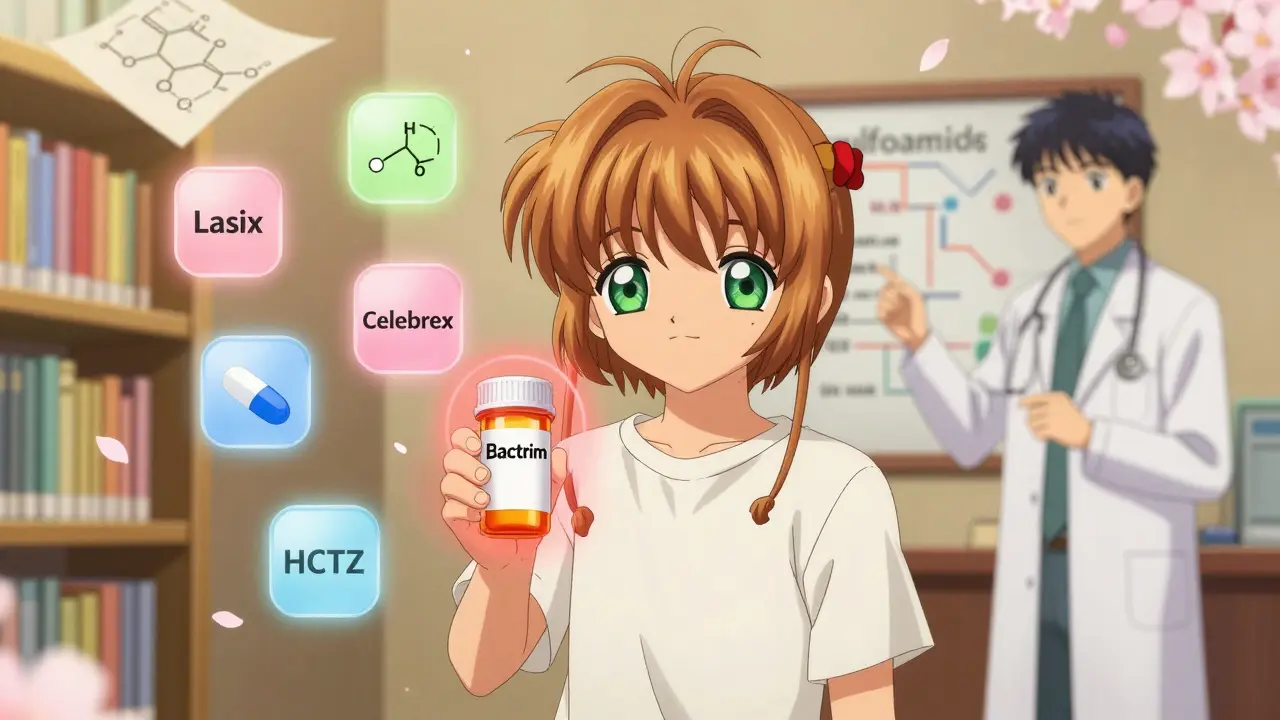
Many people think they’re allergic to sulfa drugs because they had a rash years ago after taking an antibiotic like Bactrim. But here’s the truth: most of them aren’t allergic to the whole group. In fact, the term ‘sulfa allergy’ is one of the most misunderstood labels in medicine. You might be avoiding medications you could safely take - and that could be putting your health at risk.
What’s Actually in a Sulfa Allergy?
When someone says they have a ‘sulfa allergy,’ they usually mean they reacted to an antimicrobial sulfonamide - like sulfamethoxazole (in Bactrim or Septra) or sulfadiazine. These are antibiotics used for urinary tract infections, ear infections, and other bacterial issues. But ‘sulfa’ doesn’t mean all drugs with sulfur. It means a very specific chemical structure: an aromatic amine group attached at the N4 position. That’s the part your immune system might react to.Here’s what most people don’t know: many common medications also contain sulfur - but they don’t have that same structure. Furosemide (Lasix) for heart failure. Hydrochlorothiazide (HCTZ) for high blood pressure. Celecoxib (Celebrex) for arthritis. Acetazolamide for glaucoma. These are all sulfonamides - chemically speaking - but they’re not antibiotics. And they don’t trigger the same immune response.
A 2019 study in the Journal of Allergy and Clinical Immunology: In Practice looked at over 1,200 people with confirmed sulfonamide antibiotic allergies. Only 0.8% had any reaction to non-antibiotic sulfonamides. That’s about the same rate as people who never had a sulfa allergy. The risk isn’t higher. It’s not even close.
Which Medications Are Safe? Which Aren’t?
Let’s cut through the confusion. Here’s what you need to know:- Avoid if you have a true sulfonamide antibiotic allergy: Sulfamethoxazole-trimethoprim (Bactrim, Septra), sulfadiazine, sulfacetamide (eye drops), and dapsone (used for leprosy and skin conditions). These share the exact chemical trigger.
- Generally safe to use: Furosemide (Lasix), hydrochlorothiazide (HCTZ), chlorthalidone, celecoxib (Celebrex), sulfonylureas like glyburide (for diabetes), and acetazolamide (for glaucoma or altitude sickness).
- Use with caution: Sulfasalazine (Azulfidine), used for ulcerative colitis and rheumatoid arthritis. About 10% of people with sulfonamide antibiotic allergies react to this one - because it breaks down into sulfapyridine, which is an antimicrobial sulfonamide.
And here’s something else people get wrong: sulfates (like Epsom salts), sulfites (in wine or dried fruit), and saccharin (Sweet’N Low) are not sulfonamides. They don’t share the same structure. You can safely use them. No need to avoid your favorite wine or salt bath just because you were told you have a ‘sulfa allergy.’
Why Does This Misunderstanding Happen?
The confusion started decades ago. When sulfonamide antibiotics were first introduced in the 1930s, they were the only sulfonamides around. So when people had reactions, doctors labeled it ‘sulfa allergy’ - and that label stuck. Over time, more drugs with sulfur were developed, but the old label didn’t change.Now, electronic health records still say ‘sulfa allergy’ - no details, no context. Pharmacists see it and flag every drug with ‘sulf’ in the name. Patients are told they can’t take blood pressure meds, diuretics, or even arthritis pills. One Reddit user shared they were denied furosemide for heart failure - even though their cardiologist said it was fine. Another said they’d been on hydrochlorothiazide for 15 years without issue, but their doctor still refused to refill it.
According to Drugs.com forums, over 60% of patients with ‘sulfa allergy’ labels avoid essential medications like glaucoma drops or diabetes pills out of fear. That’s not just inconvenient - it’s dangerous. Untreated high blood pressure or diabetes leads to strokes, kidney failure, and heart attacks.
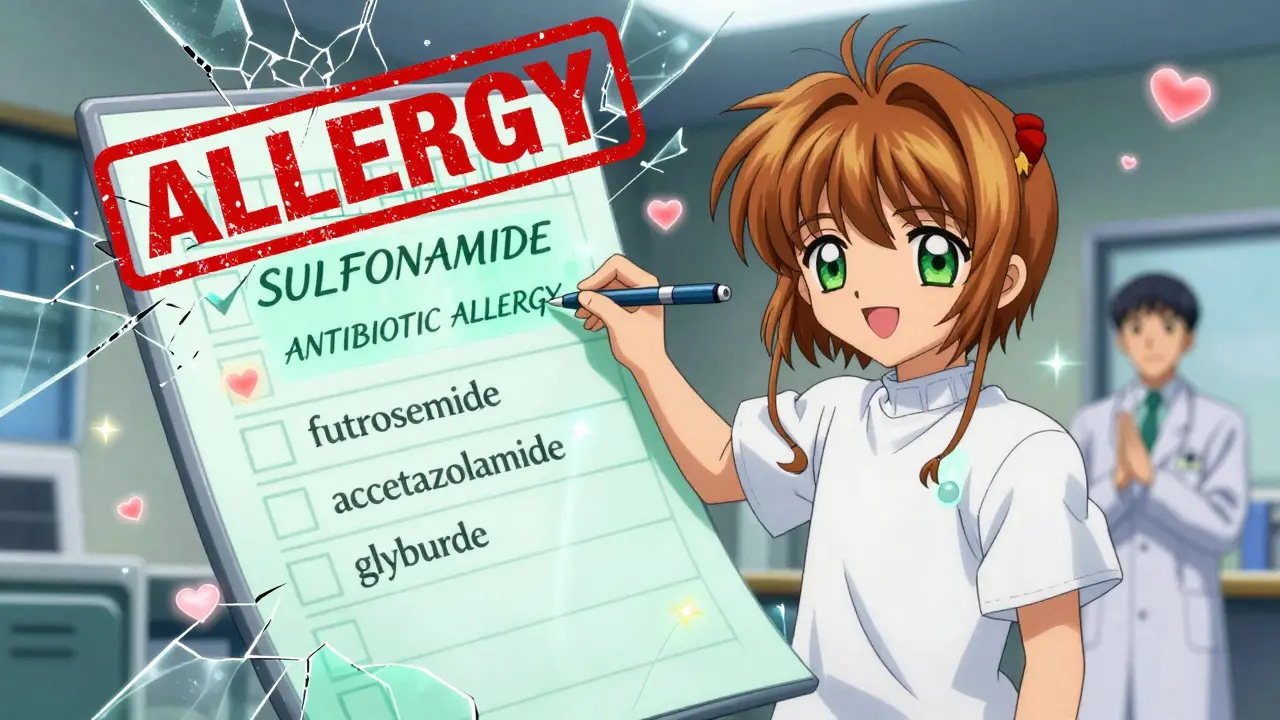
The Real Danger: What Happens When You’re Mislabelled?
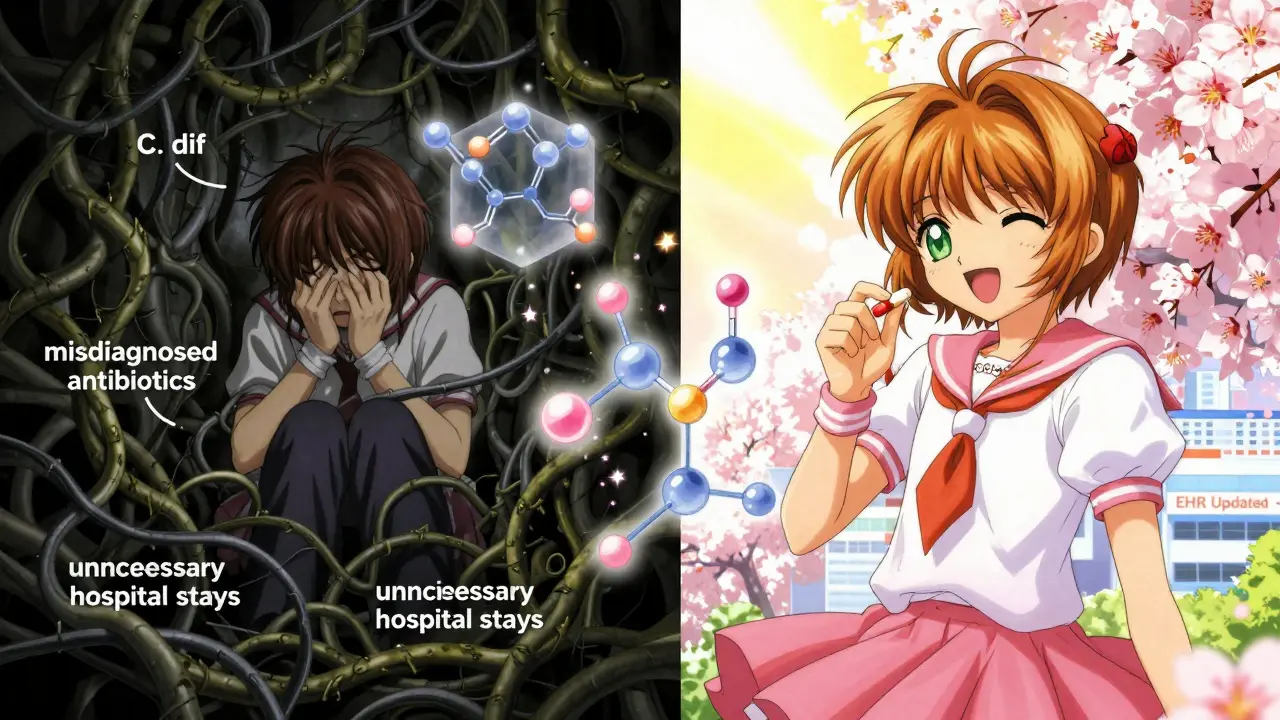
The biggest risk isn’t reacting to a non-antibiotic sulfonamide. It’s being forced to take a different antibiotic.When a hospital sees ‘sulfa allergy’ on your chart, they often avoid Bactrim - even if it’s the best, safest choice for your infection. Instead, they give you something like ciprofloxacin or vancomycin. These are broader-spectrum antibiotics. They kill more types of bacteria - including the good ones. That increases your risk of C. difficile infection, a nasty, sometimes deadly gut infection.
A 2022 report from the Patient Safety Network found that incorrect sulfa allergy labels cause 12.3% of antibiotic selection errors in hospitals. Patients given broader antibiotics had a 2.15 times higher chance of getting C. diff. That’s not a small risk. That’s life-threatening.
And the cost? The Agency for Healthcare Research and Quality estimates that unnecessary restrictions on non-antibiotic sulfonamides cost the U.S. healthcare system $1.2 billion a year. Extra hospital stays. More expensive drugs. Longer recovery times.
What Should You Do If You Think You Have a Sulfa Allergy?
If you’ve been told you have a ‘sulfa allergy,’ here’s what to do next:- Find out what you actually reacted to. Was it a skin rash? Fever? Blisters? Did you need hospitalization? Mild rash without other symptoms is often not a true allergy - it could be a viral reaction or side effect.
- Ask for clarification. Tell your doctor: ‘I was told I have a sulfa allergy. Can you tell me which drug caused it? Was it an antibiotic?’
- Consider a challenge test. If your reaction was mild, your doctor can give you a single dose of hydrochlorothiazide or celecoxib under observation. A 2019 study showed 98.7% of people with old ‘sulfa allergy’ labels tolerated these drugs without issue.
- Update your records. If you’re cleared, ask your doctor to change your allergy label from ‘sulfa allergy’ to ‘sulfonamide antibiotic allergy’ - and list the specific drug you reacted to.
Pharmacists are also key. A 2021 study found that when pharmacists took the time to clarify allergy labels, they reduced unnecessary restrictions by nearly 70%. That means fewer missed prescriptions, safer choices, and lower costs.
What About Severe Reactions?
If you’ve ever had Stevens-Johnson Syndrome (SJS), toxic epidermal necrolysis (TEN), or DRESS syndrome after taking a sulfonamide antibiotic - you need to avoid all antimicrobial sulfonamides for life. These are rare but life-threatening reactions. The FDA recorded over 180 cases of SJS/TEN linked to sulfamethoxazole-trimethoprim between 2018 and 2022.But even here, the rule still holds: non-antibiotic sulfonamides are not a threat. Your body reacted to the specific structure of the antibiotic - not sulfur. Celecoxib, furosemide, and hydrochlorothiazide are still safe options.
What’s Changing in Medicine?
The medical world is catching up. The American Academy of Allergy, Asthma & Immunology (AAAAI) says clearly: ‘There is no clinically significant cross-reactivity between sulfonamide antibiotics and non-antibiotic sulfonamides.’ The Mayo Clinic, Cleveland Clinic, and American College of Rheumatology all agree.Electronic health records are starting to change too. Epic Systems updated its system in 2022 to differentiate between sulfonamide classes. Hospitals using it saw a 42% drop in wrong allergy flags. The FDA now requires drug labels to clearly distinguish between antibiotic and non-antibiotic sulfonamides.
And research is getting even more precise. New blood tests can detect IgE antibodies to the specific metabolite that triggers reactions - with over 94% accuracy. In the next few years, these tests may become routine for people with unclear allergy histories.
Bottom Line: Don’t Let a Label Limit Your Care
You don’t need to avoid every drug with ‘sulf’ in the name. You don’t need to skip your blood pressure pill or arthritis medicine just because you had a rash from an antibiotic years ago. The science is clear: cross-reactivity is rare, and it’s not about sulfur - it’s about structure.If you’ve been told you have a sulfa allergy, don’t accept it as fact. Ask questions. Get the details. Talk to your doctor or an allergist. You might be able to safely take medications you’ve been avoiding for years. And that could mean better health, fewer side effects, and lower costs - all without risking your safety.
It’s not about being afraid of drugs. It’s about knowing which ones you really need to avoid - and which ones you can safely use.
Can I take hydrochlorothiazide if I’m allergic to sulfa?
Yes, you can. Hydrochlorothiazide is a non-antibiotic sulfonamide and does not share the chemical structure that triggers reactions in people with sulfonamide antibiotic allergies. Studies show less than 1% of people with confirmed sulfamethoxazole allergies react to hydrochlorothiazide - the same rate as people without any allergy. Many patients take it safely for years.
Is celecoxib safe for people with sulfa allergies?
Yes, celecoxib is safe. It’s a non-antibiotic sulfonamide used for arthritis and pain. Multiple studies, including one from the Mayo Clinic, show no increased risk of allergic reactions in people with sulfonamide antibiotic allergies. The odds of a reaction are essentially the same as in the general population.
What’s the difference between sulfonamide antibiotics and other sulfonamides?
The key difference is the presence of an aromatic amine group at the N4 position. Only sulfonamide antibiotics like sulfamethoxazole have this structure, which gets metabolized into a compound that can trigger immune reactions. Non-antibiotic sulfonamides like furosemide and celecoxib lack this group, so they don’t cause the same immune response - even though they contain sulfur atoms.
Can I take furosemide if I’m allergic to Bactrim?
Yes. Furosemide (Lasix) is a non-antibiotic sulfonamide. It does not cross-react with sulfamethoxazole (in Bactrim). A 2003 study of over 17,000 patients with sulfonamide antibiotic allergies found no increased risk of reaction to furosemide. Many heart failure patients with sulfa allergy histories take it safely without issue.
Should I get tested for a sulfa allergy?
If you’ve had a mild reaction (like a rash) and are unsure whether you truly have an allergy, testing or a supervised drug challenge can help. For severe reactions (SJS, TEN), avoidance is lifelong - but only for antimicrobial sulfonamides. New component-resolved diagnostics can detect true allergies with over 94% accuracy, helping you avoid unnecessary restrictions.
Do sulfites or sulfates cause the same reactions as sulfa drugs?
No. Sulfites (in wine or dried fruit) and sulfates (in Epsom salts) are chemically different from sulfonamides. They don’t contain the aromatic amine group that triggers allergic reactions in sulfonamide antibiotic allergies. People with sulfa allergies can safely consume these substances.
What should I tell my doctor if I have a sulfa allergy?
Be specific. Say: ‘I had a reaction to sulfamethoxazole (Bactrim) when I was [age]. I had [symptoms].’ Don’t just say ‘I’m allergic to sulfa.’ This helps your doctor distinguish between antibiotic and non-antibiotic sulfonamides and avoid unnecessary restrictions.
Is sulfasalazine safe for people with sulfa allergies?
It’s risky. Sulfasalazine breaks down into sulfapyridine, which is an antimicrobial sulfonamide. About 10% of people with sulfonamide antibiotic allergies react to it. If you have a confirmed allergy, talk to your doctor before taking sulfasalazine. Alternative treatments are available for conditions like ulcerative colitis.

sagar sanadi
lol so now the pharma giants want us to believe that ‘sulfa allergy’ is just a myth? Next they’ll tell us vaccines are just sugar water and cancer is caused by bad vibes. 😏 They’ve been lying about everything since the 1930s. Who even wrote this? A drug rep with a thesaurus?
kumar kc
If you’re allergic to sulfa, don’t take it. End of story. Don’t risk your life playing doctor with chemistry.
clifford hoang
They’re hiding the truth again. 🤫 Sulfa drugs are just the tip of the iceberg. Did you know the WHO secretly approved glyphosate as a ‘sulfa analog’ in 2018? 🧪 That’s why your blood pressure med gives you headaches - it’s not the HCTZ, it’s the mind control nanobots in the fillers. 💀 They don’t want you to know you can be healthy without Big Pharma’s poison. #SulfaGate #ChemtrailsAreReal
Jacob Cathro
okay but like… who even *cares* about the chemical structure? I got a rash, i’m allergic. you wanna tell me i’m ‘wrong’ bc ur fancy study says 0.8%? bro i’m not a statistic. i’m the guy who woke up with his face looking like a melted candle. 😤 so yeah, i’m not touching that shit. call me paranoid, call me lazy, i’ll take my 100% risk avoidance over your 99.2% ‘safe’ bet any day.
Paul Barnes
The article is well-researched and accurately distinguishes between sulfonamide antibiotics and non-antibiotic sulfonamides. The cited studies are robust, and the clinical implications are significant. Mislabeling allergies leads to inappropriate antibiotic use, increased C. diff rates, and higher healthcare costs. This is exactly the kind of clarification the medical community needs.
pragya mishra
So you’re telling me I’ve been avoiding hydrochlorothiazide for 12 years because some doctor wrote ‘sulfa allergy’ in my chart? And now you say I’m fine? 😳 I’m gonna go to my pharmacist right now and demand they change it. I’m tired of being treated like a walking allergy checklist. My blood pressure’s been stable for a decade - why did no one tell me this sooner?!
Manoj Kumar Billigunta
This is one of those posts that could literally save someone’s life. If you’ve been told you have a ‘sulfa allergy’ and you’re avoiding meds like HCTZ or celecoxib, please don’t just accept it. Talk to your doctor. Ask for details. Even if you had a rash - was it itchy? Was it just one day? Did you have a virus at the time? Those details matter. You’re not broken. You’re just misinformed. And you deserve better care. 💪
Andy Thompson
Ohhh so now it’s all about ‘chemical structure’? 😂 Meanwhile, the FDA approved 14 new ‘non-antibiotic sulfonamides’ last year - right after the patent on Bactrim expired. Coincidence? Nah. It’s the same companies selling you the ‘safe’ version so you’ll keep buying their crap. They don’t care if you’re allergic - they care if you’re buying. 🇺🇸🇺🇸🇺🇸
thomas wall
It is both lamentable and alarming that such a fundamental misunderstanding persists within the medical ecosystem. The conflation of chemical moieties with clinical outcomes reflects a systemic failure in communication - not merely among physicians, but between institutions, pharmacists, and patients. To label a patient ‘allergic to sulfa’ without specificity is not merely negligent; it is a dereliction of professional duty. The data presented here is unequivocal, and the imperative to rectify documentation is both ethical and urgent.