
Strength Training for Fat Loss: How to Program for Real Results
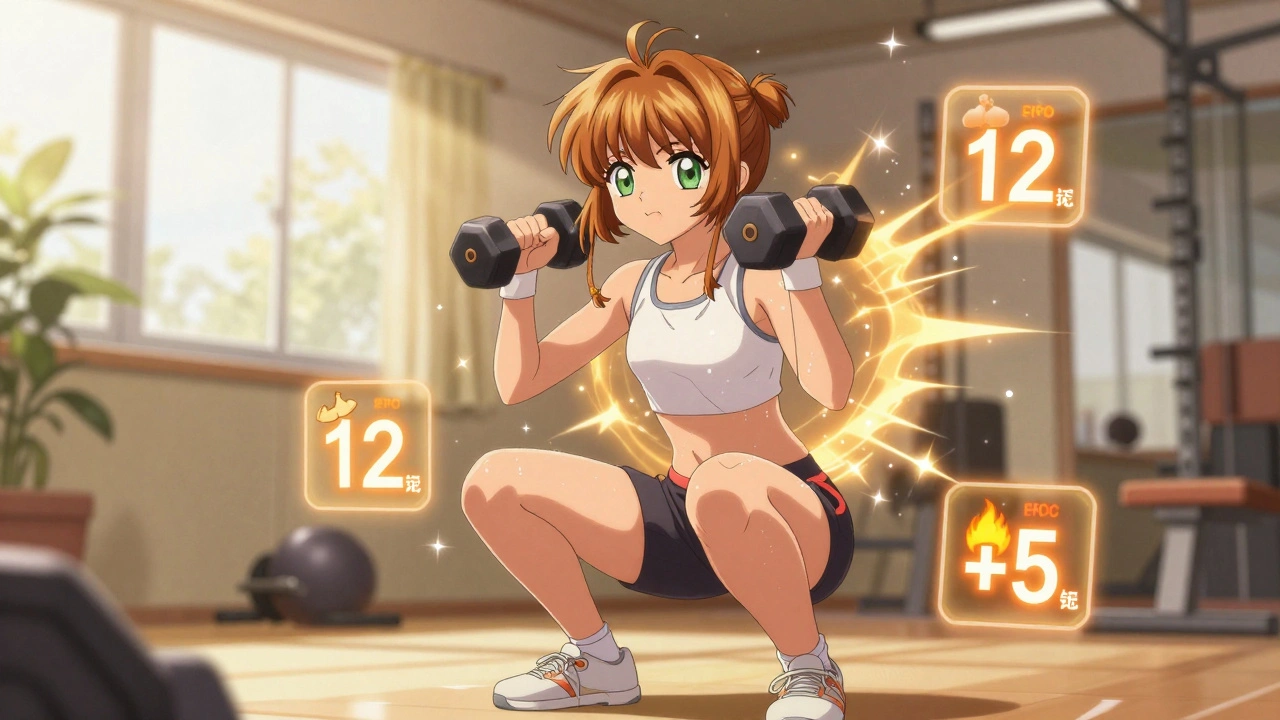
Most people think fat loss means endless cardio, sweat-drenched treadmills, and the scale dropping week after week. But if you’ve ever done that and ended up looking skinny but soft, you know something’s off. The truth? Strength training is the most effective tool for real, lasting fat loss-not because it burns the most calories during the workout, but because it changes your body’s entire metabolism for the long haul.
Why Strength Training Beats Cardio for Fat Loss
Cardio burns calories while you’re doing it. That’s it. Once you stop, your body goes back to resting mode. Strength training? It keeps burning calories for up to 72 hours after you finish. That’s called EPOC-excess post-exercise oxygen consumption. A 2018 study in the Journal of Sports Science & Medicine found strength workouts can add 6-15% more total calories burned just from your body recovering afterward. But the real game-changer is muscle. Every pound of muscle you build burns 6-10 calories a day at rest. Fat? Only 2-3. So if you lose 5 pounds of fat and gain 3 pounds of muscle, your body is now burning nearly 20 extra calories a day without lifting a finger. That’s 140 extra calories a week. Over a year? That’s over 7,000 calories-roughly two pounds of fat-just from having more muscle. A 2022 meta-analysis in Obesity Reviews looked at 28 studies and found people who trained with weights kept 95% of their lean mass during weight loss. Those who only did cardio? They lost 12% of their muscle. That’s not just about looking better-it’s about keeping your metabolism high so you don’t regain the weight.How to Structure Your Strength Program for Fat Loss
This isn’t about lifting heavy for bulk. It’s about lifting smart to burn fat and keep muscle. The sweet spot? 8-15 reps per set. For big movements like squats, deadlifts, and bench presses, aim for 8-12 reps. For smaller moves like bicep curls or lateral raises, go 12-15. Do 3-5 sets per exercise. Rest 2-3 minutes between sets. That might sound long, but it lets you lift heavier next set, which is how you keep building muscle. Shorter rests? You’ll just end up doing cardio with a barbell. Here’s a simple weekly plan that works for most people:- Monday: Full-body strength (compound lifts)
- Tuesday: Steady-state cardio (30-40 minutes, heart rate 65-75% max)
- Wednesday: Full-body strength (different exercises or heavier weights)
- Thursday: HIIT (20 minutes: 1 min hard, 3 min easy, repeat 5x)
- Friday: Full-body strength (focus on tempo and control)
- Saturday: Active recovery (walk, stretch, foam roll)
- Sunday: Rest
Progressive Overload: The Secret Sauce
If you do the same workout every week, your body adapts-and stops changing. That’s why most people hit plateaus. The fix? Progressive overload. That means gradually making your workouts harder. The rule: When you can complete all sets of an exercise at the top of your rep range (e.g., 12 reps on squats with 20 lbs), increase the weight. For women, add 5 lbs. For men, add 10 lbs. Then reset your reps to the lower end of the range (8-10). You’ll feel it. That’s progress. A 2023 review of 500 Amazon reviews for the Women’s Health 4-Week Strength Training Plan found that 87% of people who got the best results tracked their weights and increased them weekly. The rest? They stayed stuck.Form Over Weight-Always
Lifting heavier feels good. But if you’re rounding your back on a deadlift or bouncing the bar off your chest on a bench press, you’re not building muscle-you’re risking injury. Poor form also means you’re not targeting the right muscles, so you burn fewer calories and get less benefit. Take two weeks to learn the basics. Watch videos. Do sets with light weight and focus on control. Use a 2-0-2 tempo: 2 seconds up, no pause, 2 seconds down. This keeps tension on the muscle and boosts calorie burn. Common mistakes:- Arching your lower back during deadlifts
- Not going deep enough on squats (thighs parallel to the floor is the goal)
- Shrugging your shoulders on overhead presses
Nutrition: The Other Half of the Equation
You can’t out-train a bad diet. But you also don’t need to starve yourself. The goal is to create a modest calorie deficit while protecting muscle. Aim for:- 1.6-2.2 grams of protein per kilogram of body weight
- 40% protein, 30% carbs, 30% fats
Why the Scale Lies-And What to Track Instead
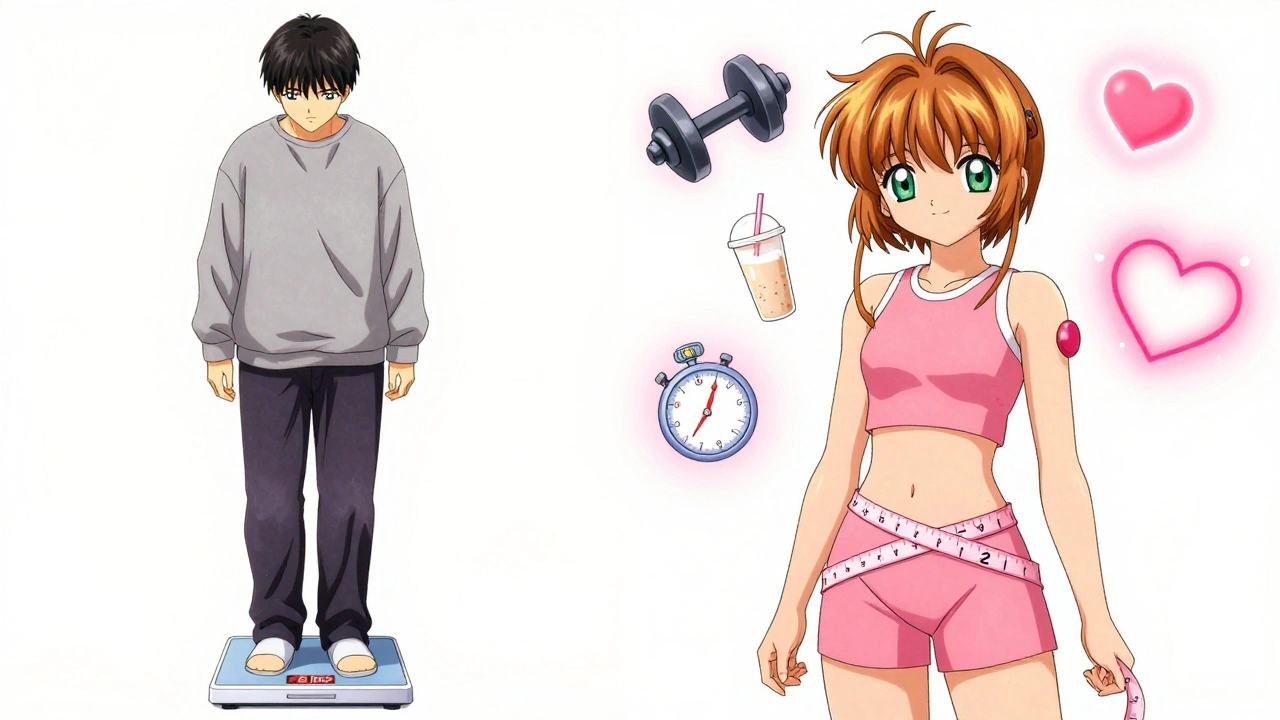
If you’re doing strength training for fat loss, the scale might not move-or it might even go up. That’s not failure. That’s muscle. Muscle is denser than fat. You can lose 4 pounds of fat and gain 3 pounds of muscle and still gain 1 pound on the scale. But your clothes will fit better. Your waist will shrink. Your arms will look tighter. Track these instead:- Waist, hip, and chest measurements (every 2 weeks)
- Progress photos (same lighting, same time of day)
- How your clothes fit
- Strength gains (can you lift more? Do more reps?)
Real People, Real Results
On Reddit, user ‘FitJourney2023’ lost 48 pounds over 6 months with 3 strength sessions a week and intermittent fasting. The scale only dropped 32 pounds. The other 16? Muscle gained while fat melted away. Body fat dropped from 32% to 19%. Another user, ‘CardioQueen99’, did pure cardio for 8 months. Lost 25 pounds. Looked “skinny fat.” Added strength training. Six months later? She had visible abs for the first time in her life. These aren’t outliers. They’re the rule when you train right.
What About HIIT? Should I Do That Too?
Yes-but not instead of strength training. HIIT is great for burning extra calories and improving heart health. But it doesn’t build muscle like lifting does. Best approach: 3 strength sessions + 2 cardio sessions (one steady, one HIIT). That’s the sweet spot. A 2023 study showed this combo led to 1.8 pounds of fat loss per week. Cardio-only? 1.3 pounds. Strength-only? 1.1 pounds. HIIT should be short: 20 minutes max. Do it on non-lifting days. Or add it at the end of a strength session with 3-4 rounds of jump squats, kettlebell swings, or burpees.Common Mistakes (And How to Fix Them)
- “I’m too sore to keep going.” DOMS (delayed onset muscle soreness) peaks at 48 hours. Foam rolling and 10-15 minutes of walking reduces soreness by 35%. Don’t skip workouts because you’re sore-move more.
- “I don’t see results after 2 weeks.” Muscle growth and fat loss take time. Most people see changes at week 3-4. Stick with it.
- “I don’t have time.” A 30-minute full-body workout 3x a week is enough. You don’t need 90 minutes.
- “I’m scared of getting bulky.” Women don’t have enough testosterone to get bulky from lifting. You’ll get toned, strong, and lean-not big.
The Future Is Personalized
Tech is catching up. Wearables like WHOOP now track “muscle preservation score.” Apple Fitness+ has dedicated “Strength for Fat Loss” programs. Tonal’s new AI feature, launching in early 2024, adjusts weights in real-time based on how you move. But the core hasn’t changed. You still need to lift, eat protein, sleep, and be consistent.Final Thought: It’s Not About Losing Weight. It’s About Getting Stronger.
Fat loss isn’t a race. It’s a transformation. Strength training doesn’t just change your body. It changes how you feel in it. You’ll sleep better. Move easier. Feel more confident. The scale? It’s just a number. Your strength, your energy, your confidence-that’s what lasts.Can I lose fat with strength training alone?
Yes, but it’s most effective when paired with a slight calorie deficit and adequate protein. Strength training builds muscle, which boosts your metabolism and helps you burn fat even at rest. Without a calorie deficit, you won’t lose fat-no matter how much you lift. But with proper nutrition, you can lose fat while gaining muscle, which is the ideal outcome.
How often should I strength train for fat loss?
Three times per week is the sweet spot for most people. Full-body workouts on non-consecutive days (like Monday, Wednesday, Friday) give you enough recovery while keeping your metabolism elevated. More than 4-5 days can lead to overtraining and hinder recovery. Less than 2 won’t give you enough stimulus to build muscle or boost metabolism significantly.
Do I need weights to lose fat with strength training?
No, but they help. Bodyweight exercises like squats, push-ups, lunges, and planks can build muscle and burn fat, especially for beginners. But once you get stronger, adding dumbbells, resistance bands, or a barbell lets you keep progressing. Without increasing resistance, your body adapts and stops changing. Weights make progression easier and more effective.
Why am I not losing weight even though I’m lifting and eating clean?
You’re likely gaining muscle while losing fat. Muscle weighs more than fat, so the scale might stay the same-or even go up. That doesn’t mean you’re not making progress. Check your waist measurement, how your clothes fit, and take progress photos. Most people see visible changes in body shape before the scale moves. Stick with it for 4-6 weeks before judging results.
Is strength training safe for beginners?
Yes, if you start slow and focus on form. Begin with bodyweight or light dumbbells. Learn the basic movements: squat, hinge (deadlift), push, pull, and carry. Use mirrors, videos, or a trainer to check your form. Don’t rush to lift heavy. Master the movement first. Most injuries happen from poor technique, not from lifting too light.
How long until I see results from strength training for fat loss?
You’ll start feeling stronger in 2-3 weeks. Visible changes in muscle tone and fat loss usually appear between weeks 4-6. Body composition changes take time because muscle growth is slow. The biggest shifts happen after 8-12 weeks. People who track progress (measurements, photos, weights) are far more likely to stick with it and see results.
Should I do cardio with strength training for fat loss?
Yes, but not as the main tool. Cardio helps burn extra calories and improves heart health. Do 1-2 sessions per week: one steady-state (like walking or cycling) and one HIIT (short bursts of high effort). Don’t let cardio replace strength training. Muscle preservation is the key to long-term fat loss, and only strength training does that effectively.
What’s the best protein source for fat loss and muscle gain?
Whole food sources are best: chicken, turkey, fish, eggs, Greek yogurt, cottage cheese, tofu, lentils, and whey or plant-based protein powder. Aim for 20-40 grams of protein per meal, especially after workouts. Protein helps repair muscle, keeps you full, and prevents muscle loss during a calorie deficit. Avoid processed meats and high-sugar protein bars-they often undo your progress.
Strength training for fat loss isn’t a trend. It’s the science-backed, time-tested way to transform your body and keep it that way. The goal isn’t to be lighter. It’s to be stronger, leaner, and more resilient. Start today. Lift smart. Stay consistent. The results will follow.

Kurt Russell
YOOOOO THIS IS THE BEST THING I’VE READ ALL YEAR. I was doing 90 minutes of cardio every day and looked like a twig with a belly. Started lifting 3x a week. Six months later? I can do pull-ups. My jeans fit like they were custom-made. Muscle doesn’t just burn fat-it gives you a damn soul. THANK YOU.
Also, I cried when I saw my waist measurement drop. No joke. This isn’t fitness. This is alchemy.
Ashley Farmer
I love how this doesn’t shame people who aren’t into gyms. I started with resistance bands in my living room while my kid napped. No mirrors, no fancy gear, just consistency. Took 8 weeks to feel stronger, but now I carry groceries like they’re nothing. You don’t need to be ‘hardcore’-you just need to show up.
Also, the protein timing tip? Game changer. I started having Greek yogurt after my workout and stopped craving sugar at night. Magic.
Louis Llaine
So let me get this straight. You’re telling me I don’t need to run 10 miles a day to lose fat… I just need to lift weights and eat chicken? And this is revolutionary?
Wow. The fitness industry must be so embarrassed right now. Next you’ll tell me water is hydrating.
Jane Quitain
OMG YES I’M SO GLAD I FOUND THIS!! I was so discouraged because the scale wasn’t moving but my arms looked way better!! I thought I was doing something wrong but now I know I’m not!! THANK YOU THANK YOU THANK YOU!! 💪💖
Also I did the 2-0-2 tempo and my biceps are on FIRE. I’m obsessed.
Olivia Hand
There’s a quiet violence in progressive overload-the way your body rebels against stagnation, then surrenders to growth. It’s not about calories in, calories out. It’s about demanding more from your biology until it adapts. The scale is a relic. The real metric is the weight you can lift tomorrow that you couldn’t lift yesterday.
And yes, women won’t get ‘bulky.’ You’ll get powerful. There’s a difference between mass and muscle. One is a byproduct. The other is a statement.
Also, the 2023 Speediance study? That’s the one with the 78% scale confusion stat. I’m not surprised. We’ve been sold a lie for decades: thin = healthy. But strength? That’s resilience. That’s autonomy.
Most people don’t train to change their bodies. They train to escape them. This method? It helps you come home to them.
Sam Mathew Cheriyan
Ok but have you heard about the government’s secret plan to make people lift weights so they don’t get sick? I heard it from a guy on YouTube who said the CDC is using fitness trackers to monitor our muscle mass because they want us to be ‘resilient’ for the next pandemic. Also, I think the protein thing is a Big Chicken conspiracy. Maybe it’s just the carbs that make you fat? 🤔
Also, I did 3 pushups and now my arms are so sore I can’t hold my phone. That’s gotta be working right?
Nancy Carlsen
THIS. THIS. THIS. 🥹💖 I used to hate my body. Now I thank it every morning for carrying me through my workouts. I’m not losing weight-I’m becoming a warrior. And yes, my clothes fit better, I sleep like a baby, and I finally understand why my grandma said ‘strong is the new skinny.’
Also, if you’re scared of lifting, just start with water bottles. Seriously. I did. Now I deadlift 100 lbs. You got this. 💪✨
Ted Rosenwasser
How quaint. You cite a 2023 Amazon review as evidence. You reference ‘Speediance’ like it’s a peer-reviewed journal. The 2018 study? Cited correctly but ignored the confounding variables. And you think 3x/week is optimal? Please. For real metabolic adaptation, you need at least 5 sessions with periodized hypertrophy blocks and controlled EPOC modulation.
Also, 1.6-2.2g/kg protein? That’s amateur hour. You need 2.5-3.0g/kg if you’re serious. And why no mention of leucine thresholds? Or mTOR activation kinetics? This reads like a blog post written by a personal trainer who watched three YouTube videos.
Helen Maples
Stop saying ‘you don’t need a gym.’ That’s dangerous advice. Beginners who think dumbbells are enough often develop imbalances, poor form, and injuries. You need resistance machines to learn movement patterns safely. Also, ‘women won’t get bulky’ is a myth that keeps women from lifting heavy. You can get strong without being a bodybuilder. But you won’t get strong if you’re scared of 30 lbs.
And if you’re not tracking your weights weekly, you’re not training-you’re playing.
David Brooks
Bro. I did this for 4 months. Lost 22 lbs of fat. Gained 8 lbs of muscle. My wife said I looked like a different person. Not thinner. Just… more. Like I finally showed up as myself.
Also, I started doing the 2-0-2 tempo on squats and now I can get out of my chair without groaning. That’s not fitness. That’s liberation.
Jennifer Anderson
i just started and im so tired but i love it!! my back stopped hurting and i can play with my kids without being winded. i dont even care if the scale moves. i just feel like me again 😊
also i used my old tshirts as weights and it worked lol
Kyle Oksten
Strength training isn’t a tool for fat loss. It’s a ritual of self-reclamation. We’ve been taught to see our bodies as problems to be solved-too much fat, too little muscle, wrong shape. But lifting? It doesn’t ask you to fix yourself. It asks you to meet yourself. The weight doesn’t care if you’re ‘fat’ or ‘skinny.’ It only cares if you show up. And when you do, it gives you back your agency.
That’s why the scale lies. It measures mass. But strength measures meaning.
Sadie Nastor
thank you for writing this. i’ve been scared to lift for years because i thought i’d get too big. but now i get it-i just want to be strong enough to carry my dog up the stairs without crying. and maybe one day do a push-up without falling over. 💛
also i cried reading the part about clothes fitting better. i didn’t even know i was waiting for that.