
Safe Storage of Medications: How to Keep Kids and Pets Safe from Accidental Poisoning
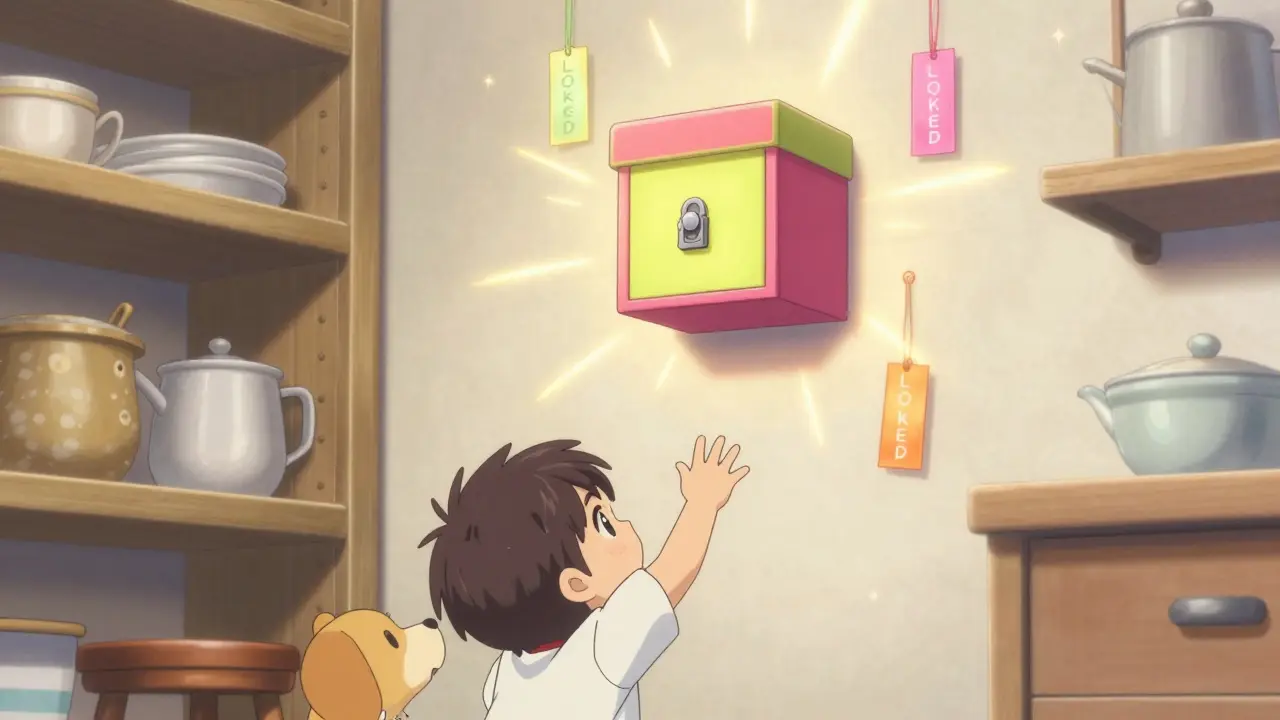
Medication Safety Risk Assessment
This assessment evaluates your medication storage practices based on CDC and FDA guidelines. Answer a few questions to get your personalized risk score and safety recommendations.
Every year, 60,000 children under age five end up in emergency rooms because they accidentally swallowed medicine they found lying around. That’s not a rare accident-it’s a preventable crisis. And it’s not just kids. Pets, especially dogs, are just as curious-and just as deadly at getting into the wrong pill. If you’re storing meds on the nightstand, in the bathroom cabinet, or next to the dog food, you’re putting lives at risk. This isn’t about being paranoid. It’s about knowing exactly where your medicines are-and making sure they’re out of reach.
Why Locked Storage Isn’t Optional
Child-resistant caps sound like a solution. But here’s the truth: they stop only half to 80% of kids. That means even if your bottle says "child-resistant," a determined 18-month-old climbing on a chair can still get to it. Studies show that kids as young as 18 months can climb up to three feet-right to that nightstand where you left your blood pressure pills. And pets? Dogs can open standard pill bottles in under two minutes. They don’t care about labels. They care about flavor. Many pet medications are flavored with banana or strawberry, making them smell and taste like candy to a child.The only thing that works consistently? A locked container. Not just a cabinet with a latch. Not just a drawer you think is "high enough." A lock. Simple. Effective. Proven to reduce accidental ingestions by 92%.
Where Not to Store Medications
Let’s clear up the myths. You’ve heard all the "common sense" advice. But here’s what actually happens in real homes:- Countertops and nightstands-68% of parents admit to leaving meds here. That’s the #1 mistake.
- Bathroom cabinets-Damp, warm, and full of tempting bottles. This is where 78% of pet poisonings happen, according to veterinary studies.
- Handbags or coats on the floor-Kids dig. They find. They swallow. One mom in Melbourne found her toddler with her husband’s opioid prescription in his coat pocket.
- Next to food or pet bowls-Mixing human and pet meds in the same drawer? That’s how a child grabs heartworm pills thinking they’re gummy vitamins. Or a dog eats a tube of dewormer paste meant for a horse. Both are fatal.
- Unlabeled containers-Transferring pills to a spice jar or snack box? One in three medication errors comes from this. Labels fade. Kids don’t know what’s what.
These aren’t edge cases. They’re everyday scenarios that lead to hospital stays, intensive care, and sometimes death.
How to Store Medications Correctly
Here’s the exact system that works-backed by the CDC, Nationwide Children’s Hospital, and the FDA:- Lock it. Use a lockbox. It doesn’t need to be fancy. A $25 wall-mounted lockbox from a hardware store works. Or repurpose an old gun safe, tool chest, or even a locked suitcase. The key is that it can’t be opened by a child-or a dog.
- Keep it high. At least four feet off the floor. Some experts say five feet, especially if you have a climber. Height matters. But lock matters more.
- Keep it dry. Most meds need to stay between 68-77°F (20-25°C). Bathrooms are too humid. Kitchens are better. Pantries are ideal. Moisture ruins pills. In 30 days, 40% of common meds lose effectiveness if exposed to damp air.
- Keep human and pet meds separate. Store them in different rooms if you can. At minimum, keep them in separate locked boxes. Mixing them increases the risk of accidental ingestion by nearly five times. A 5mL dose of veterinary ivermectin? That’s 10 times the toxic dose for a child.
- Keep original packaging. Never transfer pills to another container. Labels tell you the name, dose, expiration, and warnings. Lose the label? Lose the safety.
- Check temperature needs. About 25% of medications need refrigeration. Keep those in a locked fridge-not the one in the garage. And make sure kids can’t open it.
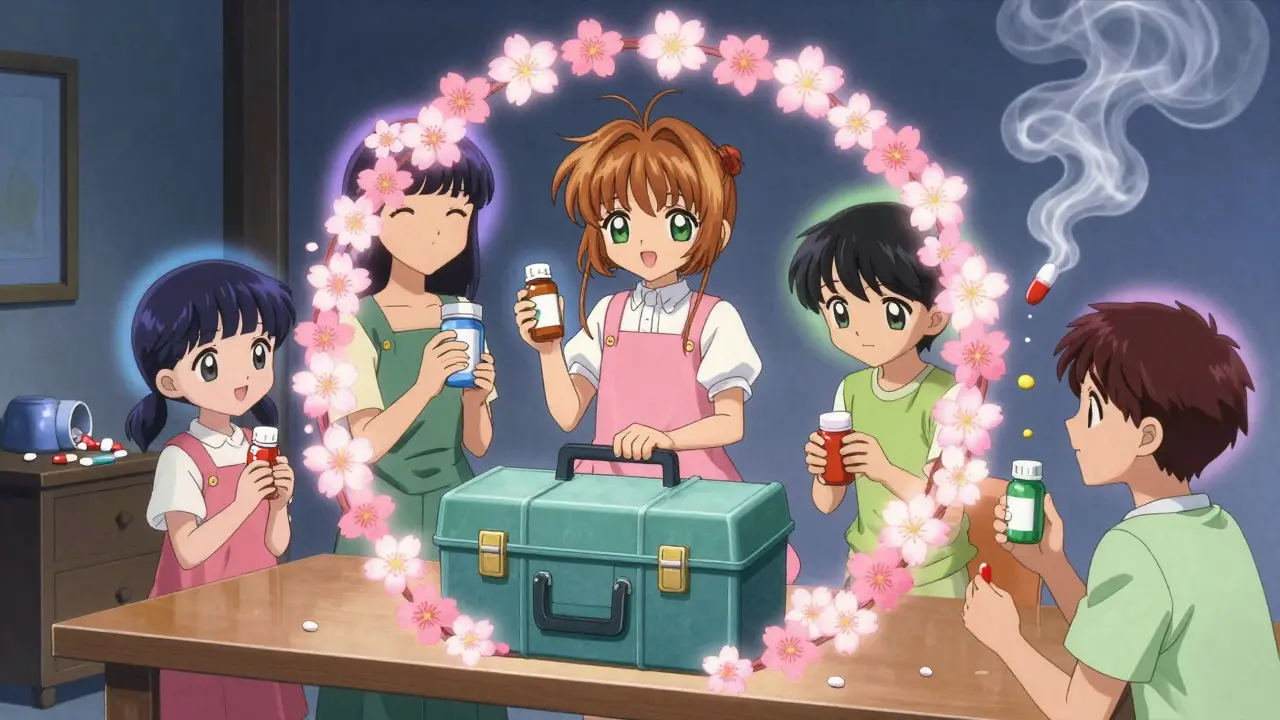
Special Risks: Pet Medications and Toxic Human Drugs
Some medications are far more dangerous than others. Here’s what to watch out for:- Ivermectin (used in heartworm pills for dogs): Extremely toxic to children. Even a tiny drop can cause seizures, coma, or death.
- 5-Fluorouracil cream (used for skin cancer): One drop on a cat’s skin can be fatal. Keep it locked, away from pets.
- Permethrin (used in flea treatments): Deadly to cats. If you use this on your dog, store it completely separate from anything a cat can reach.
- Opioids: Even one pill can kill a child. DEA regulations require these to be stored in UL TRTL-30x6 certified safes-containers that can resist power tools for 30 minutes. If you have these, don’t skip this step.
And don’t forget: many pet meds are designed to taste good. That’s why dogs love them. But that same flavor makes them irresistible to toddlers. A strawberry-flavored worming pill isn’t just a pet med-it’s a candy trap.
What Works in Real Homes
You don’t need to buy expensive gadgets. Real families are doing this successfully:- A dad in Sydney uses a small, used gun safe he bought for $40. His kids and dog can’t get in. He says it’s the best $40 he ever spent.
- A mum in Adelaide uses a locked toolbox on a high shelf. She keeps all human meds in one side, pet meds in the other. She labels both with bright tape: "KIDS DANGER" and "PET DANGER."
- A family in Brisbane installed a timed lockbox that only opens at 7 a.m. and 7 p.m. when they give meds. No one else can get in.
These aren’t extreme measures. They’re smart habits. And they work. Families who use locked storage report zero access incidents. Zero.
What to Do With Old or Unused Meds
Don’t flush them. Don’t throw them in the trash. Don’t leave them in a drawer "just in case."The FDA recommends one thing: take them to a drug take-back site. In 2024, the DEA expanded its National Take Back Day to over 11,000 locations across the U.S. and Australia. Pharmacies, police stations, and hospitals often host drop-off bins. Find your nearest one at DEA.gov/takebackday (or check with your local pharmacy).
If you can’t get to a drop-off, mix pills with coffee grounds or cat litter, seal them in a bag, and throw them in the trash. Remove labels first. But take-back is always better.
How to Get Everyone on Board
This isn’t just your job. If you live with a partner, grandparents, babysitters, or roommates, they need to know too.- Have a 15-minute talk. Show them where the lockbox is. Explain why.
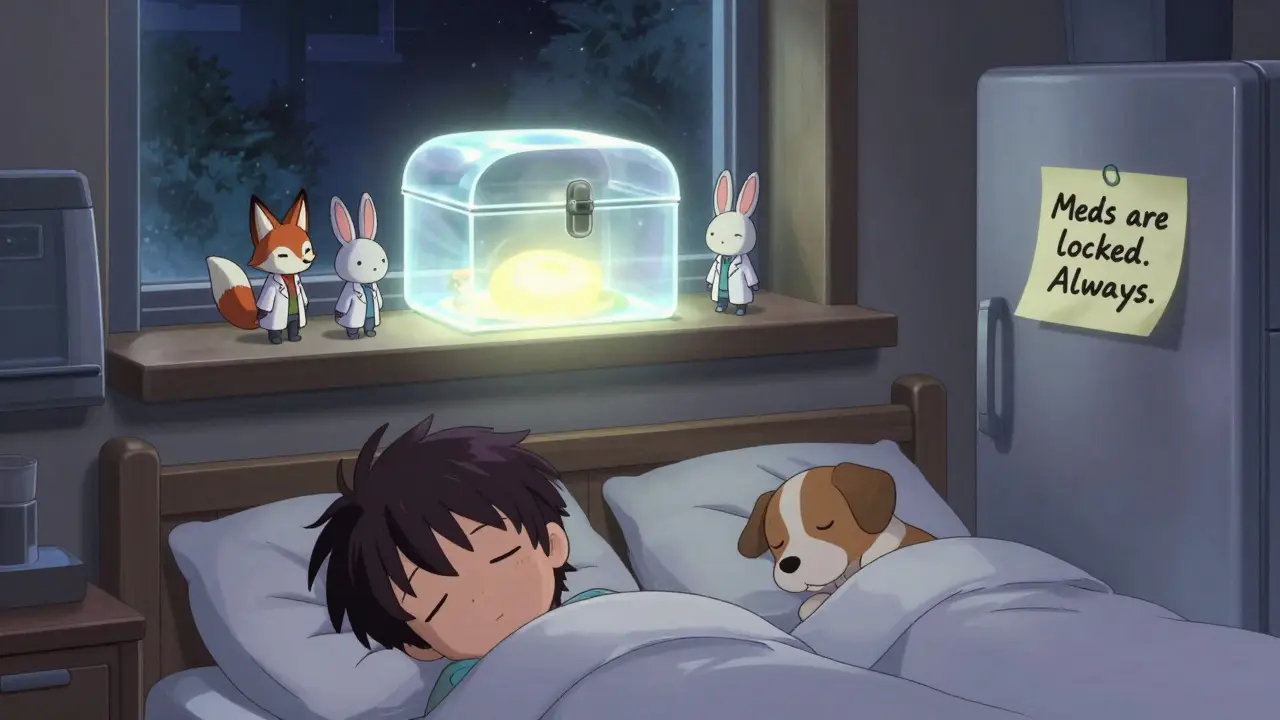
- Put up a simple reminder: a sticky note on the fridge saying "Meds are locked. Always."
- Make it a weekly habit. Every Sunday, check the lockbox. Toss expired meds. Reorganize if needed.
- Teach older kids: "If you see medicine on the counter, put it in the locked box. That’s your job."
Consistency takes time. CDC says it takes 21-30 days to make a new habit stick. After that, it becomes automatic. And that’s when safety becomes routine.
It’s Not About Perfection. It’s About Progress.
You don’t have to buy a $200 smart lockbox. You don’t need to be a safety expert. You just need to make one change: lock the meds.Right now, only 22% of households with kids and pets use locked storage-even though 95% own child-resistant packaging. That gap? That’s where the danger lives.
Start tonight. Find a box. Put your meds in it. Lock it. Put it up high. Tell the people you live with. That’s it. You’ve just made your home safer than 78% of others.
Medicines save lives. But only when they’re handled right. Keep them locked. Keep them out of reach. Keep your family safe.
Can child-resistant caps alone protect my kids from medicine?
No. Child-resistant caps are designed to slow down kids, not stop them. Testing shows they prevent only 50-80% of accidental ingestions. Many children as young as 18 months can open them using tools, climbing, or persistence. Locked storage is the only reliable method to prevent access.
Is it safe to store human and pet medications together?
No. Storing them together increases the risk of accidental ingestion by 4.7 times. Pets often have flavored medications that taste like candy to children. Human medications like ivermectin or 5-fluorouracil can be deadly to pets, and vice versa. Keep them in separate locked containers, ideally in different rooms.
What’s the best place to store medications in my home?
The safest place is a locked box mounted on a wall or placed on a high shelf in a dry, cool area like a kitchen pantry. Avoid bathrooms (too humid) and bedrooms (easily accessible). The CDC recommends keeping storage at least 4 feet above the floor, but higher is better if you have climbers.
How do I dispose of expired or unused medications safely?
Take them to a drug take-back location-many pharmacies, police stations, or hospitals offer free drop-off bins. If that’s not possible, mix pills with coffee grounds or cat litter, seal them in a plastic bag, and throw them in the trash. Always remove or black out labels first. Never flush them down the toilet.
Are there specific medications that are especially dangerous to children or pets?
Yes. Ivermectin (used in pet heartworm preventatives) is deadly to children-even a small amount. 5-Fluorouracil cream (for skin cancer) is 100% fatal to cats with minimal exposure. Opioids can kill a child with one pill. Permethrin (in flea treatments) is lethal to cats. These must be locked in the most secure container you have.
What’s the cheapest way to lock up medications?
You can use a $25 wall-mounted lockbox, a locked toolbox, or even a small gun safe bought secondhand for under $50. Many households already have suitable containers like old toolboxes or suitcases. The cost isn’t the barrier-it’s awareness. The key is that it locks, stays high, and is out of reach.
How long does it take to make medication storage a habit?
The CDC says it takes 21-30 days of consistent practice to turn a new behavior into a habit. After that, locking up meds becomes automatic. Use visual reminders like sticky notes or alarms to help during the first few weeks. Once it’s routine, safety becomes effortless.

Stacey Smith
Lock it or lose them. Simple. No excuses. This isn't optional safety-it's parenting.
Sarah Williams
I started doing this after my niece swallowed a blood pressure pill. Best $30 I ever spent. Now my whole family knows: meds go in the box. No questions.
mukesh matav
I keep my meds in a locked drawer above the fridge. My dog can't jump that high and my kids are too lazy to climb. Works fine.
Grace Rehman
We live in a world where we lock our cars but leave poison on the nightstand because it's inconvenient. We optimize for comfort not survival. We call it normal. We call it parenting. We call it love. But love doesn't mean leaving a loaded gun where a toddler can find it. It means building a wall between temptation and tragedy. And if you think that's extreme-you're the reason 60,000 kids end up in ERs every year. Not because you're bad. Because you're lazy. And laziness kills more than malice ever could.
Peggy Adams
i think the gov just wants us to buy more lockboxes so they can profit off our fear. also why do we even have meds in the house? maybe we should just stop taking pills altogether. #freeyourmind
Ben Warren
The statistical correlation between improper pharmaceutical storage and pediatric morbidity is not merely anecdotal; it is empirically validated by the Centers for Disease Control and Prevention, the American Academy of Pediatrics, and the Food and Drug Administration. The failure to implement a UL TRTL-30x6 certified containment protocol for Schedule II narcotics, in particular, constitutes a gross dereliction of familial duty. One must consider the ontological responsibility of the caregiver: to protect the vulnerable from the consequences of their own curiosity, which is not a flaw in the child but a failure in the environment. Therefore, the deployment of a lockbox is not a suggestion-it is a moral imperative.
Sandy Crux
You know, it's interesting how you all assume that locking things up is the only solution. Have you considered that perhaps children are naturally curious, and that this curiosity should be nurtured-not suppressed with industrial-grade containers? I mean, what are we teaching them? That the world is a dangerous place? That trust is a liability? I prefer to teach my child to ask before touching. It's called... parenting.
Hannah Taylor
wait so you're telling me that if i leave my adderall on the counter my kid might eat it?? like... i dont even have kids but even i know that's bad?? but also what if the lockbox gets hacked?? like what if the government is watching us lock our meds??
Jay lawch
This is what happens when you let corporations control your medicine. Why do you need all these pills? Why are you not eating turmeric and doing yoga? The pharmaceutical industry wants you dependent. Locking your meds is just another way to keep you afraid. They sell you the lockbox, then the alarm, then the smart fridge that only opens for you. This isn't safety-it's control. Wake up. The real poison is the system.
Cara C
I used to think I was doing fine until my dog ate my sister’s diabetes pill. She was fine, but it scared me. Now I have a cheap lockbox on the top shelf. My partner doesn’t like it, but we talk about it every Sunday. It’s not perfect, but it’s better than before. Small steps matter.
Theo Newbold
The fact that you need a lockbox to keep your meds safe says more about your household dynamics than your parenting. If your child is climbing to the nightstand, maybe the problem isn't the medicine-it's the supervision. Or the lack of boundaries. Or the fact that you let your toddler roam unsupervised with access to every surface in the house. Fix the environment, not the container.