
Oral Food Challenges: Safety and Diagnostic Value

When a child breaks out in hives after eating peanut butter, or an adult gets stomach cramps after a bite of milk chocolate, the question isn’t just "What happened?" - it’s "Is this a real allergy?" Many people assume a positive skin test or elevated IgE blood level means they’re allergic. But the truth is, those tests are wrong more often than they’re right. That’s where the oral food challenge comes in - the only test that can say for sure.
Why Other Tests Can’t Be Trusted
Skin prick tests and blood tests for food-specific IgE are common. But they don’t diagnose allergies - they detect sensitization. That’s a big difference. You can have IgE antibodies floating around without ever reacting to the food. Studies show these tests have a positive predictive value of only 50-60% for common allergens like peanuts and eggs. In other words, half the time, a positive result doesn’t mean you’ll actually get sick from eating it. Component-resolved diagnostics, which break down proteins in foods to find specific triggers, are more advanced. But even they only hit about 85% accuracy. That’s good - but not good enough when your child’s lunchbox or your dinner plate is on the line. The only way to know for certain whether a food causes a reaction is to eat it - under supervision.What Happens During an Oral Food Challenge
An oral food challenge isn’t just eating a peanut butter sandwich and waiting to see what happens. It’s a carefully controlled medical procedure. You start with a tiny amount - as little as 1-2 milligrams of the food. That’s less than a grain of rice for peanut. If no reaction occurs after 15-30 minutes, the dose increases. This continues until you’ve eaten a full serving, or until a reaction appears. The whole process takes 3 to 6 hours. You’re monitored the entire time: heart rate, breathing, skin, and any signs of swelling or vomiting. Doctors and nurses are right there with epinephrine, antihistamines, and oxygen ready. Most challenges are open - meaning you know what you’re eating. But in some cases, especially if anxiety might affect results, the food is disguised in a cookie or capsule so you don’t know what you’re consuming. The goal isn’t to scare you. It’s to find the truth. If you eat the full amount without a reaction, you’re not allergic. If you react, you know exactly what triggers you - and how much it takes to do it.When It’s Most Useful
Oral food challenges aren’t for everyone. They’re not used as a first-line screening tool. If someone had a life-threatening reaction last month, they won’t be scheduled for a challenge right away. But they’re essential in three situations:- When test results are unclear - like when IgE levels are borderline.
- When you suspect a child has outgrown an allergy - especially for milk, egg, soy, or wheat. About 65% of kids outgrow these by age 5.
- When you’ve been avoiding a food for years and want to know if you can safely reintroduce it.
Safety: How Risky Is It?
It’s natural to worry. After all, you’re feeding someone a food they might be allergic to. But the numbers tell a different story. About 40-60% of challenges result in mild reactions - usually just hives or a flushed face. These are easy to treat with antihistamines right in the clinic. Severe reactions requiring epinephrine happen in only 1-2% of cases when the procedure is done properly. And that’s with trained staff, emergency equipment, and strict protocols. In one large study of over 10,000 challenges, only 0.9% required treatment for a reaction that went beyond mild symptoms. The risk isn’t zero - but it’s far lower than the risk of living with uncertainty. Avoiding a food you don’t actually need to avoid can lead to nutritional gaps, social isolation, and anxiety. A challenge gives you control.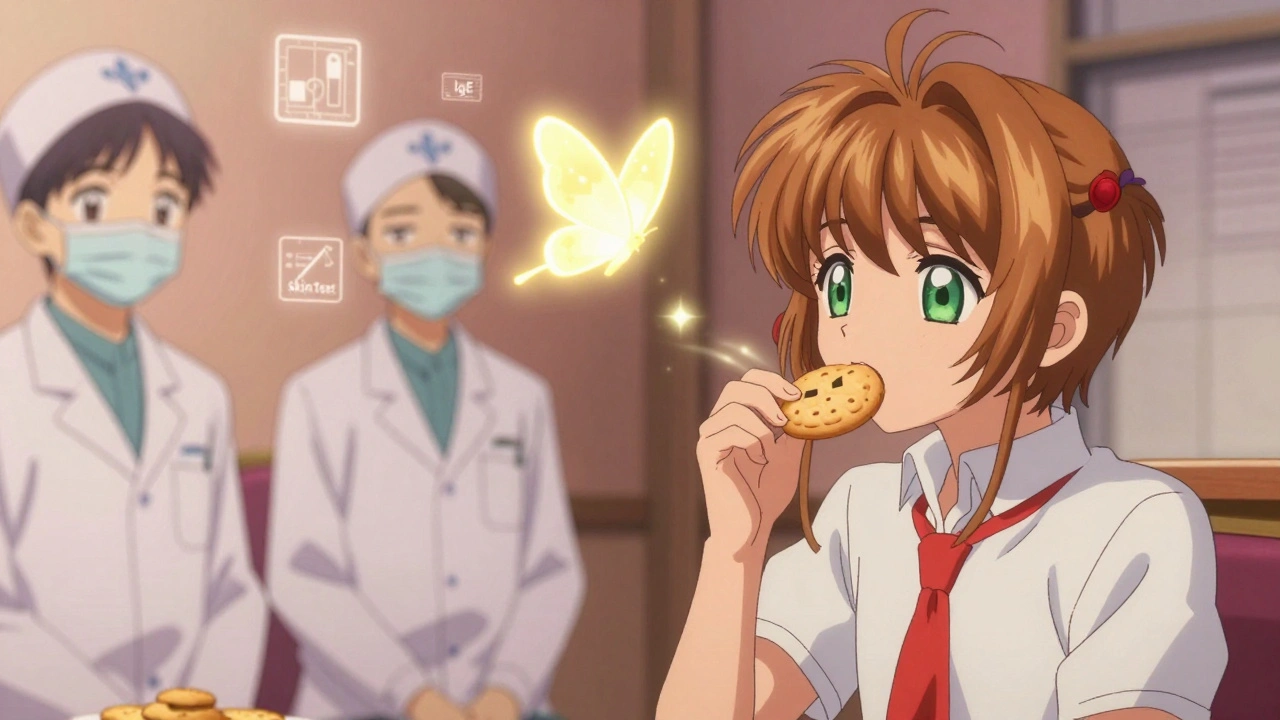
What You Need to Do Before the Challenge
Preparing isn’t just about showing up on time. You need to do things right.- Stop antihistamines 5-7 days before. They can hide early signs of a reaction.
- Don’t come in sick. A cold or flu can make you more likely to react.
- Wear loose clothing. It’s easier to check for swelling.
- Bring distractions - books, tablets, favorite toys. The hours can feel long, especially for kids.
- Have a plan for after. You might be tired or sore. Don’t schedule anything demanding.
Real Stories, Real Results
One parent on a food allergy forum described her 4-year-old’s peanut challenge this way: "He cried the whole time. I cried. But when the doctor said he passed, we both collapsed in relief. We hadn’t eaten peanut butter at home in three years. Now we can go to birthday parties without panic." Another parent shared: "We thought our daughter was allergic to eggs. She broke out in hives once, years ago. Blood test was positive. We avoided eggs. Then we did the challenge - she ate three scrambled eggs with no reaction. We had been depriving her of protein-rich foods for nothing." These aren’t rare cases. They’re common. And they happen because of the oral food challenge.Who Can Perform It
This isn’t something any doctor can do. It requires specialized training. The American Academy of Allergy, Asthma & Immunology recommends that clinicians complete at least 10 supervised challenges before doing them alone. The setting matters too - it must be a clinic or hospital with emergency equipment on hand, staff trained in anaphylaxis, and protocols in place. Major hospital systems like Cleveland Clinic, Mayo Clinic, and Children’s Hospital of Philadelphia run hundreds of these challenges every year. Private allergists in cities across the U.S. and Australia do them too, though fewer due to staffing and space limits.
The Future of Food Allergy Testing
Scientists are working on better biomarkers - blood tests or skin markers that could predict reactions without eating the food. Some are promising. But right now, none come close to the accuracy of an oral food challenge. In 2023, the NIH launched a study to refine dosing protocols for high-risk foods like tree nuts. There’s also growing support for home-based challenges in low-risk cases - under strict guidance. But experts agree: the gold standard isn’t going anywhere. As Dr. Kari Nadeau from Stanford put it: "OFC will remain the gold standard for the foreseeable future."What If the Challenge Fails?
If you have a reaction, it’s not the end. It’s information. You now know exactly what you’re allergic to, and how much it takes to trigger it. Some people can tolerate tiny amounts - like a crumb of cake - without trouble. Others need to avoid it completely. Either way, you’re not guessing anymore. Your allergist will give you a clear action plan: what to avoid, what to carry (like an epinephrine auto-injector), and how to read labels. You’ll get a written report to share with schools, daycare centers, or restaurants.Final Thoughts
An oral food challenge isn’t just a test. It’s a way out of fear. It’s the difference between living with uncertainty and living with clarity. For parents, it means letting their child eat at a friend’s house without panic. For adults, it means enjoying a meal without scanning every ingredient list. For doctors, it means prescribing real answers - not guesses. The procedure isn’t perfect. It’s time-consuming. It’s expensive. It’s stressful. But when it comes to food allergies, there’s no better way to know the truth.Are oral food challenges safe for children?
Yes, when done in a controlled medical setting with trained staff. Children undergo thousands of oral food challenges each year, and severe reactions are rare - occurring in only 1-2% of cases. Most reactions are mild, like hives or flushing, and are easily treated on-site. Pediatric allergists are specially trained to manage these challenges, and clinics use age-appropriate dosing and distraction techniques to reduce anxiety.
How long does an oral food challenge take?
An oral food challenge typically lasts 3 to 6 hours. The first 1-2 hours involve gradually increasing the amount of food, given every 15-30 minutes. After the final dose, you’ll be observed for another 2-3 hours to watch for delayed reactions. The total time depends on how many doses are needed and whether a reaction occurs.
Can I eat normally the day before the challenge?
Yes, you can eat normally - but avoid any foods you’re being tested for. The key is to be healthy. Don’t do the challenge if you’re sick, have a fever, or are having an asthma flare-up. Also, stop antihistamines 5-7 days before, as they can mask early signs of a reaction. Your allergist will give you specific instructions based on your case.
What happens if I have a reaction during the challenge?
If a reaction occurs, the challenge is stopped immediately. Medical staff will treat it with medications like antihistamines or epinephrine, depending on severity. Most reactions are mild and resolve quickly. You’ll be monitored until you’re stable, and your allergist will explain what happened, how much triggered it, and what you need to avoid going forward. A reaction doesn’t mean failure - it means you now have clear, accurate information.
Do I need to avoid the food completely before the challenge?
Yes. You must avoid the food being tested for at least 2 weeks before the challenge, unless your allergist says otherwise. This ensures your body hasn’t been recently exposed, which could affect results. You should also avoid antihistamines for 5-7 days. Always follow your provider’s instructions - even small exposures can interfere with the test.
Can oral food challenges be done at home?
Home-based oral food challenges are now considered for very low-risk cases under strict guidelines. This is only recommended for people with a history of mild reactions or those being tested for outgrowing an allergy, and only when supervised by an allergist. You’ll need a written plan, emergency medication on hand, and a clear signal to stop and call for help. Most challenges are still done in clinics for safety and accuracy.
Is an oral food challenge covered by insurance?
Most insurance plans in the U.S. and Australia cover oral food challenges when ordered by a board-certified allergist and performed in an approved medical setting. However, pre-authorization is often required. Check with your provider and ask if the clinic can help with the paperwork. The cost of the challenge is usually far less than the long-term cost of unnecessary food avoidance and related health issues.


Sakthi s
This is such a needed conversation. I wish more parents knew how often tests lie. My son passed his peanut challenge last year - now he eats PB&J like it’s candy. Life changed.
Precious Angel
Oh please. You’re telling me we’re just supposed to trust some doctor who feeds a kid peanut butter like it’s a game show? What about the long-term damage? The immune system doesn’t forget. This is how you create super-allergies. I’ve seen kids go from mild to anaphylactic after one of these ‘challenges.’ The pharmaceutical companies love this. They sell the epinephrine pens, the testing kits, the follow-up visits. It’s a cash cow. And you’re all just drinking the Kool-Aid.
My cousin’s daughter had a tiny rash after a bite of egg at 18 months. They did the challenge. Now she’s on a feeding tube at 7 because her body ‘got confused.’ No one talks about that. No one wants to admit the system is broken. The real allergy epidemic? It’s the blind trust in medicine.
And don’t even get me started on insurance. They’ll cover the challenge but not the naturopathic support that could’ve healed her gut naturally. They’d rather pump your kid full of antihistamines than fix the root cause. Wake up. This isn’t science - it’s corporate medicine.
I’m not anti-medical. I’m pro-awareness. We’re being manipulated into believing we need to ‘test’ our way out of a problem they created. The food supply is poisoned. The soil is dead. The vaccines? The glyphosate? All of it. And now they want us to feed our kids the very thing that made them sick - just in a ‘controlled’ environment? Please. I’d rather live in fear than be a lab rat.
And don’t tell me about ‘1-2% severe reactions.’ That’s still 1-2% too many. My child isn’t a statistic. Neither is yours. We’re being pushed toward a future where every meal is a risk. And the doctors? They’re the ones holding the spoon.
Melania Dellavega
I’ve sat in those challenge rooms. Held my daughter’s hand while they gave her the tiniest crumb of peanut. I cried when she didn’t react. Not because I was relieved she wasn’t allergic - but because I realized how much of our lives had been shaped by fear. We avoided birthday cakes, skipped picnics, panicked at school lunches. We thought we were protecting her. But we were just living in a cage of false certainty.
That day, when the doctor said ‘she’s fine,’ I didn’t just get my daughter back. I got my peace back. And now I tell everyone I meet: don’t let a blood test define your child’s relationship with food. Talk to your allergist. Ask about the challenge. It’s not scary - it’s liberating.
There’s a quiet power in knowing. Not hoping. Not guessing. Knowing.
Bethany Hosier
Have you ever considered that oral food challenges are part of a larger agenda? The CDC, WHO, and Big Pharma have been quietly pushing this for over a decade. Why? Because if people start eating foods they’ve been avoiding, they stop buying expensive hypoallergenic products. The market for gluten-free, dairy-free, nut-free snacks is worth billions. And if parents find out their kids aren’t allergic? That market collapses. That’s why they make it sound so scientific. It’s not about safety - it’s about profit. The ‘1-2% severe reaction’ stat? That’s cherry-picked. What about the delayed autoimmune responses? The gut dysbiosis? The long-term inflammation? They don’t track that. They don’t want you to know.
And the ‘trained staff’? Who trains them? The same organizations that profit from the tests. It’s a closed loop. I’ve seen the documents. I’ve read the emails. This isn’t medicine. It’s monetized fear.
Don’t get me wrong - I’m not saying allergies aren’t real. But the system? It’s rigged. And you’re being played.
Krys Freeman
Why are we even doing this? In America, we’ve got better things to worry about than whether someone can eat a cookie. This is why we’re broke - spending millions on these ‘challenges’ while our infrastructure crumbles. Just tell people to avoid the food and stop wasting time.
Shawna B
i had a kid who broke out after eating eggs. we avoided them for years. then we did the challenge. she ate three. no reaction. we were so dumb. now she eats omelets every morning. best decision ever.
Jerry Ray
Wait, so you’re telling me the whole reason we’ve been avoiding milk for five years is because a blood test said ‘maybe’? That’s it? That’s the science? I’ve seen people go from zero symptoms to full-blown anaphylaxis after one of these challenges. What if it’s not the food? What if it’s the stress? The adrenaline? The fact that you’re sitting in a clinic surrounded by people in lab coats and EpiPens? Maybe the body’s just freaking out. Maybe the test is creating the allergy. That’s not science. That’s suggestion therapy with a side of trauma.
And don’t give me the ‘25-30% of people are wrong’ line. That’s not proof. That’s a guess. What about the other 70%? What if they’re the ones who die? Who’s responsible then? The doctor? The parent? The system?
I’m not saying don’t do it. I’m saying don’t pretend it’s foolproof. It’s a gamble with a kid’s life. And we’re calling it medicine.
Sophia Lyateva
did u know the FDA is secretly testing oral food challenges on kids to see if they can trigger a global panic so they can sell more epipens? i read it on a forum. they’re also putting fluoride in the peanut butter to make people more allergic. its all connected. i dont trust any of this. my daughter hasnt eaten anything since 2021 and shes fine. dont be a lab rat.
AARON HERNANDEZ ZAVALA
I just want to say thank you for writing this. I’ve been scared to even think about a challenge for my son because I didn’t want to risk him having a reaction. But reading this - honestly - it made me feel less alone. I didn’t realize how much I’d been carrying this fear. It’s not just about the food. It’s about trust. Trust in medicine. Trust in myself. And maybe, just maybe, trust that we’re not failing our kids by trying to find the truth.
I’m not rushing into it. But I’m not running away either.
Lyn James
Let me be clear: if you’re considering an oral food challenge, you’re already in the wrong mindset. You’re treating food allergies like a puzzle to be solved instead of a sacred warning from the body. The body doesn’t lie. It sends signals - hives, swelling, vomiting - and you want to override that with a clinical experiment? That’s not courage. That’s arrogance. You’re treating your child’s immune system like a machine that can be calibrated. But it’s not. It’s a living, breathing, spiritual expression of their connection to the world. You don’t force it. You honor it.
And let’s talk about the ‘25-30% false positive’ statistic. That’s a number cooked up by a lab in a university funded by pharmaceutical grants. Who benefits from people thinking they’re not allergic? The food industry. The snack companies. The grocery chains. They want you eating peanuts again so they can sell you more processed junk. You think they care about your child’s health? They care about your wallet.
There’s a reason why traditional cultures never had food allergies. They ate whole foods. They fermented. They avoided processed sugar and chemicals. You think a child raised on organic, homegrown, non-GMO foods needs a ‘challenge’? No. They just eat. And they thrive.
Stop trying to ‘test’ your way out of intuition. Your gut knows. Trust it. Don’t let a doctor in a white coat convince you that science is more reliable than your mother’s instinct.
Shannon Wright
I’m an allergist’s assistant, and I’ve seen over 800 oral food challenges in the last decade. I’ve held toddlers who screamed through the entire thing. I’ve watched parents cry when their child ate a whole cookie without a single symptom. I’ve seen the relief - the pure, unfiltered joy - when families realize they can finally go to a birthday party without panic.
But here’s what no one talks about: the emotional toll on the staff. We don’t just monitor vitals. We hold hands. We sing songs. We distract with cartoons. We cry with parents. This isn’t just a medical procedure - it’s a ritual of healing.
Yes, there’s risk. But the risk of living in fear? That’s far greater. Children who avoid foods unnecessarily miss out on nutrients, social connection, joy. They grow up anxious. They feel broken. They think their body is their enemy.
Doing the challenge doesn’t mean you’re reckless. It means you’re brave. It means you’re choosing truth over fear. And that’s not just good medicine - it’s good parenting.
If you’re considering one, talk to your allergist. Ask questions. Prepare. But don’t let fear make the decision for you.
vanessa parapar
Wow. So you’re telling me that people who’ve avoided milk for 10 years because they got a rash once are just… not allergic? That’s ridiculous. My cousin’s kid had a seizure after eating nuts. You think a challenge is gonna fix that? No. You’re just playing Russian roulette with kids’ lives. And now you want to make it sound like a miracle? Please. If you’re that desperate to eat peanut butter, just buy a different brand. Don’t risk your child’s life for convenience.