
Online Pharmacy Counterfeits: The Hidden Dangers of Buying Medicines Online
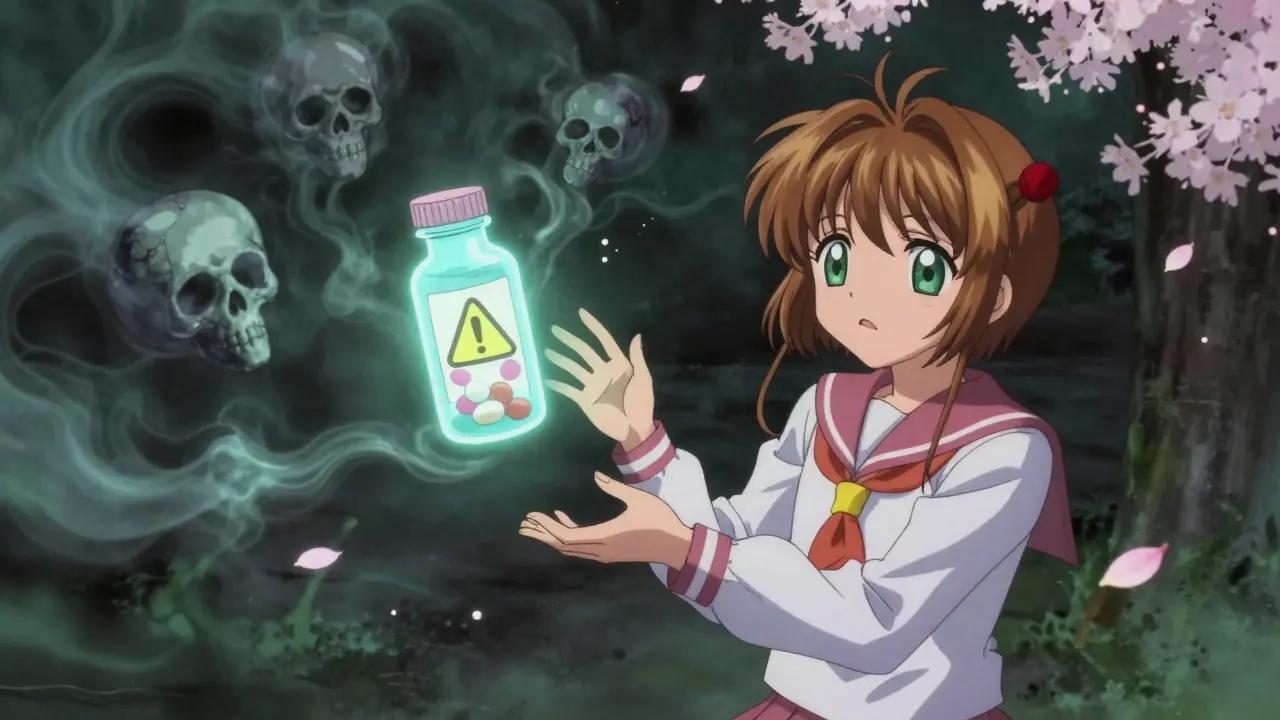
Buying medicine online sounds easy-click, pay, wait, get your pills delivered. But what if the bottle in your mailbox isn’t what it claims to be? Every year, millions of people around the world buy drugs from websites that look real but are run by criminals. These aren’t just cheap alternatives-they’re dangerous. And the risks aren’t theoretical. People have died from pills that looked like oxycodone but were actually laced with fentanyl. Others got fake Botox that caused facial paralysis. Or counterfeit Ozempic that contained nothing but sugar and toxic chemicals.
How Common Are Fake Online Pharmacies?
Almost every online pharmacy you find by searching for discounts on prescription drugs is illegal. According to the National Association of Boards of Pharmacy, 95% of websites selling prescription medications online don’t follow the law. The U.S. Trade Representative’s 2024 report says 96% of the 35,000 online pharmacies operating globally are breaking regulations. That means if you’re buying without checking, you’re almost certainly buying from a criminal operation.
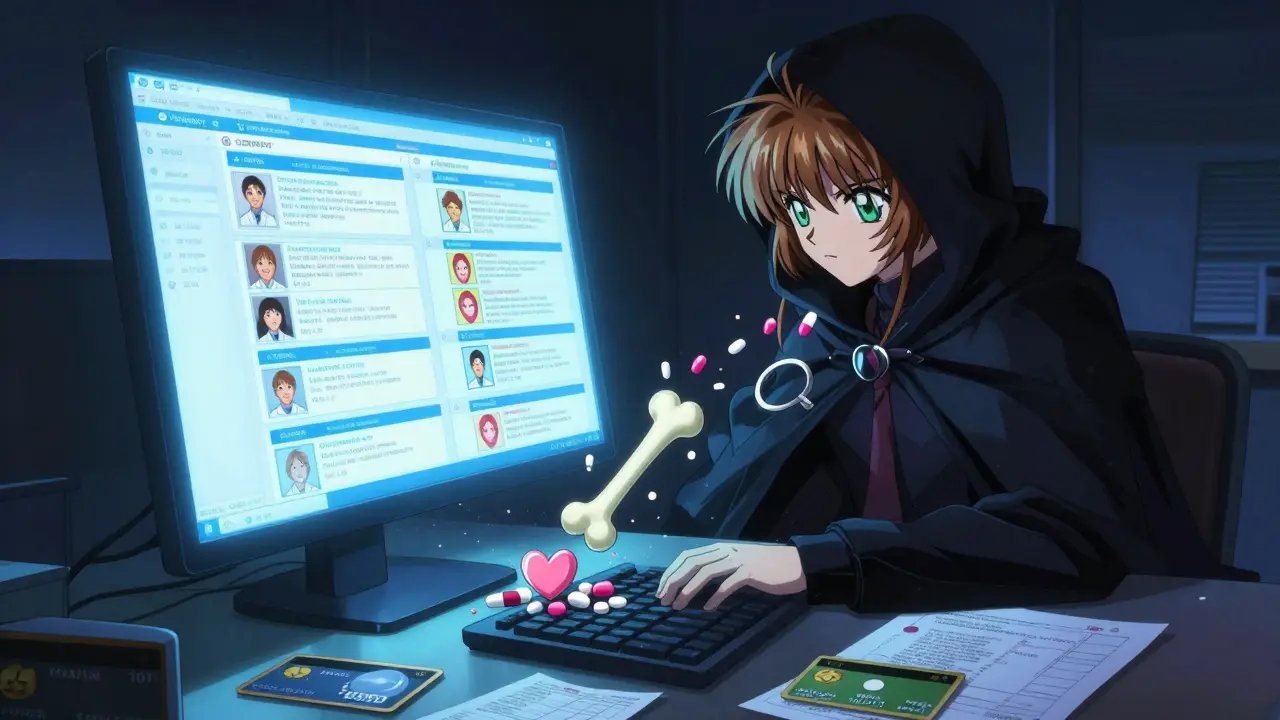
These sites pop up fast-about 20 new ones every day. They copy the design of real pharmacies, use professional logos, even have live chat support. Some even offer free shipping, bulk discounts, and no prescription needed. That’s not convenience-it’s a trap. Legitimate pharmacies never sell controlled drugs without a valid prescription from a licensed doctor.
What’s in These Fake Pills?
The contents of counterfeit medicines are unpredictable-and often deadly. The U.S. Drug Enforcement Administration seized over 60 million fake pills in 2024 alone. Most of them contained fentanyl, a synthetic opioid up to 50 times stronger than heroin. A single pill can kill someone who’s never used opioids before. There’s no warning label. No dosage guide. Just a pill that looks like Adderall, Xanax, or Vicodin-but could be a death sentence.
It’s not just painkillers. Counterfeit weight-loss drugs like Ozempic (semaglutide) have been found with no active ingredient at all. Some contained harmful fillers like metformin or even rat poison. Fake Botox injections have caused nerve damage, drooping eyelids, and breathing problems. Antibiotics sold online have been found with no active drug, leaving infections untreated. Diabetes medications? Some had too much or too little insulin-either way, it could send someone into a coma.
The Pharmaceutical Security Institute recorded over 6,400 incidents of counterfeit drugs in 2024 across 136 countries. These weren’t minor cases. They involved 2,428 different medicines, including cancer treatments, heart drugs, and vaccines. When you buy fake medicine, you’re not just wasting money-you’re gambling with your life.
Why Do People Buy From These Sites?
Price is the biggest lure. A 30-day supply of Ozempic can cost over $1,000 at a U.S. pharmacy. On a shady website, it’s $150. For people without insurance, or those paying high out-of-pocket costs, that discount feels like salvation. But it’s a trap. The FDA warns that drugs sold without a prescription are never guaranteed to be safe, effective, or even real.
Another reason? Privacy. Some people are embarrassed to ask their doctor for erectile dysfunction pills, anti-anxiety meds, or weight-loss drugs. They think buying online keeps them anonymous. But these sites collect your credit card, email, and medical history. Many sell your data to third parties-or worse, use it to launch phishing scams.
And let’s not forget the design. These fake pharmacies look professional. They have secure checkout pages, customer reviews (fake, of course), and even fake pharmacist credentials. One woman in Texas bought counterfeit Muro 128 eye drops for her dry eyes. The fake version caused corneal damage. She didn’t realize the problem came from the pills until she went to the ER.
How to Spot a Legitimate Online Pharmacy
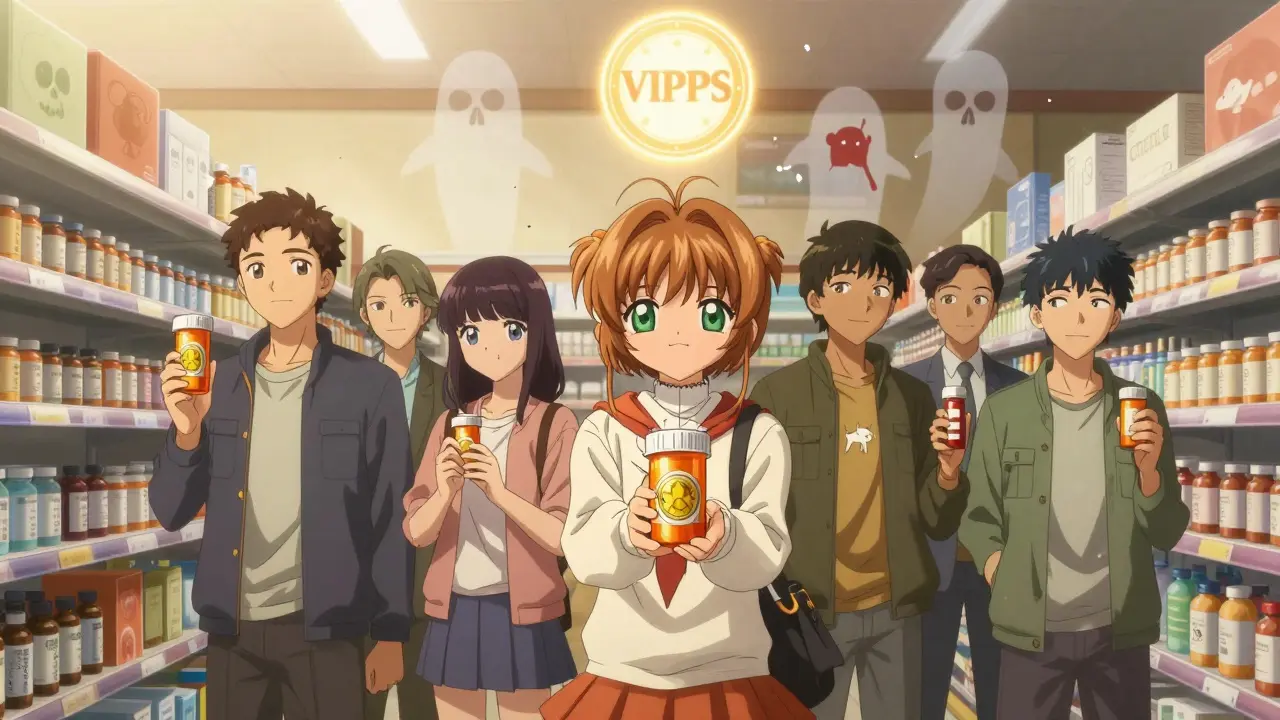
There’s a simple way to know if an online pharmacy is safe: look for the VIPPS seal. That’s the Verified Internet Pharmacy Practice Sites certification from the National Association of Boards of Pharmacy. Only about 5% of online pharmacies have it. You can check the list at vipps.pharmacy.
Here’s what to check before you buy:
- Requires a prescription-No legitimate pharmacy sells controlled drugs without one.
- Has a physical address and phone number-Click on it. Call them. If they don’t answer or give a vague reply, walk away.
- Has a licensed pharmacist available-They should be able to answer questions about your medication.
- Is based in the U.S. or a country with strict drug laws-Sites based in countries like India, Russia, or China are harder to regulate.
- Doesn’t offer "miracle cures" or huge discounts-If it sounds too good to be true, it is.
Also, check the website’s domain. Legitimate pharmacies use .pharmacy, .gov, or .edu. Avoid sites with strange domains like .xyz or .info unless they’re verified.
What Happens When You Report a Fake Pharmacy?
If you find a suspicious site, report it. The FDA’s Office of Criminal Investigations takes these reports seriously. You can email [email protected] or call 1-855-543-3784. Include the website URL, screenshots, and any packaging you received.
If you took a fake drug and had a bad reaction, report it to MedWatch-the FDA’s adverse event reporting system. Even if you’re not sure it was counterfeit, your report helps them track patterns. In 2023, a report about fake Ozempic led to a nationwide alert that stopped hundreds of other people from buying the same product.
Law enforcement is cracking down. In September 2024, the U.S. Department of Justice indicted 18 people for running fake pharmacies that distributed millions of fentanyl pills. Interpol’s Operation Pangea XVI in 2025 shut down 13,000 websites and arrested 769 people across 90 countries. These aren’t small-time operations-they’re organized crime networks.
What You Can Do to Protect Yourself
Don’t assume your doctor’s office or insurance provider will warn you. Most patients don’t know how common fake pharmacies are. Take responsibility. Here’s what you can do:
- Always get prescriptions filled at a licensed pharmacy-even if it’s more expensive.
- Ask your pharmacist to verify the source of your medication if you notice changes in color, shape, or taste.
- Use mail-order pharmacies approved by your insurer-they’re regulated and tracked.
- Never buy drugs from social media ads, Instagram influencers, or YouTube promotions.
- Teach older relatives. Many seniors are targeted because they’re less familiar with online scams.
There’s no shame in paying full price for medicine. The cost of a fake pill isn’t just financial-it’s biological. One wrong pill can lead to organ failure, addiction, or death.
Why This Problem Won’t Go Away
Counterfeit drugs thrive because they’re profitable and low-risk. Criminals can make hundreds of thousands of dollars with little chance of getting caught. Penalties are light compared to drug trafficking. Online platforms make it easy to hide behind fake addresses and offshore servers.
Even with better tracking systems like the U.S. Drug Supply Chain Security Act, fake pharmacies still slip through. They operate from countries with weak enforcement. They change domains daily. They use AI to generate fake reviews and customer testimonials.
Until governments crack down harder, and until consumers stop falling for the discounts, this problem will keep growing. The WHO estimates the global cost of fake medicines is $30.5 billion a year. That’s not just lost money-it’s lost lives.
Medicine should save you. It shouldn’t kill you. And if you’re buying it online without verification, you’re already at risk.

Jhoantan Moreira
Just saw a post on Instagram selling 'Ozempic' for $50. Looked legit-green bottle, fancy logo, even had a 'pharmacist' in the video. I almost clicked... then remembered this article. 🤦♂️ Stay safe, folks. No discount is worth your life.
Meenal Khurana
Don’t buy from random sites.
Joy Johnston
As a pharmacist with 18 years in community practice, I can’t stress this enough: if a website doesn’t require a prescription, it’s not a pharmacy-it’s a crime scene. I’ve seen patients come in with blister packs from shady sites, and the differences in color, texture, and even smell are obvious to trained eyes. The FDA’s VIPPS seal is your only real safeguard. And yes, calling the pharmacy’s listed number? Do it. If they sound like a call center in a different country, hang up. Your health isn’t a gamble.
Jesse Naidoo
So you’re saying the government doesn’t want us to save money? Sounds like they’re just protecting Big Pharma’s profits. I’ve bought my insulin from a Canadian site for years-never had an issue. You’re scared of the wrong thing.
Sherman Lee
95% of online pharmacies are fake? That’s because the FDA and DEA are in bed with the pharmaceutical giants. They don’t want you buying cheap meds because then you won’t need their overpriced junk. And those ‘fentanyl pills’? Probably manufactured by the same people who run the DEA. Think about it. They need fear to keep you hooked on their $1,000 prescriptions. 🤔💀
Lorena Druetta
I’m so glad someone finally wrote this. My aunt bought fake Xanax last year-thought she was saving $800. She ended up in the ER with seizures. She’s fine now, but she won’t touch anything online again. Please, if you’re struggling with costs, talk to your doctor. There are patient assistance programs. You’re not alone. 💙
Zachary French
Bro. I bought my Adderall from a site called 'PharmaBlast.xyz' for $30 a bottle. Tasted like chalk and made me feel like a robot on a treadmill. But guess what? I didn’t die. I’m still here. Meanwhile, my buddy got his legit script from CVS and paid $500. He’s crying in his car every month. Who’s the real victim here? 🤷♂️ #PharmaScam #IWantMyDollarsBack
Daz Leonheart
Thanks for putting this out there. I’ve been telling my mom for years not to buy pills off Facebook ads. She’s 72 and thinks ‘free shipping’ means it’s safe. I printed this article and left it on her fridge. She didn’t say anything-but she stopped ordering from those sites. Small wins, right?
Kunal Kaushik
My cousin in Delhi got fake Botox last year. Face was lopsided for 6 months. Now he only goes to licensed clinics. Even if it costs more, it’s worth it. Life > savings. 🙏
Mandy Vodak-Marotta
Okay, so I’m gonna be real-I bought fake Ozempic last year because I was tired of being told to ‘eat less and move more.’ It worked. I lost 20 pounds. But then I started getting dizzy, and my doctor found traces of metformin and something called ‘phenylpropanolamine’-which, by the way, is banned in the US because it causes strokes. I didn’t tell anyone for months. I was ashamed. But reading this? I feel less alone. If you’re doing this because you’re scared of judgment or cost, please talk to someone. Your doctor isn’t your enemy. And if you’re reading this and you’re still buying from shady sites… I get it. But please, please, please get tested. Your body is trying to tell you something.
Nathan King
The systemic failure here lies not merely in the proliferation of illicit pharmaceutical vendors, but in the commodification of healthcare itself. The confluence of regulatory arbitrage, pharmaceutical monopolization, and consumer desperation constitutes a pathological market failure that transcends individual negligence. One must interrogate the structural incentives that render therapeutic access contingent upon socioeconomic status. The VIPPS seal, while commendable, is a Band-Aid on a hemorrhage.
rahulkumar maurya
You people are naive. If you think this is just about fake pills, you’re missing the bigger picture. This is about control. The FDA, WHO, and Big Pharma are all part of the same cabal. They want you dependent on their expensive, overpriced, patent-protected drugs so you never question the system. Real medicine? It’s in herbs, fasting, and sunlight. These ‘counterfeit’ pills? Probably more effective than the real ones. The real danger is the lie they’re selling you about safety.