How to Identify Authorized Generics: Packaging and Labeling Guide
Quick Summary
- Authorized generics are identical to brand-name drugs, produced in the same facilities with the same ingredients.
- The fastest way to identify them is by checking the National Drug Code (NDC), where the product code matches the brand but the labeler code differs.
- They are not listed as separate entries in the FDA's Orange Book because they share the original New Drug Application (NDA).
- Packaging usually omits the brand trademark but includes a different distributor name.
What Exactly Is an Authorized Generic?
Most people know that generics are "similar" to brand drugs. However, authorized generics are a different beast. While a traditional generic is approved via an Abbreviated New Drug Application (ANDA), an authorized generic is sold under the original New Drug Application (NDA). This means there is no "bioequivalence" test needed because the drug is the brand-name product itself.
This strategy often starts when a brand manufacturer wants to compete with the first generic company that breaks their patent. By releasing an authorized generic, the brand company can keep a slice of the market share during the 180-day exclusivity period. For example, AstraZeneca did this with Prilosec (omeprazole) back in 2004. Because they use the same manufacturing process and facilities, the active and inactive ingredients are 100% identical.
Decoding the Packaging and Labeling
If you're holding a bottle, the first thing you'll notice is the lack of a brand name. You won't see a fancy trademarked logo or marketing slogans. Instead, the labeling is strictly clinical. According to FDA guidance, the labeling must include the place of business, but it completely strips away the brand's promotional claims.
Check the manufacturer's name. An authorized generic often lists a subsidiary or a partner company. A real-world example is when Pfizer marketed an authorized generic of Lyrica (pregabalin); the packaging didn't say "Pfizer," but instead listed "Greenstone LLC." The capsules looked exactly the same, but the box was totally different. This is a common point of confusion-some patients worry they've received a counterfeit when they see a name they don't recognize, but in this case, it's just a different distribution arm of the same company.
It's also worth noting that the pill itself might look different. You might see a different color or marking. Why? Because U.S. trademark laws prevent generic drugs from looking exactly like the brand drug, even if the chemical makeup is identical. So, don't let a change in pill color fool you into thinking it's a different medication.
The Secret Weapon: Using the NDC Number
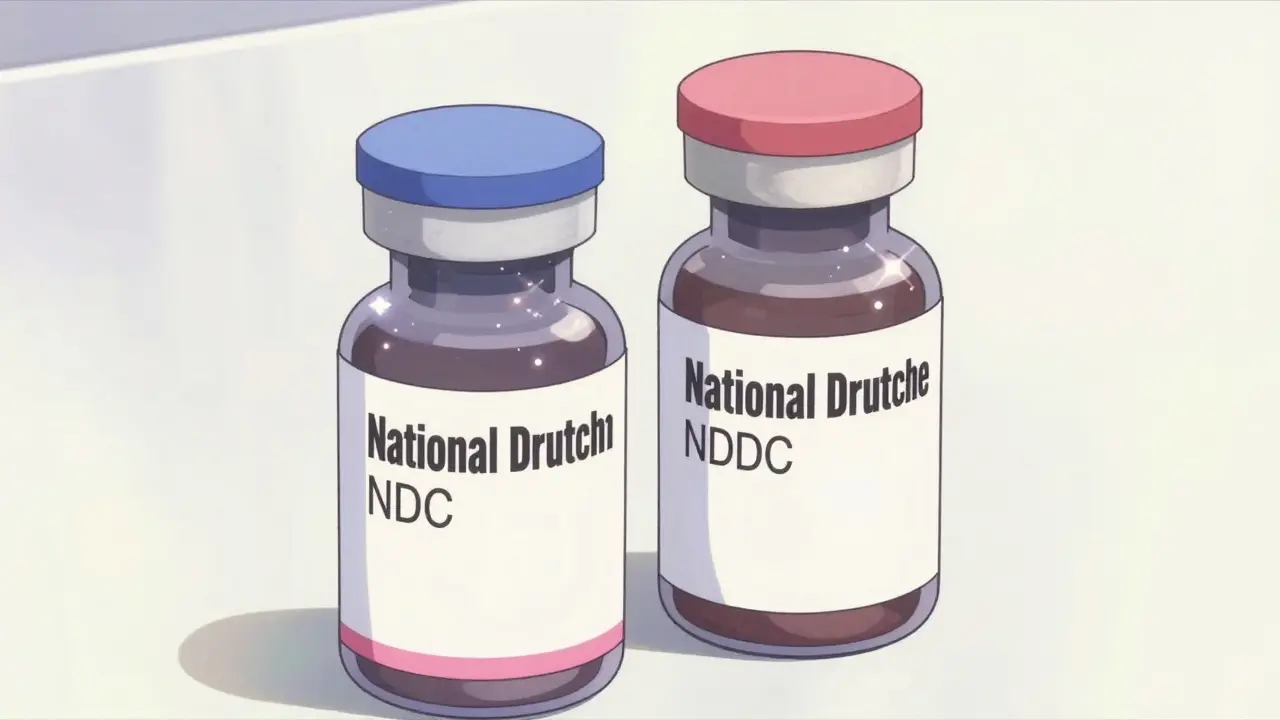
If you want to be 100% sure, ignore the colors and look at the National Drug Code (NDC). This 10 or 11-digit number is the most reliable way to tell an authorized generic from a traditional one. The NDC is split into three segments: the labeler code, the product code, and the package code.
In a traditional generic, all three segments usually change. But with an authorized generic, the second (product) and third (package) segments usually stay the same as the brand-name drug. Only the first segment-the labeler code-changes to reflect the distributor. For instance, the authorized generic version of Protonix (pantoprazole) distributed by Dr. Reddy's Laboratories used the same product and package codes as the brand, but the labeler code changed from 00071 (brand) to 55111.
| Feature | Brand Name | Authorized Generic | Traditional Generic |
|---|---|---|---|
| Active Ingredients | Original | Identical to Brand | Bioequivalent |
| Inactive Ingredients | Original | Identical to Brand | May vary |
| NDC Product Code | Standard | Same as Brand | Different |
| NDC Labeler Code | Brand Owner | Distributor/Partner | Generic Company |
| FDA Pathway | NDA | NDA | ANDA |
| Orange Book Entry | Listed | Not listed separately | Listed separately |
Common Pitfalls and Identification Challenges
Even professionals struggle with this. A survey of pharmacists showed that nearly 37% incorrectly identified authorized generics as traditional generics because the packaging formats are so similar. Many people see "Distributed by..." on a box and assume it's a standard generic. However, authorized generics typically use "Distributed by" rather than "Manufactured by," because the drug was actually made in the brand-name facility.
Another trap is the "authorized brand" product. These are traditional generics that use brand-like packaging to look more familiar. These are NOT authorized generics. The key difference is that a true authorized generic is the same physical product as the brand, whereas an "authorized brand" is just a marketing tactic for a traditional ANDA generic.
For those who are cautious, some manufacturers add a subtle "AG" or "Authorized Generic" note in the footer of the labeling. While the FDA doesn't require this, it's a helpful cue if you happen to spot it. However, since this only happens in about 28% of cases, you can't rely on it.
Step-by-Step Verification Process
If you're a patient or a pharmacy tech trying to verify a medication, follow this workflow to ensure accuracy:
- Check the NDC: Compare the NDC on your bottle to the brand-name version. If only the first few digits (labeler code) are different, but the rest match, you're likely looking at an authorized generic.
- Consult the Official List: Cross-reference the NDC with the FDA Quarterly Authorized Generic List. This is the gold standard and is updated every three months (January, April, July, and October).
- Review the Manufacturer Statement: Look for names of subsidiaries. If the label says a company like Greenstone LLC instead of Pfizer, but the product is the same, it fits the authorized generic profile.
- Ignore Pill Appearance: Don't let a different color or shape lead you to believe it's a different drug; remember that trademarks prevent clones.
The Bottom Line on Performance and Cost
From a medical standpoint, there is zero difference. In a Medscape survey, over 92% of patients reported identical outcomes when switching to an authorized generic. Because they are made in the same vat as the brand drug, you don't have to worry about slightly different absorption rates or inactive ingredients causing a reaction.
Price-wise, they sit in the middle. They are usually 15-25% cheaper than the brand name, but they can be 5-15% more expensive than a traditional generic. This premium is often due to the brand company's desire to capture a specific market segment without completely crashing the price of the original drug.
Are authorized generics safe?
Yes. They are identical to the brand-name drug in every way, including active and inactive ingredients, because they are manufactured by the same company in the same facility.
Why doesn't the authorized generic look like the brand drug?
U.S. trademark laws prevent generic versions of drugs from mimicking the exact shape, color, or markings of a brand-name product, even if the chemicals are identical.
How can I find the official FDA list of authorized generics?
The FDA publishes a Quarterly Authorized Generic List. It is updated on the first business day of January, April, July, and October and is available on the official FDA website.
Will my insurance cover authorized generics?
Most insurance plans cover them since they are therapeutically equivalent to the brand. However, because they are priced differently than traditional generics, your co-pay may vary slightly.
What is the difference between an authorized generic and a traditional generic?
A traditional generic is made by a different company and must prove "bioequivalence" (that it works the same). An authorized generic is the exact same drug made by the original manufacturer but sold under a different label.
Next Steps for Patients and Providers
If you're a patient and you're unsure about your medication, don't guess. Ask your pharmacist to verify the NDC number against the FDA's quarterly list. This takes about two to three minutes but provides total peace of mind.
For pharmacy staff, continuing education is key. Since identification errors can lead to dispensing discrepancies, focusing on the distinction between the labeler code and the product code in the NDC is the best way to avoid mistakes. When in doubt, remember: same product code as brand + different labeler code = authorized generic.