
Headache Types: Tension, Migraine, and Cluster Differences Explained
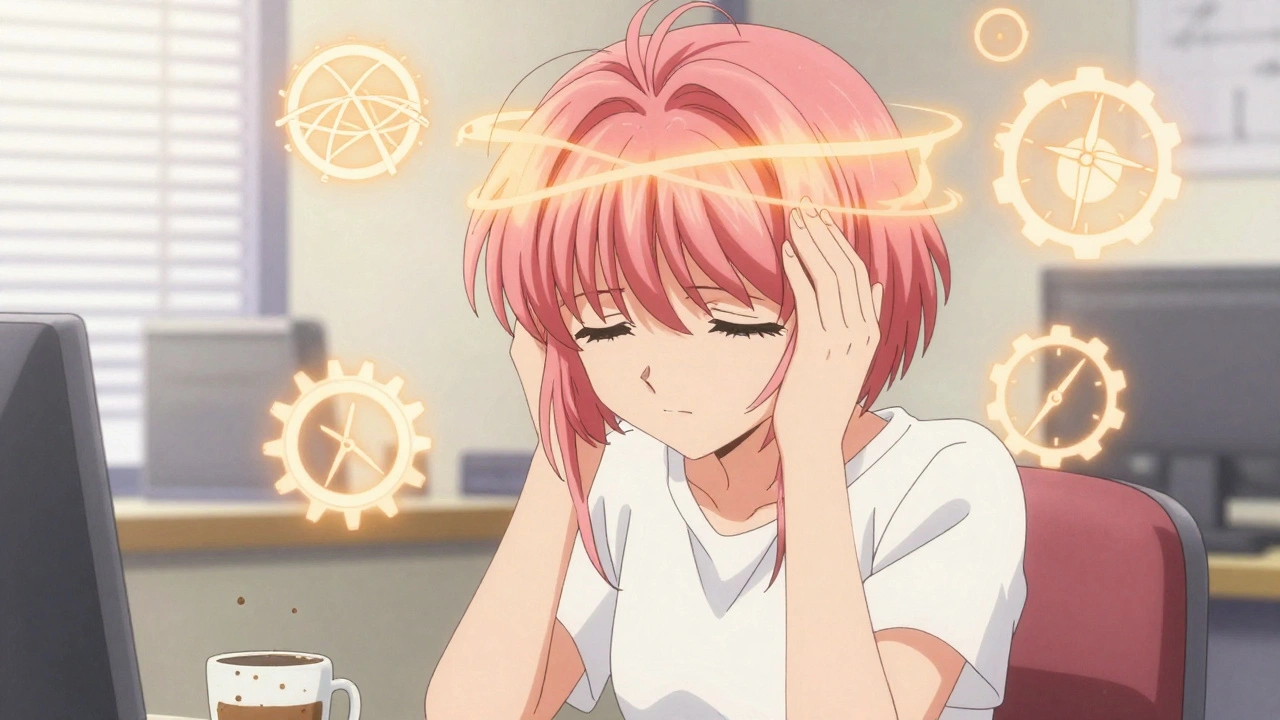
Not all headaches are the same. If you’ve ever been told, "It’s just a tension headache," only to end up curled up in a dark room for hours, you know that’s not true. Or maybe you’ve had that piercing pain beside your eye that makes you want to bang your head against the wall - and then it’s gone in an hour, only to come back tomorrow at the same time. These aren’t the same thing. They’re three completely different disorders, each with its own biology, symptoms, and treatment. Getting the right diagnosis isn’t just about naming the pain - it’s about stopping it.
Tension-Type Headaches: The Silent Pressure
Tension-type headaches are the most common. About 42% of people worldwide deal with them at some point. They don’t make headlines. They don’t show up in movies. But they’re the reason people skip lunch, rub their temples, or cancel plans. The pain feels like a tight band around your head - sometimes the forehead, sometimes the back of the skull. It’s not throbbing. It’s not sharp. It’s a dull, constant pressure, like someone’s gently squeezing your skull from all sides.
Unlike migraines, movement doesn’t make it worse. You can still walk, work, or drive. But you’re not at your best. The pain usually lasts from 30 minutes to seven days. If it’s happening 15 or more days a month for three months straight, it’s classified as chronic. Women are about 1.4 times more likely to get them than men, and stress, poor posture, or even staring at a screen too long can trigger them.
What makes it tricky is that tension headaches often come with mild nausea or light sensitivity - but not the way migraines do. Only 5-10% of people with tension headaches have real photophobia. If you’re throwing up or hiding in a closet because the light hurts, it’s probably not just tension. Over-the-counter painkillers like ibuprofen or acetaminophen work for about 70% of people. That’s why so many assume it’s "just a headache" - because it usually goes away with a pill.
Migraines: More Than a Bad Headache
Migraines aren’t headaches with extra symptoms. They’re a neurological event that happens to include head pain. About 1 in 5 women and 1 in 10 men experience them. They usually start between ages 35 and 39, and they can last anywhere from 4 to 72 hours if untreated. The pain is often one-sided and pulsing, though nearly 40% of people feel it on both sides.
The real markers? Nausea and vomiting. Light and sound sensitivity. Up to 90% of migraine sufferers have nausea. Eighty percent can’t stand bright lights or loud noises. That’s not just discomfort - that’s a complete shutdown. You can’t work, drive, or even talk. Most people lie down in a dark, silent room and wait it out.
About one in four people with migraines get an aura before the pain starts. That means seeing flashing lights, blind spots, or zigzag lines - sometimes even numbness in your hand or slurred speech. These symptoms build over 5 to 60 minutes and then fade as the headache kicks in. It’s not a warning. It’s part of the attack.
What makes migraines different from tension headaches isn’t just the pain level - it’s the system-wide disruption. Migraines involve cortical spreading depression - a wave of electrical silence that sweeps across the brain - followed by inflammation around the nerves and blood vessels in the head. That’s why treatments like triptans or CGRP inhibitors (like atogepant) work: they target the brain’s wiring, not just the pain signal. OTC meds help only about a third of migraine sufferers. The rest need prescription drugs, lifestyle changes, or nerve-stimulating devices.
Cluster Headaches: The Worst Pain Known to Humans
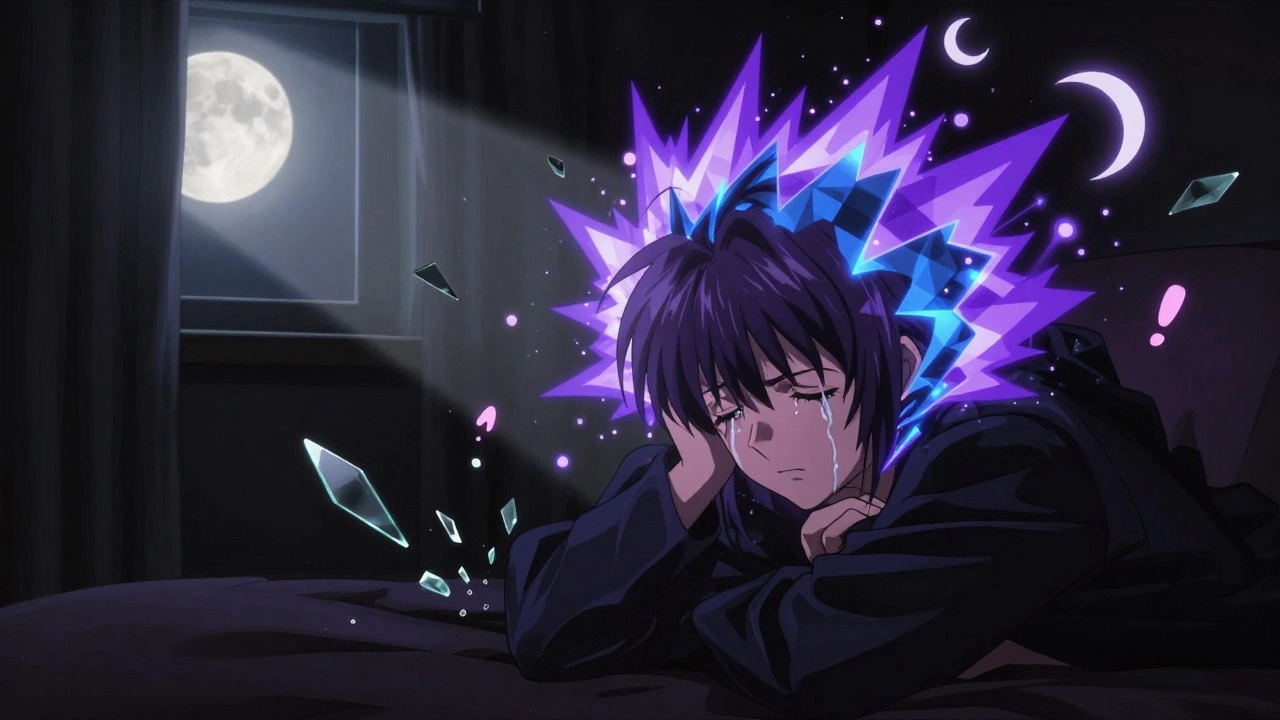
If you’ve never had a cluster headache, you can’t imagine it. And if you have, you’ll never forget it. These are the rarest - affecting only about 1 in 1,000 people - but also the most excruciating. The pain isn’t just bad. It’s unbearable. People describe it as a red-hot poker being driven into the eye or temple. Pain scales rate it 8 to 10 out of 10 - often higher than childbirth.
Cluster headaches strike in cycles. For 6 to 12 weeks straight, you might get 1 to 8 attacks a day - always at the same time. Midnight. 2 a.m. 7 a.m. They’re so regular, people set alarms to take their medicine before the pain hits. These cycles often happen seasonally - spring or fall - and then vanish for months or years.
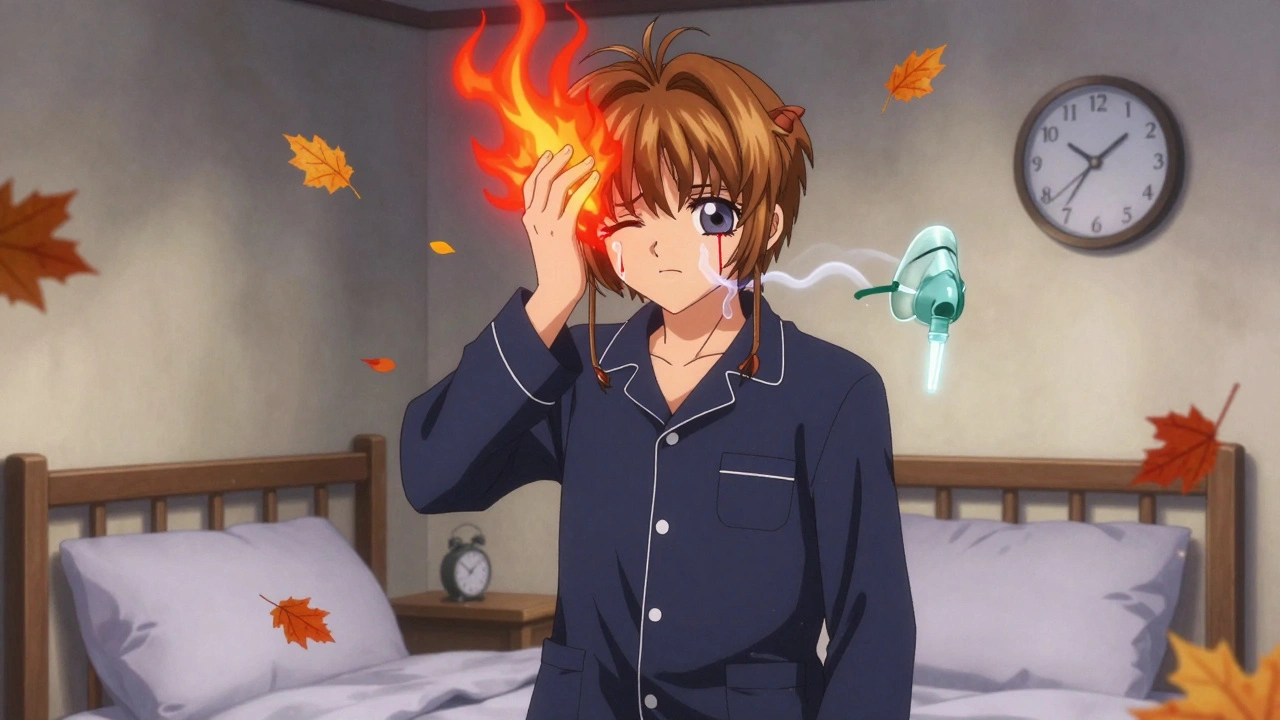
Here’s what sets them apart: autonomic symptoms. On the same side as the pain, you’ll see: tearing eyes, redness, a stuffy or runny nose, drooping eyelid, and sometimes a swollen face. These aren’t side effects - they’re part of the attack. Your body is literally reacting to the brain’s misfire.
Each attack lasts 15 to 180 minutes - usually under an hour. And during that time, you can’t sit still. People pace, rock, or even scream. You can’t lie down. You can’t relax. That’s why ER visits for cluster headaches are so common - and why oxygen therapy works so well. Breathing 100% oxygen through a mask for 15 minutes stops the pain in 70-80% of cases. Subcutaneous sumatriptan works too, with 75% success.
There’s no such thing as a "cluster migraine." That’s a myth. Cluster headaches and migraines are completely different diseases. One involves the hypothalamus - the brain’s internal clock - firing like a broken alarm. The other involves cortical spreading depression. They don’t mix. But because of their overlapping symptoms, up to 20% of migraine patients are wrongly diagnosed with cluster headaches in emergency rooms.
How to Tell Them Apart: A Quick Reference
Knowing the difference can save you months - or years - of wrong treatments. Here’s what to look for:
| Feature | Tension-Type | Migraine | Cluster |
|---|---|---|---|
| Pain location | Bilateral (both sides) | Usually one side, sometimes both | Always one side (eye/temples) |
| Pain quality | Pressure, tightness | Pulsating, throbbing | Excruciating, stabbing |
| Duration | 30 min - 7 days | 4 - 72 hours | 15 - 180 minutes |
| Frequency | Occasional to daily | 1-4 per month | 1-8 per day during cluster period |
| Associated symptoms | Minimal | Nausea, vomiting, light/sound sensitivity | Tearing, red eye, runny nose, drooping eyelid |
| Activity tolerance | Usually okay | Must rest in dark, quiet | Cannot sit still - pacing common |
| Best acute treatment | NSAIDs (ibuprofen, aspirin) | Triptans, CGRP inhibitors | High-flow oxygen, sumatriptan injection |
One big mistake? Assuming that if it’s not a migraine, it’s just stress. Tension headaches can be chronic and debilitating. Cluster headaches can be misdiagnosed as sinus infections. Migraines can be dismissed as "just bad headaches." But each one needs a different approach.
What to Do If You’re Not Getting Better
Keep a headache diary. Write down: when it started, how long it lasted, where the pain was, how bad it was (use a 0-10 scale), what you did to treat it, and whether anything made it better or worse. Note food, sleep, stress, weather - even your period if you’re a woman. Do this for at least four weeks.
Most doctors don’t get enough training in headaches. The average U.S. med school spends only 4 hours on the topic. That’s why so many people get misdiagnosed. If your headaches are frequent, severe, or changing, ask for a referral to a headache specialist. Neurologists who focus on headaches know the difference between a cluster attack and a migraine with autonomic features - and they know which treatments actually work.
There’s new hope too. In 2023, the FDA approved atogepant for cluster headache prevention - the first oral drug of its kind. Non-invasive vagus nerve stimulators are showing promise for migraine prevention. And deep brain stimulation is helping people with chronic cluster headaches who’ve tried everything else.
Why Getting It Right Matters
Migraines cost the U.S. economy $36 billion a year in lost work and medical bills. Cluster headache patients have the highest disability scores - 75% are classified as severely disabled. Tension headaches may seem minor, but chronic cases can ruin quality of life just as much.
It’s not about labeling pain. It’s about matching the right treatment to the right brain mechanism. A tension headache doesn’t need triptans. A cluster headache won’t respond to ibuprofen. A migraine won’t vanish with oxygen.
If you’ve been told "it’s all in your head," don’t believe it. Your head is doing exactly what it’s supposed to - sending signals. The problem is, no one’s listening to the right ones. Get the diagnosis right. Then get the right treatment. Your life depends on it.
Can tension headaches turn into migraines?
No, tension headaches and migraines are two different neurological conditions. One doesn’t evolve into the other. But it’s common for someone to have both. If you’ve had tension headaches for years and suddenly start getting nausea, light sensitivity, or aura, you may have developed migraines on top of it - not transformed. Track your symptoms carefully and talk to a specialist.
Are cluster headaches genetic?
There’s evidence of a genetic link. About 10% of cluster headache patients have a close relative with the condition. But it’s not inherited in a simple way like eye color. Multiple genes likely interact with environmental triggers - like smoking, alcohol, or seasonal changes - to set off attacks. If you have a family history and start getting severe one-sided headaches, get checked early.
Why do cluster headaches happen at the same time every day?
Because they’re controlled by your hypothalamus - the brain’s internal clock. This tiny region regulates sleep, hunger, and circadian rhythms. In cluster headache patients, it fires abnormally during certain windows, triggering attacks at predictable times. That’s why they often wake people up at night or strike right after waking up. This biological timing is why oxygen therapy works so well - it interrupts the signal fast.
Can stress cause cluster headaches?
Stress doesn’t trigger cluster headaches. That’s a myth. Alcohol, strong smells, and changes in sleep patterns can set them off - especially during a cluster period. But stress is more likely to worsen tension headaches or migraines. If you think stress is causing your cluster-like pain, you might actually be having migraines with autonomic features. A specialist can tell the difference.
Is there a cure for any of these headaches?
There’s no permanent cure yet - but there are effective ways to manage them. Tension headaches can often be controlled with lifestyle changes and OTC meds. Migraines can be prevented with new drugs like CGRP inhibitors. Cluster headaches can be suppressed with oxygen, injections, or even nerve stimulation. For some, attacks stop completely after years. The goal isn’t to eliminate them forever - it’s to reduce their frequency and severity so they don’t control your life.

Emma Sbarge
Tension headaches are not "just stress" - they're a real neurological phenomenon that gets dismissed because it's common. I've had them for 12 years, and no one takes them seriously until you're crying in the break room trying to type a report. The pressure doesn't go away with Advil anymore. It's chronic, it's debilitating, and it's not in your head.
Sheldon Bird
This is the most clear-headed breakdown of headache types I’ve ever read. Seriously, if you’ve ever been told "it’s just a headache," hand them this. I used to think migraines were overblown until I saw my sister go through one - she screamed for 14 hours straight. No one should suffer like that without being believed.
Karen Mccullouch
Of course the medical system ignores real pain unless it’s "spectacular." Cluster headaches? They’re rare so they don’t matter. Migraines? Too many women have them, so they’re "hysterical." Tension headaches? Oh, just drink more water and stop being so tense. 😒 The system is designed to make you feel crazy until you’re broken.
Michael Gardner
Wait - you’re telling me cluster headaches aren’t just really bad migraines? I’ve been treating mine with triptans for years and it’s been a disaster. So you’re saying oxygen is the real fix? That’s it? I’m not buying this. I’ve seen people fake cluster headaches to get opioids. This sounds like pharmaceutical propaganda.
Jennifer Taylor
THEY’RE HIDING SOMETHING. WHY IS THE HYPOTHALAMUS THE ONLY BRAIN AREA INVOLVED IN CLUSTER HEADACHES? WHY IS IT ALWAYS AT NIGHT? WHY DO THEY STOP FOR YEARS AND THEN COME BACK LIKE A CURSE? I’VE READ ABOUT MILITARY EXPERIMENTS WITH CIRCADIAN DISRUPTION - THIS ISN’T NATURAL. THEY’RE TESTING SOMETHING. THE FACT THAT OXYGEN WORKS? THAT’S TOO EASY. THEY DON’T WANT YOU TO KNOW THE TRUTH.
Hamza Laassili
Ok so tension headaches = bad posture?? Bro I sit at a desk 10 hrs a day and I’ve never had one. But I get migraines like clockwork after red wine. So maybe it’s not posture? Maybe it’s the glyphosate in our water? I read a guy on YouTube who said it’s all from 5G towers and EMF exposure. I mean… I’ve got the symptoms. I’ve got the timeline. I’m not crazy.
Constantine Vigderman
This post changed my life. I thought I had chronic tension headaches - turns out I had migraines with aura. Started tracking triggers, cut out aged cheese and MSG, and now I’m down from 12 headaches a month to 2. I’m not saying it’s easy - but knowing the difference? That’s the first step to taking back your life. You’re not broken. You’re just misdiagnosed. Keep going.
Ronan Lansbury
It’s amusing how Western medicine reduces complex neurological phenomena to simplistic diagnostic boxes. The hypothalamus? The cortical spreading depression? These are mere labels for phenomena we don’t fully understand. In traditional Tibetan medicine, headaches are seen as energetic blockages - not biochemical malfunctions. Perhaps our obsession with mechanistic models is itself the problem.
Cole Newman
You’re all missing the point. If you’re getting headaches at the same time every day, it’s not your brain - it’s your phone. You’re getting EMF exposure from your smartwatch syncing at 2 a.m. I’ve seen patients who stopped wearing their Apple Watch and their cluster headaches vanished. No oxygen needed. No meds. Just stop the tech. It’s that simple. Why isn’t anyone talking about this?
Harriet Wollaston
I’ve been there - the ER doctor looked at me like I was dramatic when I said I couldn’t open my eyes. I cried because I just wanted to sleep. Then I found a headache specialist who actually listened. It wasn’t just migraine - it was hormonal. My period triggered them. I started tracking it. I started taking magnesium. Now I can work. I can be a mom. You’re not alone. There’s help. Keep fighting.
Lauren Scrima
So… if I take ibuprofen and it works… it’s tension? If it doesn’t… it’s migraine? And if I scream and cry and pace… it’s cluster? Wow. So the diagnosis is just based on how much you suffer? Brilliant. I’m sure the insurance company loves this system.
sharon soila
It is a profound truth that human suffering is often minimized because it is common. The quiet agony of daily tension, the silent collapse of migraine, the unspeakable torment of cluster - these are not inconveniences. They are profound disruptions of the human spirit. To be heard, to be validated, to be treated with dignity - this is not luxury. It is basic humanity.
nina nakamura
Most of you are wasting your time. Headaches are caused by poor diet, lack of sleep, and weak willpower. If you can’t handle a little pain, you’re not sick - you’re lazy. I’ve never taken a pill for a headache in my life. Just breathe. Stop complaining. You’re all too soft.
Casey Mellish
I’ve had cluster headaches since I was 19. I’ve tried everything. Oxygen saved me. But here’s what no one says: the real cure is routine. Same bed, same lights out, same no alcohol, same no caffeine after noon. No magic. Just discipline. And if you’re in Australia, you can get oxygen therapy covered by Medicare. Don’t wait until you’re in the ER screaming - get help before it breaks you.