
Grief vs. Depression: How to Tell Them Apart and Support Real Recovery

When someone you love dies, it’s normal to feel broken. You cry. You can’t sleep. You lose interest in everything. But is this grief-or is it depression? Many people don’t know the difference, and that confusion can delay healing-or make things worse.
What grief actually looks like
Grief isn’t a single emotion. It’s a storm that comes in waves. One moment, you’re laughing at a memory of your loved one. The next, you’re sobbing in the grocery store because you forgot they’re gone. That back-and-forth? That’s grief. It’s not constant sadness. It’s sharp pain, followed by moments of warmth, sometimes even joy.
According to the DSM-5-TR, published in March 2022, grief after loss typically includes yearning for the person, preoccupation with memories, and emotional pain tied directly to the death. These feelings don’t disappear overnight. But over time, they become less intense. You start to find meaning again. You might still miss them every day, but you can also eat a meal without crying, or watch a movie without feeling like the world has ended.
Research from a 2020 meta-analysis in World Psychiatry, which reviewed over 25,000 people, found that in grief, positive memories of the deceased often interrupt the pain. That’s key. People in grief can still feel happiness-just not all the time. It’s not a sign they’re “over it.” It’s a sign they’re healing.
What depression actually looks like
Depression doesn’t care about your loss. It doesn’t care about your memories. It just shows up and stays. It’s a heavy, flat numbness that doesn’t lift. You don’t cry because you miss someone. You cry because you feel worthless. You don’t feel guilty because you didn’t say goodbye. You feel guilty because you think you’re a burden.
The DSM-5 defines Major Depressive Disorder as five or more symptoms lasting two weeks or longer. That includes: depressed mood nearly every day, loss of interest in almost everything, weight changes, sleep problems, fatigue, trouble concentrating, feelings of worthlessness, and thoughts of death. These symptoms aren’t tied to a specific person or event. They’re just… there. Always.
A 2017 study in Tidsskriftet for Den norske legeforening found that 92.6% of people with depression reported feelings of worthlessness. Only 18.4% of those experiencing grief did. That’s not a small difference-it’s the difference between mourning someone and feeling like you’re nothing.
The big difference: What your thoughts are about
Here’s the clearest way to tell them apart: grief is about the person you lost. depression is about yourself.
In grief, your mind keeps going back to them. You replay conversations. You imagine what they’d say if they were here. You keep their sweater. You talk to them in your head. That’s normal. That’s love.
In depression, your mind turns inward. You think: “I’m a failure.” “No one would miss me.” “I should just disappear.” You don’t think about your loved one-you think about how you’re broken. And that’s dangerous.
One Reddit user, grieving his wife, wrote: “I had days where I could smile at memories of her, then crash into sadness-but I always had those good moments. With depression after my layoff last year, it was just constant emptiness with no silver linings.” That’s the difference in a sentence.
When grief turns into something worse
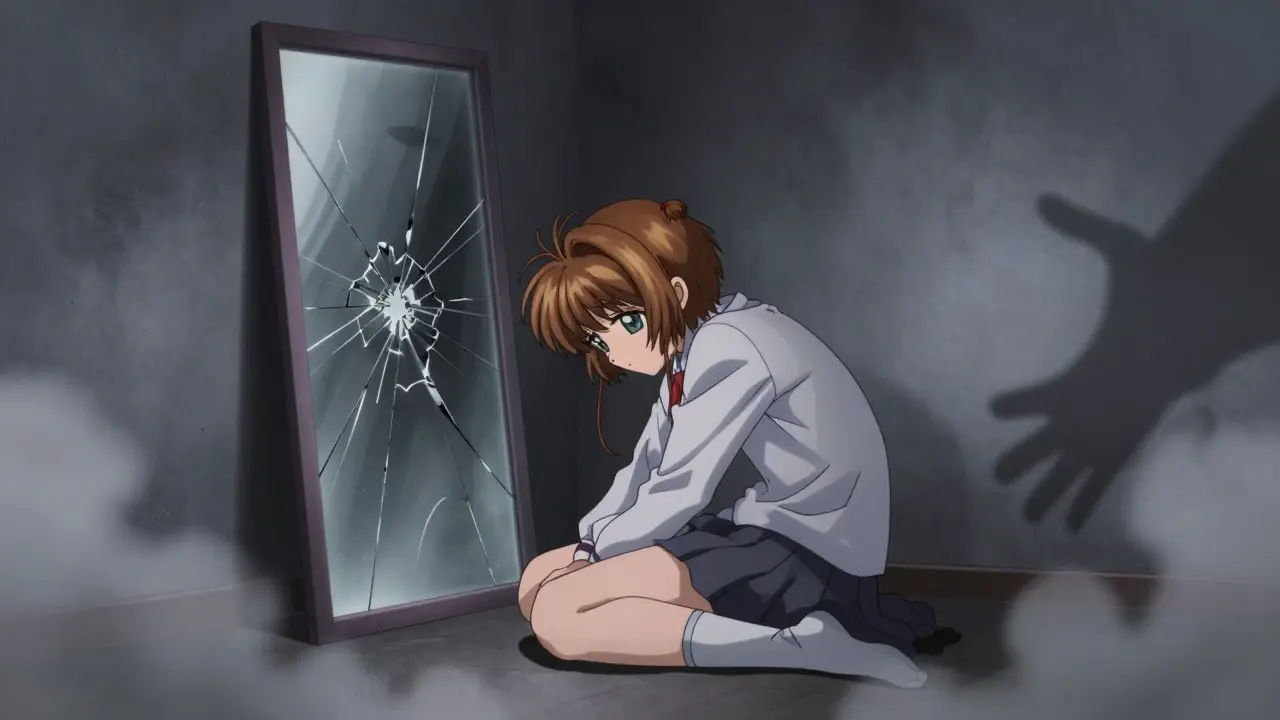
Not all grief follows the same path. About 7 to 10% of bereaved people develop Prolonged Grief Disorder, recognized in the ICD-11 and DSM-5-TR since 2022. This isn’t just “being sad for too long.” It’s when the pain doesn’t soften. When you can’t accept the death. When you avoid anything that reminds you life goes on. You stop eating. You stop seeing friends. You feel like you’re living in a fog, and the only thing that feels real is the loss.
Studies show that 9.8% of people still meet criteria for Prolonged Grief Disorder one year after losing someone. That’s nearly 1 in 10. And if left untreated, it can lead to depression, substance abuse, or even suicide.
The good news? It’s treatable. But not with standard depression meds.
How treatment differs
Antidepressants like sertraline help with depression. They don’t help with grief. In fact, the National Institute for Health and Care Excellence (NICE) says you shouldn’t prescribe them for uncomplicated grief. Why? Because 73.4% of bereaved people get better on their own within six months-with time, support, and space to feel their pain.
But if you have Prolonged Grief Disorder, you need something else: Complicated Grief Treatment (CGT). Developed by Dr. Katherine Shear at Columbia University, CGT is a 16-week therapy focused on reconnecting with memories of the deceased, processing the reality of the loss, and rebuilding a life that still includes them-but doesn’t stop because of them.
One 2014 JAMA study found that 70.3% of people with prolonged grief went into remission after CGT. Compare that to the STAR*D trial, which showed 58.1% of people with depression improved with antidepressants plus CBT. Two different problems. Two different solutions.
What to do if you’re unsure
If you’re grieving and you’re not sure if it’s depression, ask yourself these questions:
- Do I still feel moments of joy when I think about my loved one?
- Do I feel guilty because I miss them-or because I think I’m worthless?
- Am I avoiding people because I’m sad, or because I feel like I’m a burden?
- Have I lost interest in everything, or just things that remind me they’re gone?
If you answered “no” to the first question, or “yes” to the second or third, it might be time to talk to a professional. Don’t wait. Don’t assume it’ll pass. Grief doesn’t heal in silence.
How to support someone who’s grieving
You don’t need to fix it. You just need to show up.
Don’t say, “They’re in a better place.” Don’t say, “Time heals all wounds.” Don’t ask, “How are you?” and then walk away when they cry. Say: “I’m here. I don’t know what to say. But I’m here.”
Send a text a month later. Bring soup. Sit with them in silence. Let them talk about the person they lost-even if it’s the 10th time. That’s not clinging. That’s healing.
And if you notice someone withdrawing completely, sleeping all day, or talking about not wanting to live-don’t wait. Ask directly: “Are you thinking about hurting yourself?” That question doesn’t plant the idea. It opens the door.
What’s changing in mental health care
The mental health field is finally catching up. In 2023, the National Institutes of Health gave $47.3 million to study grief-up 28% from 2020. Researchers are now using AI to analyze speech patterns and tell grief from depression with 89.7% accuracy. That’s not science fiction. That’s happening now.
Apps like GriefShare are showing real results. A 2023 trial in JAMA Network Open found users reduced symptoms by 42.3% in 12 weeks. That’s not a cure. But it’s a lifeline for people who can’t find a therapist.
Meanwhile, the number of certified grief counselors in the U.S. jumped from 2,843 in 2019 to 4,217 by the end of 2022. More people are getting trained. More resources are being funded. More people are being heard.
You’re not alone
Grief isn’t a disorder. Depression isn’t weakness. But when they overlap, it’s easy to feel lost. You might think you’re failing. That you should be “over it.” But healing isn’t linear. It’s messy. It’s slow. It’s not about forgetting. It’s about learning how to carry them with you.
If you’re grieving, give yourself permission to feel it all. If you’re depressed, know that this isn’t your fault-and it doesn’t have to be your forever. Help exists. You just have to reach for it.
And if you’re watching someone else struggle? Don’t look away. Stay. Listen. Show up. Sometimes, that’s the only medicine that works.


RAJAT KD
Grief isn't depression. Simple as that. You cry because they're gone, not because you're worthless.
Meghan Hammack
I lost my dad last year. Some days I laughed so hard remembering how he sang off-key in the shower. Other days I couldn't get out of bed. Both were real. Both mattered. You're not broken for feeling both. You're human.
Heather Wilson
Actually, the DSM-5-TR doesn't 'recognize' grief as a disorder-it just clarifies diagnostic boundaries. You're conflating normal grief with Prolonged Grief Disorder. Most people don't need therapy. They need to stop Googling symptoms and just live. Also, your 70.3% recovery stat ignores attrition bias in clinical trials. This article is dangerously oversimplified.
Jacob Paterson
Oh wow, so now we're diagnosing people's grief like it's a lab report? Next you'll be telling me which tears are 'valid' based on cortisol levels. 🤡
tali murah
Let me guess-you also think antidepressants are for weak people who can't 'man up' and cry on cue? The fact that you’re this smug about grief tells me you’ve never lost anyone important. Or maybe you just don’t remember.
Matthew Maxwell
It's irresponsible to imply that grief and depression are easily distinguishable without professional evaluation. This article gives people false confidence to self-diagnose. If you're unsure, see a therapist. Don't rely on Reddit wisdom and a 2014 JAMA study. People die from this kind of oversimplification.
Ian Long
I get where you're coming from, but I think the real issue isn't the distinction between grief and depression-it's that we don't have enough space to feel either. We're told to 'move on' after two weeks, then blamed for being 'too emotional' when we don't. Maybe the problem isn't the diagnosis-it's the culture that won't let us hurt.
Diana Stoyanova
My mom died in 2021. I thought I was depressed. I didn't eat for weeks. Didn't answer texts. Sat in the dark. But then I found her old playlist-and I danced in the kitchen until I cried. That’s grief. Depression doesn’t let you dance. It makes you feel like you don’t deserve to breathe. This article? It’s the first thing that made me feel seen since she left. Thank you.
Alicia Hasö
To everyone who says ‘just see a therapist’-not everyone can afford it. Not everyone lives near one. Not everyone has insurance that covers grief counseling. That’s why resources like GriefShare matter. This isn’t just academic-it’s life-saving for people who are drowning in silence. Don’t dismiss the tools that keep people alive.
And to the person who called this ‘oversimplified’-you’re right. Grief is too messy for bullet points. But sometimes, a simple truth is all someone needs to reach out. Don’t punish clarity because it’s not perfect.
I’m a therapist. I’ve seen people wait years because they thought grief was depression and they didn’t deserve help. Don’t let your skepticism cost someone their life.
Angela Stanton
LOL at the 89.7% AI accuracy stat. 😂 You know what else has 89.7% accuracy? My cat judging me for eating cereal at 3am. AI can’t feel grief. It can’t hold your hand when you scream into a pillow because you forgot how your partner’s laugh sounded. Stop outsourcing humanity to algorithms. 🤖💔
Patty Walters
i just wanna say thank you for writing this. i’ve been silent for 18 months. didn’t know if i was depressed or just… broken. this helped me finally say it out loud to my sister. she cried with me. we didn’t fix anything. we just sat. and that was enough.
Phil Kemling
What if grief and depression aren’t opposites, but different frequencies of the same wound? Maybe the mind doesn’t distinguish between loss of a person and loss of self. Maybe the real tragedy isn’t the diagnosis-it’s that we’ve built a world where mourning is a private burden, not a shared ritual.
What if healing isn’t about fixing the pain, but about learning to carry it without letting it crush you? That’s not clinical. That’s spiritual. And maybe that’s what we’re really missing.
Pooja Kumari
I lost my husband 3 years ago. I still talk to him every night before bed. I keep his socks in the drawer. I cry when I smell his cologne on a stranger’s coat. People say I’m stuck. But I’m not stuck-I’m loving. You can’t rush love. You can’t medicate memory. And you sure as hell can’t diagnose it with a checklist. I’m not broken. I’m devoted. And I won’t apologize for that.
Also, I’ve been on antidepressants. They made me feel like a zombie. I stopped. I started writing letters to him. I joined a grief group. I planted his favorite tree. That’s what healed me. Not pills. Not algorithms. Just time and tenderness.
To the people who think I should ‘move on’-go ahead. I’ll be here, holding his memory, while you scroll past another post about ‘mental health hacks.’ I’ll be okay.
And if you’re reading this and you’re grieving? You’re not alone. I’m right here with you. Even if you don’t know me.
Ashley Kronenwetter
Thank you for the thoughtful, evidence-based breakdown. This is exactly the kind of nuanced, compassionate discourse our mental health conversations need. The distinction between grief and depression is not just clinically important-it’s ethically imperative. I will be sharing this with my patients.