
First Trimester Medication Safety: What You Need to Know About Critical Development Windows

When you're pregnant, even a simple headache can turn into a panic attack. You reach for the acetaminophen, then freeze-is this safe? The truth is, the first 12 weeks of pregnancy aren’t just a time of excitement and morning sickness-they’re the most dangerous window for your baby’s development when it comes to medications. This isn’t scare tactics. It’s biology.
The Critical 12 Weeks: When Everything Is Being Built
Your baby doesn’t look like a baby at first. In the first trimester, it’s an embryo-tiny, but rapidly building every organ system. By week 4, the neural tube (which becomes the brain and spinal cord) is forming. By week 6, the heart is beating. By week 8, fingers and toes are taking shape. All of this happens between days 17 and 56 after conception. That’s the golden window for teratogens-substances that can cause birth defects.
According to the CDC, 90% of major birth defects happen during this time. And here’s the kicker: most women don’t even know they’re pregnant until week 5 or 6. That means by the time you realize you’re expecting, your baby might already have been exposed to something that could affect development.
Common Medications and Their Real Risks
You’re not alone if you’ve taken medication before knowing you were pregnant. About 70% of pregnant women take at least one prescription drug in the first trimester. But not all are created equal.
- Acetaminophen (Tylenol): Long considered the go-to for pain and fever, it’s still the safest option-up to 4,000 mg per day. But new studies suggest a possible link to a 30% higher risk of ADHD and 20% higher risk of autism with prolonged use. That doesn’t mean you can’t use it. It means: use the lowest dose for the shortest time.
- NSAIDs (ibuprofen, naproxen, aspirin): These are risky. Even in the first trimester, they’ve been tied to a 1.6 times higher chance of miscarriage. From week 20 on, they can cause serious kidney problems in the fetus. Skip them unless your doctor says otherwise.
- Antibiotics: Amoxicillin, penicillin, and cephalosporins are generally safe. Avoid tetracycline-it stains developing teeth. Fluoroquinolones like ciprofloxacin? Animal studies show cartilage damage. Human data is limited, but most doctors avoid them entirely.
- Antidepressants: Paroxetine is linked to a 1.5-2x higher risk of heart defects. Fluoxetine, sertraline, and citalopram don’t show the same pattern. But stopping antidepressants can be just as dangerous-untreated depression increases risks for preterm birth and low birth weight.
- Pseudoephedrine (Sudafed): It’s in cold meds, but it’s been tied to a 1.2-1.3x higher risk of gastroschisis-a rare abdominal wall defect. Skip it in the first trimester. Try saline sprays instead.
- Isotretinoin (Accutane): This acne drug is a known disaster. It carries a 20-35% risk of major birth defects and up to 60% risk of cognitive issues. If you’re on this, you need strict birth control. No exceptions.
What About Over-the-Counter and Herbal Remedies?
Just because something’s sold without a prescription doesn’t mean it’s safe. Acetaminophen is fine in moderation. Docusate (for constipation)? Generally okay. But bismuth subsalicylate (Pepto-Bismol)? Avoid it-it’s a form of aspirin, and aspirin crosses the placenta.
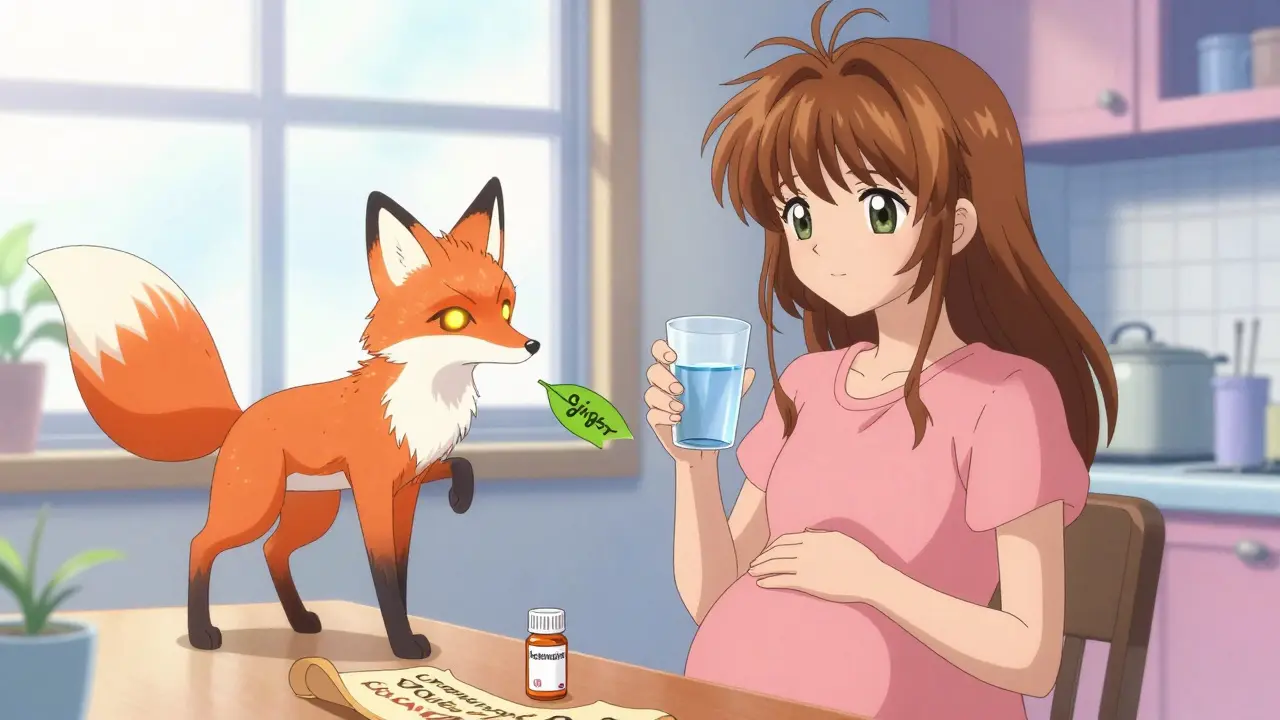
Herbs? Even more uncertain. Red raspberry leaf tea? Some say it helps labor. But there’s no solid proof it’s safe in early pregnancy. Ginger for nausea? Yes, studies support it. But don’t assume “natural” means harmless. Many herbal supplements aren’t tested in pregnancy at all.
Thyroid, Epilepsy, and Autoimmune Conditions: When Stopping Is More Dangerous
Some conditions can’t be ignored. If you have epilepsy and stop your seizure meds, your risk of fetal death jumps 400%. If you have hypothyroidism and stop levothyroxine, your baby’s brain development suffers. ACOG says your TSH should be under 2.5 mIU/L in the first trimester. Most women need a 25-50% dose increase once pregnant.
Hydroxychloroquine (Plaquenil) for lupus or rheumatoid arthritis? Studies show no increase in birth defects. Corticosteroids like prednisone? There’s a small link to cleft lip, but the risk is low-1.3-1.6 times higher than baseline. The real danger? Uncontrolled inflammation or seizures.
Here’s the rule: Don’t stop a medication without talking to your doctor. The risk of the condition itself might be far greater than the risk of the drug.
The Prescription Information Desert
Here’s the ugly truth: 98% of prescription labels don’t give you clear, reliable pregnancy safety info. Only 10% of FDA-approved medications have enough human data to know if they’re safe. That’s not a flaw in the system-it’s the system.
Doctors are flying blind. So are patients. That’s why services like MotherToBaby exist. They field over 15,000 calls a year from pregnant people asking, “Is this okay?” They don’t guess. They use the Teratology Information System (TERIS), which rates drugs based on real human studies.
And yet, 96% of commonly used medications still lack solid data. Dr. Christina Chambers from UC San Diego calls it a “prescription information desert.” We’re giving drugs to millions of pregnant women without knowing the full impact.

What You Can Do Right Now
Don’t panic. Don’t stop everything. Do this:
- Know your dates. Use your last period and an early ultrasound to figure out exactly when conception happened. That tells you which stage of development your baby is in.
- Make a list. Write down every medication, supplement, and herb you’ve taken since you stopped birth control-even if you thought it was harmless.
- Call MotherToBaby. It’s free, confidential, and staffed by specialists. They’ll tell you what’s risky, what’s probably safe, and what’s unknown. Dial 1-866-626-6847 or visit their website.
- Ask your doctor: “Is there a safer alternative?” For nausea, try vitamin B6 and ginger. For allergies, try loratadine (Claritin) or cetirizine (Zyrtec). For pain, stick with acetaminophen.
- Use the lowest dose for the shortest time. Even safe meds can become risky with overuse.
The Bigger Picture: Why This Matters
This isn’t just about one pregnancy. It’s about how we treat women’s health. For decades, pregnant women were excluded from clinical trials. We assumed it was safer not to test. Now we’re stuck with a mountain of guesswork.
Projects like PregSource and the FDA’s Pregnancy Exposure Registry are trying to fix that. They’re collecting real data from thousands of pregnant women. But until pharmaceutical companies are required to test their drugs in pregnancy, we’ll keep living in the dark.
For now, your best tool is knowledge. And your best ally is a provider who listens. If your doctor brushes off your concerns, find someone who won’t. Your baby’s development is too important to leave to assumptions.
Is it safe to take acetaminophen during the first trimester?
Yes, acetaminophen is still the safest option for pain and fever in pregnancy, with a recommended maximum of 4,000 mg per day. But recent studies suggest prolonged or high-dose use may be linked to a 30% increased risk of ADHD and 20% increased risk of autism spectrum disorder. Use only what you need, for the shortest time possible.
Can I take ibuprofen or aspirin in early pregnancy?
It’s best to avoid NSAIDs like ibuprofen and aspirin in the first trimester. Studies show they may increase the risk of miscarriage by 1.6 times. From week 20 onward, they can cause serious fetal kidney problems and low amniotic fluid. Stick with acetaminophen unless your doctor advises otherwise.
What should I do if I took medication before knowing I was pregnant?
Don’t panic. Most exposures don’t cause harm. Write down the name, dose, and date you took it. Call MotherToBaby or your OB-GYN. They’ll assess your exposure based on timing and drug type. Many common meds, like amoxicillin or acetaminophen, are low-risk. Only a few, like isotretinoin or certain antiseizure drugs, are high-risk.
Are herbal supplements safe during the first trimester?
Most herbal supplements haven’t been studied in pregnancy. Ginger is generally considered safe for nausea. But red raspberry leaf, black cohosh, and others could trigger contractions or affect hormones. Avoid anything not proven safe. Always check with your provider before taking any herb, tea, or supplement.
Should I stop my antidepressants if I get pregnant?
No-not without talking to your doctor. Stopping antidepressants can increase the risk of miscarriage, preterm birth, and low birth weight. Paroxetine carries a higher risk of heart defects, but fluoxetine, sertraline, and citalopram have better safety profiles. The risks of untreated depression often outweigh the risks of medication. Work with your provider to choose the safest option.
Is it safe to take thyroid medication during pregnancy?
Yes, levothyroxine is not only safe-it’s essential. Untreated hypothyroidism can lead to developmental delays in your baby. Most women need a 25-50% dose increase during pregnancy. Your TSH should be kept under 2.5 mIU/L in the first trimester. Regular blood tests are critical.
What medications should I avoid completely in the first trimester?
Avoid isotretinoin (Accutane) entirely-it causes severe birth defects. Also avoid tetracycline (tooth discoloration), fluoroquinolone antibiotics (cartilage damage in animals), and high-dose vitamin A supplements. Stay away from NSAIDs like ibuprofen and naproxen, and avoid bismuth subsalicylate (Pepto-Bismol) due to aspirin content.

Emma Duquemin
Okay but can we talk about how insane it is that we’re still guessing at what’s safe? I took Tylenol for three weeks straight before I knew I was pregnant-now I’m scrolling through studies at 2 a.m. wondering if my kid will need therapy before kindergarten. 🤯 I called MotherToBaby and they were SO nice. Like, actual humans who didn’t judge me for using Advil once. I’m just glad I didn’t panic-stop everything. My OB said if I’d stopped my antidepressants cold turkey, the stress alone might’ve been worse than the meds. So here’s my rule: ask, don’t assume. And if your doctor acts like you’re being dramatic? Find a new one. Your gut knows when something’s off.
Kevin Lopez
Teratogenic window: days 17–56 post-conception. NSAIDs = COX inhibition → reduced prostaglandins → increased miscarriage risk (OR 1.6). Acetaminophen: plausible epigenetic modulation via oxidative stress pathways. Paroxetine: CYP2D6 substrate, fetal cardiac neural crest disruption. Isotretinoin: RARα agonist → neural crest apoptosis. Evidence grade: moderate to high for these associations. MotherToBaby: TERIS database, class B–D based on human cohort data. Stop overinterpreting correlation as causation.
Duncan Careless
Thanks for writing this. I’m from the UK and honestly, our NHS docs barely mention meds in pregnancy unless you ask. I took some ibuprofen for a migraine before I knew I was pregnant and panicked for weeks. Ended up calling the UK Teratology Information Service-they said it was fine since it was one dose, early on. Still, I wish there was more clear guidance. I printed this out and gave it to my midwife. She actually read it. 😊
Samar Khan
OMG I took Pepto-Bismol for 3 days 😭😭😭 I thought it was just ‘stomach stuff’… now I’m crying in the shower thinking my baby has gastroschisis. Why does no one TELL YOU this?! I’m 8 weeks and already ruined everything. 🥲💔 #pregnancyguilt #help
Russell Thomas
So let me get this straight-you’re telling me I can’t take Advil for my period cramps while trying to conceive, but I can take 8 Tylenol a day for a week straight and it’s ‘fine’? 🤡 The system is a joke. Also, ‘natural’ ginger tea is safe but ‘chemical’ antidepressants are risky? Sure. And yet somehow we’re all supposed to trust Big Pharma but distrust herbal teas? I’m just here for the chaos.
Jasmine Yule
Hey Samar, I felt that. I took Pepto too. I cried too. But here’s what I learned: one dose? Almost never causes harm. The real danger is the guilt that follows. You didn’t ruin anything. You were trying to feel better. That’s not a crime. I called MotherToBaby and they said the same thing-your baby’s not a ticking time bomb. I’m 12 weeks now and my ultrasound was perfect. You’re going to be okay. And if you need to vent? I’m here. 💛
Greg Quinn
It’s funny how we treat pregnancy like a science experiment gone wrong. We’re told to avoid everything, yet we’re given no reliable data. The real tragedy isn’t the meds-it’s that we’ve turned motherhood into a minefield of fear. If we’d included pregnant women in clinical trials 50 years ago, we wouldn’t be here. We’d be having rational conversations, not panic-scrolling at 3 a.m. The body is resilient. The system? Not so much.
Lisa Dore
Just wanted to say thank you to the author. This post saved me. I’m on hydroxychloroquine for lupus and was terrified to keep taking it. My rheumatologist said it was fine, but I needed to hear it from someone who actually knew the data. I shared this with my OB and we made a plan together. You’re not alone. And you’re doing better than you think. ❤️