FDA Oversight of Foreign Generic Drug Manufacturing: Standards and Compliance
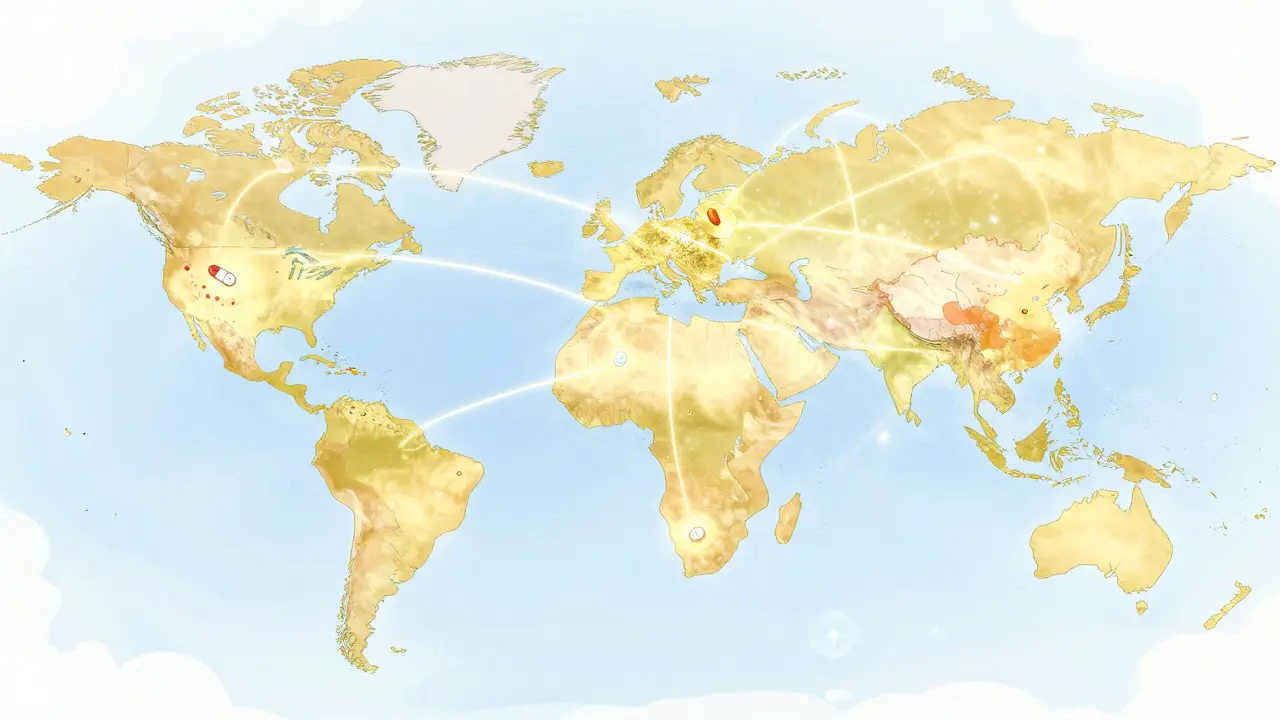
Ever wonder where your generic medication actually comes from? While the label might say "Made in USA," the active ingredients often travel thousands of miles before reaching your pharmacy. About 80% of the active pharmaceutical ingredients (APIs) used in American medicines are made overseas, with India and China leading the way. This global supply chain is a miracle of efficiency, but it creates a massive headache for regulators: how do you ensure a factory halfway around the world is following the same safety rules as one in Ohio?
For years, there was a quiet but dangerous gap in how the FDA is the federal agency responsible for protecting public health by ensuring the safety, efficacy, and security of human and veterinary drugs handled this. Domestic plants got surprise visits, but foreign plants usually had weeks to tidy up before an inspector walked through the door. That "double standard" is finally ending. With new mandates and a push for unannounced inspections, the stakes for foreign manufacturers have never been higher. If you're tracking fda approval and the quality of affordable medicine, understanding this shift is key.
The Gold Standard: Understanding CGMP
To get a drug on the U.S. market, every manufacturer must follow CGMP, or Current Good Manufacturing Practices. These aren't just suggestions; they are legally mandated quality systems that monitor every single step of production. Think of it as a high-stakes recipe book where every single gram of powder and every minute of heating must be logged and verified.
CGMP focuses on a few non-negotiable areas:
- Contamination Control: Ensuring that a batch of blood pressure medication isn't contaminated by residue from a previous batch of something else.
- Data Integrity: Proving that the test results recorded in the logs actually happened and weren't just made up to pass a check.
- Personnel Training: Making sure the people on the line know exactly how to handle sensitive chemicals without compromising the product.
When the FDA visits a site, they use Form 483 to document any "observations"-essentially a list of things the company is doing wrong. If these aren't fixed, it can lead to a warning letter or a total ban on imports from that facility.
The Inspection Gap: Surprise Visits vs. Scheduled Tours
Up until recently, foreign manufacturing lived in a different world. While the FDA conducted around 12,000 domestic inspections annually-mostly unannounced-they only managed about 3,000 foreign inspections across 90 countries. Worse, these foreign visits usually came with 8 to 12 weeks of advance notice. Imagine if your boss told you they were coming to inspect your desk in two months; you'd have plenty of time to hide the mess. That's exactly what was happening in the pharmaceutical world.
The data shows this lack of surprise led to a surge in failures. In 2024, nearly 45% of foreign inspections uncovered data integrity issues or basic CGMP failures. Contrast that with domestic plants, where the violation rate for data integrity was roughly 17.2% compared to 38.7% abroad. Because foreign sites could "prep" for the visit, the FDA was often seeing a curated version of the factory rather than the daily reality.
| Metric | Domestic Facilities | Foreign Facilities |
|---|---|---|
| Typical Notice Period | Unannounced | 8-12 Weeks |
| Data Integrity Violations | 17.2% | 38.7% |
| Contamination Control Issues | 9.8% | 22.4% |
| Annual Inspection Volume | ~12,000 | ~3,000 |
New Rules of Engagement for 2026
The era of the "scheduled tour" is dying. Following Executive Order 14135, the FDA is aggressively closing the gap between how they treat home-grown and overseas factories. By the second quarter of 2026, the agency aims to make at least 50% of all foreign inspections unannounced. This is a massive shift. For a factory in India or China, a knock on the door could now happen with as little as 24 to 48 hours' notice.
This crackdown isn't just about bureaucracy; it's about safety. High-profile cases, like the Sun Pharma situation where a banned facility was allegedly allowed to sneak some products back into the U.S. market, have fueled congressional anger. Senators Kirsten Gillibrand and Tim Scott have pushed for more transparency, questioning if safety enforcement is sometimes overridden for the sake of maintaining the drug supply.
To support this, the FDA is hiring 200 more foreign inspection specialists to increase their global reach by 40%. The goal is to catch "bad actors"-companies that falsify records or hide contamination-before the drugs ever hit American soil.

How Foreign Plants are Adapting
If you run a generic drug plant in Asia, you're probably feeling the heat. A survey by the Parenteral Drug Association showed that 68% of foreign manufacturers expect these new unannounced rules to bump up compliance costs by 15% to 25%. It's not just about the money; it's about the culture of quality.
Industry experts now recommend a "constant state of readiness." Instead of a frantic cleanup three weeks before an inspector arrives, plants are implementing:
- Daily Quality Audits: Checking logs every single day so there are no gaps in the record.
- Quarterly Mock Inspections: Hiring third-party consultants to act like FDA inspectors and find the holes in the system.
- Real-time Documentation: Moving away from paper logs that can be easily altered to digital systems with time-stamped entries.
This transition takes time. Most experts suggest a 6-to-9 month learning curve to retrain staff and update contamination protocols. If a company refuses entry to an unannounced inspector, the FDA can trigger an "import alert," effectively blocking every single product from that facility from entering the U.S. overnight.
Comparing the US and EU Models
While the U.S. is tightening its grip, some experts argue we're still doing it wrong. The European Union uses a different approach that focuses on the end of the line. In the EU, each batch of medicine must be certified by a Qualified Person-a highly trained expert physically located in Europe who signs off on the quality before the drug is released.
Right now, the U.S. relies heavily on the manufacturer's own self-policing and periodic FDA checks. Some researchers from the Brookings Institution suggest the U.S. should adopt a similar "importer-level" verification. This would mean the company bringing the drug into the U.S. would have to designate a qualified person to certify every batch. This extra layer of accountability could potentially slash foreign facility violations by 30% to 40% because the importer's own license would be on the line.
The Ripple Effect on Drug Availability
There is a flip side to this strict oversight: the risk of drug shortages. When the FDA shuts down a major plant in India for CGMP violations, it doesn't just affect one company. Since India provides 40% of the U.S. API supply, a few bad inspections can lead to a shortage of critical medications for thousands of patients.
Analysts at Evaluate Pharma warn that the sudden shift to unannounced inspections could initially disrupt supply chains, potentially impacting 15% to 20% of generic drug availability in the short term. It's a delicate balancing act. The FDA has to ensure the drugs are safe without accidentally cutting off the supply of life-saving generics.
Why does the FDA focus so much on India and China?
Because that's where the bulk of the production happens. India provides about 40% of the active pharmaceutical ingredients (APIs) and China provides about 13%. Since so much of the American generic drug supply originates there, any quality failure in those regions has a massive impact on U.S. public health.
What happens if a foreign factory fails an inspection?
It usually starts with a Form 483, which lists the problems. If the company doesn't fix them, the FDA issues a Warning Letter. In severe cases, the FDA can place the facility on an "import alert," which means their products are detained at the border and cannot enter the U.S. market until the agency is satisfied the problems are solved.
What is the difference between a generic drug and a brand-name drug regarding oversight?
In terms of manufacturing standards, there is no difference. Both must follow CGMP. However, generic manufacturers often operate on thinner margins and use more outsourced global supply chains, which can make consistent oversight more challenging for the FDA compared to large, vertically integrated brand-name companies.
Are unannounced inspections actually effective?
Yes. According to FDA Commissioner Marty Makary, unannounced visits expose "bad actors" who falsify records or hide violations during scheduled visits. When a company doesn't know when the inspector is coming, they are forced to maintain high standards every single day, not just during "audit week."
How can I tell if my generic medication was made in a compliant facility?
Individual consumers usually can't tell just by looking at the bottle. However, you can search the FDA's database for "Import Alerts" or "Warning Letters" to see if a specific manufacturer has a history of CGMP violations. Most reputable pharmacies only source from manufacturers that have cleared FDA hurdles.
What's Next for Manufacturers?
If you are operating in this space, the priority is clear: move away from "event-based" compliance and toward "continuous" compliance. Stop preparing for the inspection and start preparing the facility. This means investing in digital quality management systems that make auditing a daily habit rather than a quarterly crisis.
For patients, the goal is a system where the cost of generics doesn't come at the expense of safety. As the FDA closes the gap on foreign oversight, we should see a decrease in data integrity issues and a more stable, transparent supply chain. The next few years will be a shake-out period where only the most disciplined manufacturers survive the new era of surprise visits.