
Bell’s Palsy: How Corticosteroids Help Restore Facial Movement
When your face suddenly droops on one side-your eye won’t close, your smile tilts, your speech slurs-it’s terrifying. You might think it’s a stroke. But for many people, it’s something else: Bell’s palsy. It’s not a stroke. It’s not a tumor. It’s a sudden, unexplained weakness in the facial nerve that controls movement on one side of your face. And the good news? Most people recover fully, especially when they start treatment fast.
What Exactly Is Bell’s Palsy?
Bell’s palsy is the most common cause of sudden facial paralysis. It happens when the facial nerve (the seventh cranial nerve) becomes inflamed, swollen, or compressed inside a narrow bony tunnel in the skull called the fallopian canal. This nerve controls everything from blinking and smiling to tasting and tear production on one side of the face. When it gets squished, signals from your brain can’t reach your facial muscles. The result? Weakness or complete paralysis. It comes on fast-often overnight. People wake up with a crooked mouth, drooling, or an earache. Some feel tingling or pain behind the ear hours before the weakness shows up. It’s not contagious. It’s not caused by stress or cold weather, though those myths still circulate. The real trigger? Probably a viral reactivation-like herpes simplex-that sparks inflammation in the nerve. But no one knows for sure why it happens in some people and not others. About 15 to 30 people out of every 100,000 get it each year. It’s most common between ages 15 and 45. Pregnant women, people with diabetes, and those with upper respiratory infections are at slightly higher risk. The good news? Around 70% of people recover fully without any treatment. But that still leaves 3 in 10 with lasting issues-like uneven smiles, eye dryness, or involuntary muscle twitching (called synkinesis). That’s where treatment comes in.Why Corticosteroids Are the Gold Standard
If you’re diagnosed with Bell’s palsy, the single most important thing you can do is start corticosteroids within 48 hours. Not a week later. Not after you wait to see if it gets better. Within two days. The evidence is clear: corticosteroids, especially prednisone, are the only treatment with strong, proven benefits. Multiple high-quality studies, including a major Cochrane review of 895 patients across seven trials, show corticosteroids cut the chance of incomplete recovery by about 31%. That means if 10 people with Bell’s palsy take corticosteroids, one of them will avoid long-term facial weakness who otherwise wouldn’t have. How do they work? Corticosteroids are powerful anti-inflammatory drugs. They shrink the swelling around the facial nerve inside its tight bony canal. Less swelling = less pressure = better nerve function. Think of it like squeezing a garden hose-when you release the pressure, water flows again. Same idea here. The standard dose? 50 to 60 milligrams of prednisone daily for five days, then slowly tapered over the next five days. That’s a total of 500 milligrams over 10 days. Studies show doses below 450 milligrams don’t work as well-people are more likely to end up with lasting symptoms. Timing matters just as much as dose. Starting after 72 hours still helps a little, but the benefit drops sharply. After that, it’s mostly just waiting it out.What About Antivirals? Do They Help?
You’ve probably heard that antivirals like acyclovir or valacyclovir are used for Bell’s palsy. After all, viruses are suspected to trigger it. But here’s the truth: antivirals alone? No benefit. The American Academy of Family Physicians says there’s no high-quality evidence that antivirals work by themselves. Combining antivirals with corticosteroids? That’s where it gets interesting. Some studies suggest the combo might reduce the risk of synkinesis-those awkward, involuntary muscle movements that can happen months later. The evidence isn’t strong enough to say it improves overall recovery, but it might help prevent long-term complications. That’s why some doctors still recommend it, especially for severe cases. The American Academy of Family Physicians gives combination therapy a “B” evidence rating-meaning it’s worth considering, but not a must. If your doctor suggests it, it’s not because it’s magic-it’s because it might reduce the chance of your face never smiling the same way again.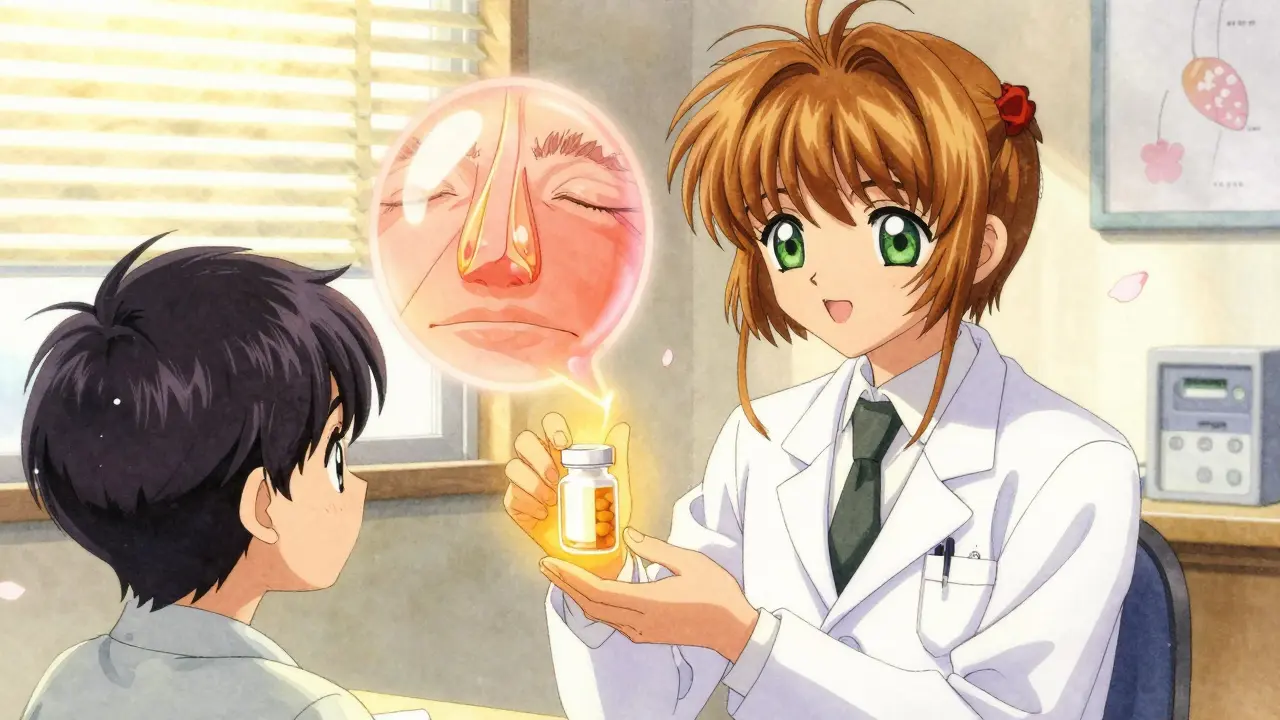
What Treatments Don’t Work
There are a lot of alternative treatments out there. Hyperbaric oxygen. Laser therapy. Steroid injections behind the ear. Stellate ganglion blocks. Some clinics even offer acupuncture. Here’s the reality: none of these have solid proof they work better than corticosteroids alone. A 2023 review of 32 to 35 studies found no high-quality evidence supporting any of them. That doesn’t mean they’re dangerous-it means they’re unproven. You’re better off spending your time and money on the treatment that’s been tested in thousands of people and shown to work. And don’t skip the corticosteroids because you’re scared of side effects. Yes, steroids can cause trouble if you take them for months-weight gain, mood swings, high blood sugar. But a 10-day course? The risks are tiny. A Cochrane review of 715 patients found no significant difference in side effects between those who took steroids and those who took a placebo. The most common complaints? Trouble sleeping, increased hunger, or mild mood changes. These go away when you finish the pills.What Happens If You Wait Too Long?
Delay is the biggest problem. On average, people wait 3.2 days after symptoms start before seeing a doctor. That’s too late for maximum benefit. Many don’t realize Bell’s palsy is an emergency. They think it’s a pinched nerve or a bad night’s sleep. The result? Treatment starts after the 72-hour window. Recovery still happens-about 80% of people get better-but it takes longer. And the risk of lasting damage goes up. That’s why education matters. If you’re suddenly unable to close one eye or smile evenly, don’t wait. Don’t scroll online. Don’t call a nurse line. Go to an urgent care clinic or emergency room. Tell them you think you have Bell’s palsy. They’ll check for stroke (which is rare but critical to rule out), then start you on steroids if it’s Bell’s.How Do Doctors Know It’s Bell’s Palsy?
Not every facial weakness is Bell’s palsy. Stroke, tumors, Lyme disease, and Ramsay Hunt syndrome (a shingles variant) can look similar. That’s why doctors need to be careful. The key difference? In Bell’s palsy, the whole side of the face is affected-forehead, eye, mouth. In a stroke, the forehead usually still moves because the nerve supply is different. Ramsay Hunt syndrome comes with blisters in the ear or mouth and often severe pain. Doctors use the House-Brackmann scale to grade severity-from I (normal) to VI (total paralysis). Most Bell’s palsy cases start at grade III or IV. They’ll also check your hearing, taste, and tear production. If everything points to a single nerve issue with no other symptoms, it’s Bell’s.
Recovery: What to Expect
Most people start to improve within two to three weeks. Full recovery often takes three to six months. With corticosteroids, 72.6% recover fully by three months. By nine months, that jumps to 89.5%. Age is the biggest predictor of recovery. People under 45 do better than those over 60. But even older adults benefit from steroids. During recovery, eye care is crucial. If you can’t close your eye, it can dry out, scratch, or get infected. Use artificial tears during the day. At night, tape your eye shut or wear a moisture chamber. Some people need a small eyelid weight to help it close. Physical therapy isn’t usually needed, but gentle facial exercises-like smiling, raising eyebrows, or puffing cheeks-can help retrain muscles. Don’t overdo it. Let the nerve heal first.Cost, Access, and Real-World Barriers
Prednisone is cheap. A 10-day course costs about $4.27 at most U.S. pharmacies. It’s generic, widely available, and covered by nearly every insurance plan. The real barrier isn’t cost-it’s awareness. Many patients don’t know they need to act fast. Others fear steroids. A 2023 study found 37% of patients hesitated to take them because of myths about side effects. Education helps. Some clinics now hand out simple one-page guides explaining why steroids are safe and urgent. Telemedicine is helping too. In U.S. pilot programs, apps that let people video-call a doctor for facial weakness reduced diagnosis delays by 42%. That’s huge. Every hour counts.What’s Next for Bell’s Palsy Treatment?
Research is moving toward personalization. Scientists are looking for biomarkers-things in the blood-that can predict who will recover well and who needs stronger treatment. Some are testing nerve growth factors or new anti-inflammatory drugs, but nothing has beaten corticosteroids yet. For now, the path is clear: act fast, take steroids, protect your eye, and trust the process. Bell’s palsy is scary, but it’s rarely permanent. With the right treatment, your face will smile again.Can Bell’s palsy come back?
Yes, but it’s rare. About 10% of people have a recurrence, usually on the same side. If your symptoms return after full recovery, see a doctor right away. It could be something else, like a tumor or multiple sclerosis. Recurrence on the opposite side is even rarer.
Is Bell’s palsy the same as a stroke?
No. A stroke affects the brain, not just the facial nerve. In a stroke, you might also have arm or leg weakness, trouble speaking, confusion, or a sudden severe headache. In Bell’s palsy, only the face is affected, and you can still move your forehead. If you’re unsure, treat it like a stroke-call emergency services immediately.
Do children get Bell’s palsy?
Yes, but less often than adults. Children usually recover fully, even without steroids. However, doctors still recommend corticosteroids for moderate to severe cases, especially if treatment starts early. Dosing is adjusted by weight, and side effects are rare in short courses.
Can I still drive with Bell’s palsy?
It depends. If you can’t close your eye, your vision may be blurry or dry, which can make driving unsafe. If you have trouble controlling facial muscles, your ability to signal or respond quickly may be impaired. Many doctors recommend avoiding driving until symptoms improve, especially in the first few days.
Should I take prednisone if I have diabetes?
Yes, but with caution. Corticosteroids can raise blood sugar levels. If you have diabetes, monitor your glucose more often during the 10-day course. Your doctor may adjust your diabetes medication temporarily. The risk of not treating Bell’s palsy-permanent facial weakness-is greater than the short-term spike in blood sugar.

Sangeeta Isaac
so i woke up one morning looking like i lost a fight with a grumpy raccoon and thought i was dying. turns out? just a sleepy nerve. prednisone saved my smile. also, no, i didn’t become a steroid monster. just a slightly hungrier version of myself. 🤷♀️
Alex Carletti Gouvea
if you’re not taking steroids you’re just waiting for your face to stay crooked forever. this isn’t yoga, it’s medicine. get your ass to urgent care.
Philip Williams
While the clinical evidence supporting corticosteroid intervention in Bell’s palsy is robust, I remain concerned about the systemic implications of even short-term glucocorticoid exposure. The hypothalamic-pituitary-adrenal axis suppression, though transient, warrants careful patient counseling-particularly in those with subclinical metabolic vulnerabilities.
Ben McKibbin
Let’s be real-antivirals are the placebo of neurology. They sound cool, but if your nerve’s swollen like a balloon in a hot car, you don’t need more viruses to fight-you need to deflate the damn thing. Steroids are the fire extinguisher. Antivirals? Just the guy holding the sparkler.
Uju Megafu
THIS IS WHY AMERICA IS FALLING APART. PEOPLE WON’T TAKE RESPONSIBILITY FOR THEIR HEALTH. YOU LET A VIRUS TAKE OVER YOUR FACE AND THEN YOU WANT A PILLS? NO. YOU NEED TO PRAY. OR DO YOGA. OR EAT TURMERIC. NOT JUST TAKE STEROIDS LIKE A COWARD. YOUR FACE IS A TEMPLE, NOT A LAB TEST.
Stephen Rock
prednisone is just legal coke for your immune system. everyone’s scared of side effects but no one’s scared of looking like a cartoon character for 6 months. guess which one’s worse?
Dee Monroe
There’s something deeply poetic about how our bodies can collapse so suddenly-like a puppet with a snapped string-and yet, with a little help from chemistry, it finds its way back to grace. It’s not just medicine; it’s a quiet miracle. We don’t talk about that enough. We talk about doses and timelines, but not about how a face, once frozen, learns to laugh again. That’s the real healing. Not the pill. The return of the smile.
Jarrod Flesch
Had this last year. Eye taping at night was the MVP. Also, don’t skip the artificial tears. My cornea almost threw a tantrum. Steroids? Lifesaver. No side effects beyond needing to eat my entire pantry. 😅
lokesh prasanth
steroids bad. body heal itself. you trust pharma not nature.
Glenda Marínez Granados
so you're telling me the thing that makes me feel like a villain in a 90s horror movie is fixed by a $4.27 pill? and i spent $80 on a 'facial rejuvenation' mask? 🤡
MARILYN ONEILL
My cousin’s neighbor’s cousin took steroids and got diabetes. So I’m not taking any. I’m going to wait and see if my face gets better on its own. I’m not a lab rat.
Rod Wheatley
PLEASE, if you’re reading this and you’re scared of steroids-listen: a 10-day course is like a 10-minute shower. You don’t live in the water. You don’t become the water. You just get clean. And your face? It gets to smile again. Don’t let fear steal your expression. Go get the script. Now.
Jerry Rodrigues
Interesting how we’ve turned a simple nerve issue into a medical drama. Maybe we need less hype and more clarity. The science is solid. The cost is low. The window is small. Do the thing.
Ashok Sakra
why do you think you deserve to get better? maybe your face is broken because you never loved yourself enough. maybe this is punishment. maybe you should sit with it.
Andrew Rinaldi
It’s wild how a single nerve can carry so much meaning-smiling, crying, winking, whispering. When it stops, it’s not just muscle that’s silenced. It’s connection. That’s why this matters more than we say out loud.