
Aspirin with Other Blood Thinners: What You Need to Know About Bleeding Risks

Blood Thinner Interaction Risk Checker
Assess Your Risk
This tool helps you understand the increased bleeding risk when combining aspirin with other blood thinners. Enter the medications you're taking to see your specific risk level.
Combining aspirin with other blood thinners doesn’t just add up-it multiplies the danger. If you’re taking aspirin daily for heart health and your doctor also prescribed warfarin, rivaroxaban, or apixaban, you’re not getting double the protection. You’re getting double the risk of serious, sometimes life-threatening bleeding.
Why Aspirin and Blood Thinners Don’t Mix Well
Aspirin works by stopping platelets from clumping together. It blocks an enzyme called cyclooxygenase-1, which reduces a chemical called thromboxane A2. Without it, platelets can’t stick to each other to form clots. That’s good if you’ve had a heart attack or stroke-it keeps blood flowing. But when you add another blood thinner-like warfarin, which slows down clotting factors, or newer ones like dabigatran or edoxaban, which block specific proteins in the clotting chain-you’re attacking clotting from two sides at once.This isn’t just theoretical. Studies show that people taking both aspirin and an oral anticoagulant have twice the risk of bleeding compared to those taking just one. The bleeding doesn’t always come with a scream. Sometimes it’s quiet: a little more bruising than usual, darker stools, or fatigue from low iron. But when it hits hard, it can be inside the brain, the stomach, or the lungs.
Where the Bleeding Happens-And How Bad It Gets
Not all bleeding is the same. When aspirin teams up with anticoagulants, certain areas of the body are hit harder:- Gastrointestinal tract: Bleeding in the stomach or intestines becomes 2.24 times more likely. This can mean black, tarry stools-or sudden vomiting of blood. It’s the most common serious side effect.
- Brain: Intracranial bleeding risk jumps by 3.22 times. Even a minor fall can turn dangerous. The ASPREE trial found healthy older adults on daily aspirin had a 38% higher chance of traumatic brain bleeds than those not taking it.
- Lungs and urinary tract: Bleeding here is less common but still significantly higher-1.36x and 1.57x more likely, respectively.
And it’s not just about big bleeds. Many people develop anemia from slow, unnoticed blood loss. Studies show this happens nearly three times more often with combination therapy. Fatigue, dizziness, shortness of breath-these aren’t just signs of aging. They could be your body telling you it’s losing blood inside.
Not All Blood Thinners Are Equal
If you’re on a combination, the specific drug matters. Not all anticoagulants carry the same risk when paired with aspirin.Among the newer direct oral anticoagulants (DOACs), rivaroxaban has shown the highest bleeding risk when combined with aspirin, based on a 2024 meta-analysis of 24 studies. Dabigatran and apixaban follow, but still pose clear danger. Warfarin, though older, remains risky-especially if your INR levels aren’t tightly controlled.
And it’s not just prescription drugs. Over-the-counter painkillers like naproxen or diclofenac can be just as dangerous. Naproxen with an anticoagulant increases bleeding risk by more than four times. Even ibuprofen, often thought of as “safe,” raises the risk by nearly 80%. If you’re on a blood thinner, avoid NSAIDs unless your doctor says otherwise.

Who Should Even Be on This Combo?
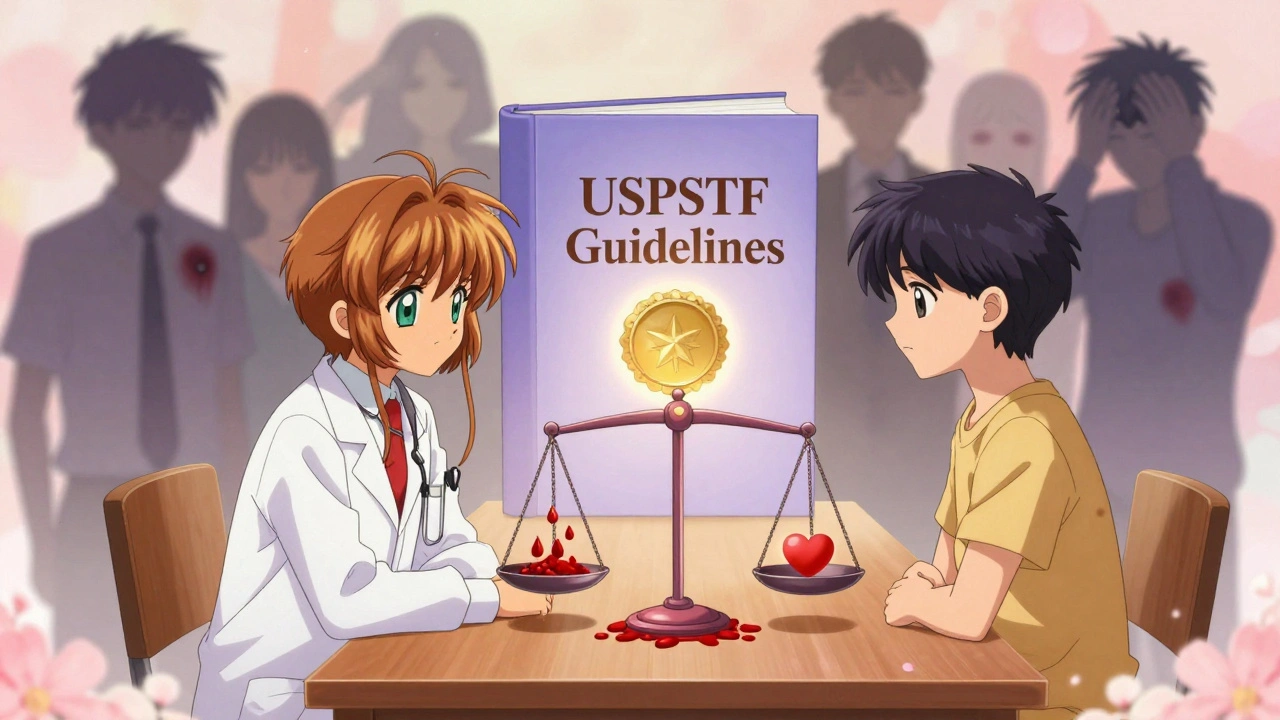
For most people, the answer is: no one.The U.S. Preventive Services Task Force (USPSTF) now advises against routine low-dose aspirin for healthy older adults-especially those over 60-because the bleeding risk outweighs any small benefit in preventing first heart attacks or strokes. The National Institute on Aging backs this up.
So who still gets this combo? Only a few specific cases:
- People with mechanical heart valves-where clotting risk is extreme.
- Those who’ve had a stent placed after a heart attack, especially if it was drug-eluting, and need dual antiplatelet therapy for a short time.
- Patients with certain types of atrial fibrillation who’ve also had a recent heart attack or stent placement.
In every other case, the combination is unnecessary. If you’re on both, ask your doctor: Why? Is there solid evidence for you personally? Or is it just habit?
What You Can Do to Stay Safe
If you’re on aspirin and another blood thinner, you can’t just stop. But you can take steps to reduce risk:- Use an electric razor. No nicks. No cuts.
- Switch to a soft-bristle toothbrush. Bleeding gums aren’t normal.
- Wear protective gear. Helmets, pads, non-slip shoes-anything to avoid falls.
- Take aspirin with food. It helps reduce stomach irritation.
- Watch for warning signs: Unusual bruising, red or black stools, headaches that won’t go away, coughing up blood, or sudden weakness.
Your doctor should check your hemoglobin every 3 to 6 months if you’re on this combo. And they should use a tool called HAS-BLED to score your bleeding risk-factors like high blood pressure, kidney disease, older age, or a history of bleeding.
The Bigger Picture: Why This Combo Is Still Common
Despite the risks, about 29 million Americans still take daily aspirin. Many started years ago on advice that’s now outdated. Doctors sometimes keep it going out of habit, or because patients insist they’ve “always taken it.”The global anticoagulant market is growing fast-projected to hit $66.2 billion by 2029. More people are on DOACs than warfarin now. But the combination with aspirin hasn’t dropped as much as it should. Regulatory agencies like the FDA have added boxed warnings to NSAID-anticoagulant labels. That’s a big deal. It means the danger is officially recognized at the highest level.
What’s Next? Personalized Medicine May Help
Research is moving toward smarter approaches. Scientists are testing genetic tests for genes like CYP2C9 and VKORC1, which affect how people respond to warfarin. That could help tailor doses so patients get the minimum effective amount.There’s also work on new reversal agents-drugs that can quickly undo the effects of anticoagulants in emergencies. But until those are widely available, the best defense is prevention.
If you’re on aspirin and another blood thinner, don’t assume it’s safe just because your doctor prescribed it. Ask for the evidence. Ask about alternatives. Ask if you really need both.
Your body doesn’t need two blood thinners unless the stakes are extremely high. And if they are? Then you need close monitoring-not just a prescription and a hope.
Can I take aspirin with warfarin?
Taking aspirin with warfarin increases your risk of serious bleeding-especially in the stomach and brain. This combination is only recommended for very specific cases, like after a heart stent or with a mechanical heart valve. For most people, the risks outweigh the benefits. Always talk to your doctor before combining them.
Is it safe to take ibuprofen with a blood thinner?
No, ibuprofen and other NSAIDs like naproxen or diclofenac can significantly increase bleeding risk when taken with anticoagulants. Ibuprofen alone raises the risk by nearly 80%. If you need pain relief, acetaminophen (paracetamol) is generally safer-but still check with your doctor first.
What are the signs of internal bleeding from blood thinners?
Watch for unexplained bruising, black or tarry stools, blood in urine, vomiting blood, severe headaches, dizziness, or sudden weakness. Fatigue and shortness of breath can signal anemia from slow bleeding. If you notice any of these, seek medical help immediately.
Should I stop taking aspirin if I’m on a blood thinner?
Don’t stop aspirin suddenly without talking to your doctor. Stopping abruptly can increase your risk of clotting, especially if you’ve had a heart attack or stent. But if you’re on aspirin for primary prevention (no prior heart disease), it’s very likely you don’t need it-and the bleeding risk isn’t worth it. Ask your doctor to review your reasons for taking it.
Are there safer alternatives to aspirin for heart health?
For most people, the best alternatives aren’t pills-they’re lifestyle changes: regular exercise, a heart-healthy diet, managing blood pressure and cholesterol, and not smoking. If you have a high risk of heart disease, your doctor might recommend a different antiplatelet drug like clopidogrel, but only if absolutely necessary. Never assume aspirin is the only option.


Katherine Rodgers
so like... i took aspirin with my rivaroxaban for 3 years bc my doc said "it’s fine" and now i’m on iron supplements bc my stools look like motor oil. thanks, medicine. 🤡
Lauren Dare
The concomitant use of dual antiplatelet and anticoagulant regimens in the absence of clear indication represents a paradigmatic failure of clinical decision-making, particularly in primary prevention cohorts where the number needed to harm significantly outweighs the number needed to treat. The pharmacokinetic synergy of COX-1 inhibition and FXa blockade is not merely additive-it’s catastrophic.
Gilbert Lacasandile
I’ve been on apixaban for AFib and started aspirin after my stent. My cardiologist said it was only for 6 months. I’m still on it. Maybe I should ask again? I don’t wanna bleed out but I also don’t wanna have another heart thing. 😅
Lola Bchoudi
If you're on a DOAC + aspirin, your HAS-BLED score should be screaming at you. Check your hemoglobin. Get a stool test. Ask about alternatives. You’re not being paranoid-you’re being proactive. Your body is trying to tell you something.
Morgan Tait
You know what’s really scary? The fact that Big Pharma pushed this combo for decades while the FDA was asleep. Now they slap on a boxed warning like it’s a surprise. Meanwhile, your doc still prescribes it because they got free lunches from the reps. I’ve seen the emails. They’re not dumb. They’re paid.
Darcie Streeter-Oxland
The assertion that the combination of aspirin with oral anticoagulants constitutes an undue risk is, in my view, empirically substantiated. However, the casual tone and colloquialisms employed throughout this article undermine its scholarly credibility. One would hope for a more rigorous presentation in a medical context.
Sarah Gray
If you’re taking aspirin for "heart health" and you’ve never had a heart attack, you’re not being preventive-you’re being reckless. You think you’re a hero for popping pills, but you’re just a walking bleeding risk with a Costco membership.
Kathy Haverly
Oh wow, another article telling people they’re dumb for trusting doctors. Meanwhile, the same doctors who told you to take aspirin are the ones who told you low-fat diets were healthy and that Vioxx was safe. Maybe the problem isn’t you-it’s the whole damn system.
ian septian
Ask your doctor why. If they can’t answer, stop.
Nikhil Pattni
Bro I was on warfarin and aspirin for 2 years after my stent and I used to take ibuprofen for my back pain like it was candy. One day I woke up puking blood and my wife called 911. They said my INR was 8.8. I was 42. Now I only take acetaminophen and I do yoga. Life is good. Also, my doc said I was "lucky". Lucky? I almost died because I thought "natural" meant safe. 😭
William Umstattd
The fact that 29 million Americans are still on this combo is a national disgrace. This isn’t medical care-it’s medical negligence wrapped in a white coat. And the FDA’s boxed warning? Too little, too late. People are dying because of inertia. And you know who pays? The families.
Elliot Barrett
I’m a nurse. I’ve seen 3 patients bleed out from this combo. One was 72, took aspirin since 2005, started apixaban last year. Said his doctor "always did it." He bled into his brain after tripping on a rug. He didn’t survive. Don’t be that guy.