
Antibiotic Stewardship at Home: Why Finishing Your Course and Proper Disposal Matters
Every year, millions of people in Australia and around the world finish their antibiotic course-only to stash the leftovers in a medicine cabinet, flush them down the toilet, or hand them off to a family member who’s feeling under the weather. It seems harmless. Maybe even smart. But here’s the truth: antibiotic stewardship at home isn’t just a hospital thing. It’s your responsibility. And skipping doses or keeping old pills could be making superbugs stronger-and putting your family at risk.
Why Finishing the Full Course Isn’t Optional
You start an antibiotic for a sore throat or sinus infection. After two days, you feel fine. You’re back to work. The cough is gone. So you stop taking the pills. Sounds logical, right? It’s not. When you stop early, you don’t kill all the bacteria. You kill the weak ones. The strong ones? They survive. And now they’re tougher. They’ve learned how to resist the drug. That’s how antibiotic resistance starts. And it doesn’t just affect you. It spreads. The CDC says stopping antibiotics too early can lead to relapse-or worse, create drug-resistant infections. In fact, studies show incomplete courses increase resistance risk by 23% to 37%. That’s not a small number. That’s the difference between a simple infection and one that needs hospitalization. And it’s not just about feeling better. Antibiotics work best when they’re taken at exact intervals-every 8 hours, every 12 hours. Missing a dose drops the drug level in your blood. That’s like giving bacteria a break to regroup. Even if you feel fine, the infection might still be hiding. Only the full course kills every last one.What Happens When You Don’t Finish
Imagine you’re fighting a fire. You turn off the hose after the flames are out-but the embers are still glowing. A few hours later, the whole house is on fire again. That’s what happens with antibiotics. In older adults-especially those over 65, who make up a third of all home antibiotic users-the consequences are even more serious. A 2023 study found that seniors who didn’t finish their course had a 22% higher chance of being readmitted to hospital within 30 days. Why? Because the infection came back harder. And this time, the same antibiotic didn’t work. Caregivers often struggle. One Reddit user in Melbourne wrote: “My mum takes seven meds. I can’t keep track of which antibiotic to give at 2 a.m. without a system.” That’s not unusual. Dosing schedules get messy. But that’s why you need tools. Use a pill organizer with alarms. Set phone reminders. Apps like Medisafe or Hero (a smart dispenser that costs about $299 upfront) help track doses and send alerts. These aren’t luxuries-they’re lifelines. In homes where caregivers used these tools, course completion jumped from 51% to 89%.Proper Disposal: Don’t Flush, Don’t Keep
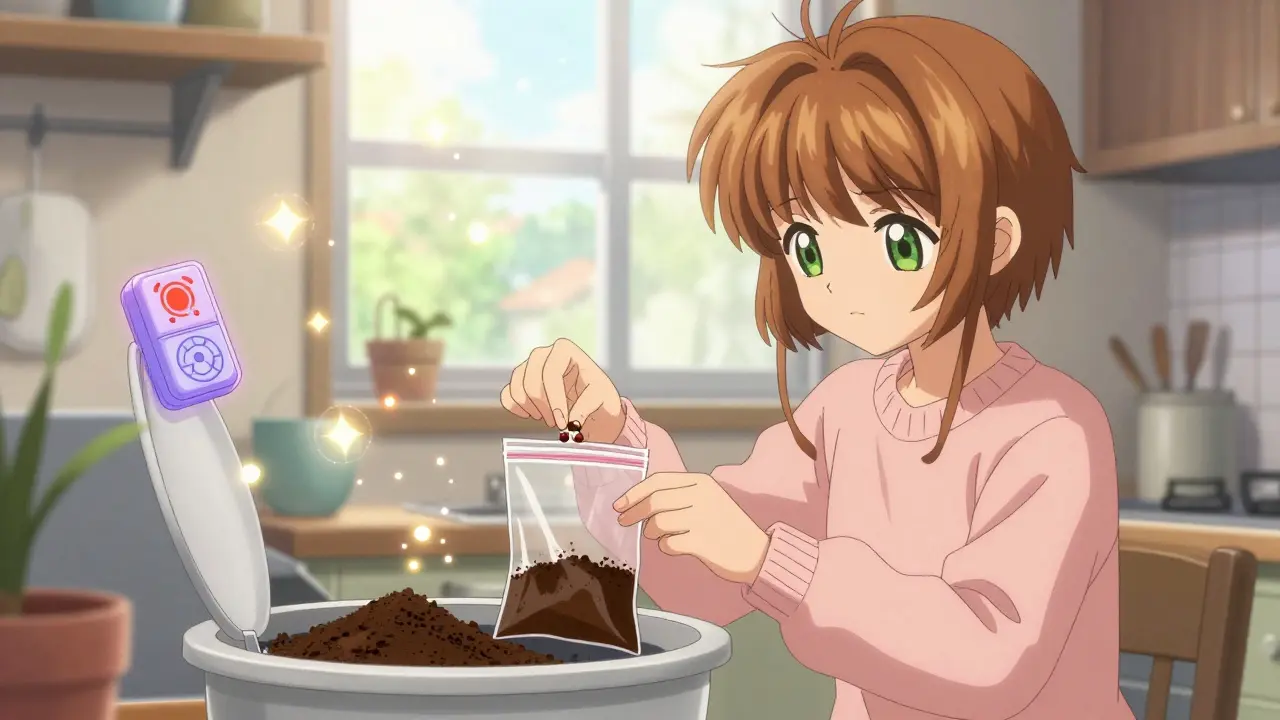
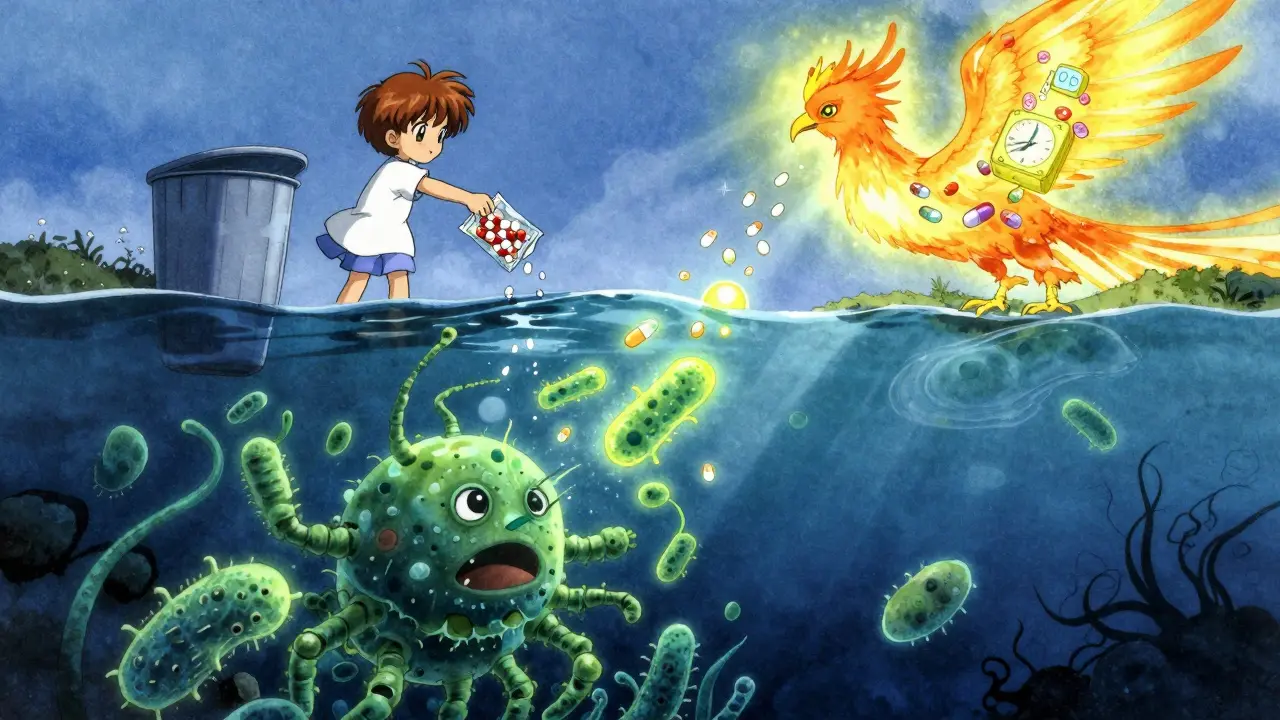
You’ve finished your course. There are three pills left. What do you do? Don’t keep them. Don’t give them to your neighbor. Don’t toss them in the trash like regular junk. And absolutely don’t flush them. Flushing antibiotics sends them straight into waterways. A 2022 study found antibiotic residues in 63% of U.S. water systems near cities. Australia’s rivers aren’t immune. These chemicals don’t break down easily. They end up in fish, in drinking water, in soil. And they keep pushing bacteria to evolve-faster. The FDA and CDC recommend a simple, safe method: mix unused pills with something unappetizing-used coffee grounds, kitty litter, or dirt. Put the mixture in a sealed plastic bag. Toss it in the trash. That stops kids or pets from finding them. It stops them from leaching into groundwater. And if you’re unsure? Check with your local pharmacy. Many have take-back bins. In Melbourne, some chemists like Chemist Warehouse and TerryWhite Chemmart offer free disposal services for expired or leftover meds. Ask at the counter.
Why Home Settings Are the New Frontline
Hospitals have antibiotic stewardship teams. Nurses check doses. Doctors review prescriptions. There are protocols. But at home? You’re on your own. Only 12% of home care agencies have formal systems to check if antibiotics are still needed after 48 hours. That’s called an “antibiotic timeout.” In hospitals, it’s standard. At home? Rare. And here’s the scary part: 61% of people keep leftover antibiotics for “next time.” That’s a dangerous habit. Infections change. What worked for a sinus infection won’t work for a UTI. Taking the wrong antibiotic can mask symptoms, delay real treatment, and make future infections harder to cure. Plus, antibiotics aren’t harmless. They can cause severe diarrhea, allergic reactions, or damage your gut microbiome. Taking them when you don’t need them? That’s like using a sledgehammer to crack a nut.What You Can Do Today
You don’t need a medical degree to be part of the solution. Here’s what actually works:- Take every dose, at the right time. Even if you feel fine. Even if you’re on vacation.
- Use reminders. Set alarms. Use a pill box. Download a medication app.
- Never share antibiotics. Not with kids, not with partners, not with friends.
- Dispose of leftovers safely. Mix with coffee grounds or kitty litter. Seal. Trash.
- Ask your doctor: “Do I really need this?” Not every cold needs antibiotics. Ask about alternatives.
- Call your pharmacist. Ask if they have a drug take-back program.
What’s Changing-And What’s Coming
The good news? Things are shifting. In 2024, AALLCare released new guidelines specifically for seniors and caregivers in home settings. They say: “Complete the full course, even if the person feels better.” The CDC is preparing its first-ever Home Care Antibiotic Stewardship Toolkit, due out in early 2025. It’ll include printable checklists, reminder templates, and disposal guides you can print and hang on the fridge. Australia’s Therapeutic Goods Administration (TGA) is also reviewing home antibiotic use. While there’s no formal program yet, public awareness is growing. Pharmacies are starting to offer disposal bins. Community health centres are running free workshops. The goal? Reduce inappropriate antibiotic use by 15% by 2027. That’s not a fantasy. It’s a target. And it starts with you.Final Thought: Your Pill Box Is a Weapon Against Superbugs
Antibiotic resistance isn’t something that happens in labs or hospitals. It happens in your kitchen. In your bathroom. In your medicine cabinet. Every time you finish your course. Every time you dispose of leftovers safely. Every time you say no to sharing pills. You’re not just protecting yourself. You’re protecting your kids, your parents, your neighbours. You’re helping keep antibiotics effective-for the next infection, the next child, the next generation. It’s not glamorous. It’s not a headline. But it’s one of the most powerful things you can do for public health.What happens if I stop taking antibiotics early?
Stopping early leaves behind the strongest bacteria, which can survive and multiply. This leads to antibiotic resistance, meaning future infections may not respond to the same drugs. It also increases your risk of the infection coming back-sometimes worse than before. Studies show incomplete courses raise resistance risk by 23-37%.
Can I save leftover antibiotics for next time?
No. Antibiotics are prescribed for specific infections, at specific doses. A different illness (like a UTI or ear infection) needs a different drug. Taking the wrong antibiotic can delay proper treatment, cause side effects, or make future infections harder to cure. Always dispose of leftovers safely instead.
Is it safe to flush antibiotics down the toilet?
No. Flushing antibiotics pollutes waterways and contributes to environmental resistance. Drug residues have been found in 63% of U.S. water systems near cities, and similar risks exist in Australia. The CDC and FDA recommend mixing unused pills with coffee grounds or kitty litter, sealing them in a bag, and throwing them in the trash.
How can I remember to take my antibiotics on time?
Use a pill organizer with compartments for each time of day. Set phone alarms for each dose. Apps like Medisafe or Hero (a smart dispenser) can send alerts and track your progress. Many caregivers find these tools essential, especially when managing multiple medications.
Where can I dispose of old antibiotics in Melbourne?
Many pharmacies in Melbourne, including Chemist Warehouse and TerryWhite Chemmart, offer free medication take-back bins. Ask at the counter. If no bin is available, mix unused pills with used coffee grounds or kitty litter, seal in a plastic bag, and throw them in your household trash.
Do I need antibiotics for every infection?
No. Antibiotics only work on bacterial infections-not colds, flu, or most sore throats, which are viral. Ask your doctor: “Is this infection bacterial?” and “Are there alternatives?” Overuse of antibiotics is a major driver of resistance. Only take them when truly needed.

Sumler Luu
My grandma used to save antibiotics in a Tupperware under the sink. I didn’t realize how dangerous that was until I read this. Now I make sure she uses the pharmacy drop-off at CVS. Small change, big impact.
Thanks for laying it out so clearly.
sakshi nagpal
As someone from India where antibiotic misuse is rampant, I can attest that this issue is global. In rural areas, people buy antibiotics over the counter without prescriptions - and stop when they feel better. No one teaches them about resistance. Education needs to start in schools, not just hospitals.
Bravo for highlighting home stewardship. This should be mandatory public health messaging.
Fabio Raphael
I never thought about how flushing pills affects fish and water systems. That’s wild. I always just tossed them in the trash - didn’t know about the coffee grounds trick. Gonna start doing that immediately.
Also, the part about seniors and caregivers? Real. My aunt’s caregiver misses doses all the time because she’s juggling five meds. A pill organizer with alarms is a game-changer.
Amy Lesleighter (Wales)
finish the whole damn course. no exceptions. its not a marathon its a kill mission. bacteria dont care if you feel better. they just wanna survive and make babies. and now they got superpowers because we gave em training wheels.
also dont flush. mix with coffee grounds. its gross but its science. and if you keep em for next time youre just playing russian roulette with your immune system.
ps: yes i know i spelled dont wrong. sue me.
pps: my dog ate a whole bottle once. dont ask.
Becky Baker
Why are we even talking about this? America spends billions on antibiotics while other countries just let people die. If you’re too lazy to finish your pills, maybe you shouldn’t be on them in the first place.
Stop coddling people. This isn’t a parenting blog. It’s public health. Do your damn job.
Rajni Jain
i get it. my mom took antibiotics last year for a UTI and stopped after 3 days cause she felt fine. then she got sick again and had to go to the er. i cried. she cried.
now we use a pill box with alarms and i set them for her. she hates it but she does it. last month she finished the whole pack. proud of her.
also we drop off old meds at the pharmacy down the road. they give you a sticker. i put it on the fridge. little win.
Sophia Daniels
Oh sweet baby Jesus. Another do-gooder telling me how to live my life because some bacteria got a little too smart.
You know what’s worse than antibiotic resistance? People who think their tiny personal choices are going to ‘save the world.’ You’re not a hero for using a pill organizer. You’re just a person who followed a pamphlet.
Meanwhile, Big Pharma is still selling antibiotics like candy and governments are letting corporations dump antibiotics into rivers. But sure, let’s blame grandma for keeping three pills in her drawer.
Also - coffee grounds? Really? That’s your solution? You’re not cleaning up the mess, you’re just hiding it in a bag like a toddler with a dirty diaper.
And why is everyone acting like this is new? We’ve known this since the 1940s. Stop pretending you’re the first person to care.
Nikki Brown
Wow. Just... wow. I can't believe people still think antibiotics are like Advil. You're not treating a headache, you're waging biological warfare. And you're losing - because you're lazy.
And flushing? That's not just irresponsible - it's a crime against nature. You're poisoning ecosystems because you don't want to walk to the pharmacy.
I'm not mad. I'm just disappointed. And honestly? I'm scared for the next generation. If we can't even follow basic medical advice, what hope do we have?
PS: I'm not judging you. I'm judging the system that let this become normal.
PPS: I cried reading this. Seriously. I did.
PPPS: 🤕💧😭
Peter sullen
It is imperative to underscore, with unequivocal clarity, that the phenomenon of antimicrobial resistance (AMR) is a direct consequence of non-adherence to prescribed antimicrobial regimens, compounded by improper pharmaceutical disposal practices, which introduce sub-therapeutic concentrations into environmental matrices, thereby exerting selective pressure on microbial populations. The data, as presented, are robust and corroborated by peer-reviewed epidemiological studies from the CDC and TGA. Furthermore, the integration of digital adherence technologies (e.g., Medisafe, Hero) demonstrates statistically significant improvements in compliance metrics (p < 0.001). It is therefore not merely advisable, but ethically obligatory, to implement these interventions at the household level. The public health imperative is non-negotiable.
Steven Destiny
Look. I don’t care if you think this is ‘important.’ I’ve got two jobs, three kids, and a dog that eats everything. I don’t have time for pill boxes and coffee grounds. If I feel better, I stop. If my kid gets sick again, I give them the leftover pills. It’s worked for 10 years.
And if you think I’m gonna drive 20 minutes to a pharmacy to drop off three pills? Nah. You want change? Fix the system. Don’t guilt-trip me.
Also - antibiotics are expensive. I’m not throwing money away.
Natasha Sandra
my mom just finished her antibiotics last week and i made her use the drop-off bin at the pharmacy. she was like ‘why??’ and i said ‘because i love you and i don’t want you to die of a superbug.’
she rolled her eyes but did it. 😘
also i put a sticky note on the fridge that says ‘ANTIBIOTICS ARE NOT CANDY’
and i gave my sister a pill organizer for her birthday. she cried. it was cute.
💖🩺✨